Small Apartment Storage: Use Vertical Space Without Clutter
Add small-apartment storage without sacrificing exits, light, or floor area by using shallow vertical space, dual-purpose furniture, and strict overflow limits.
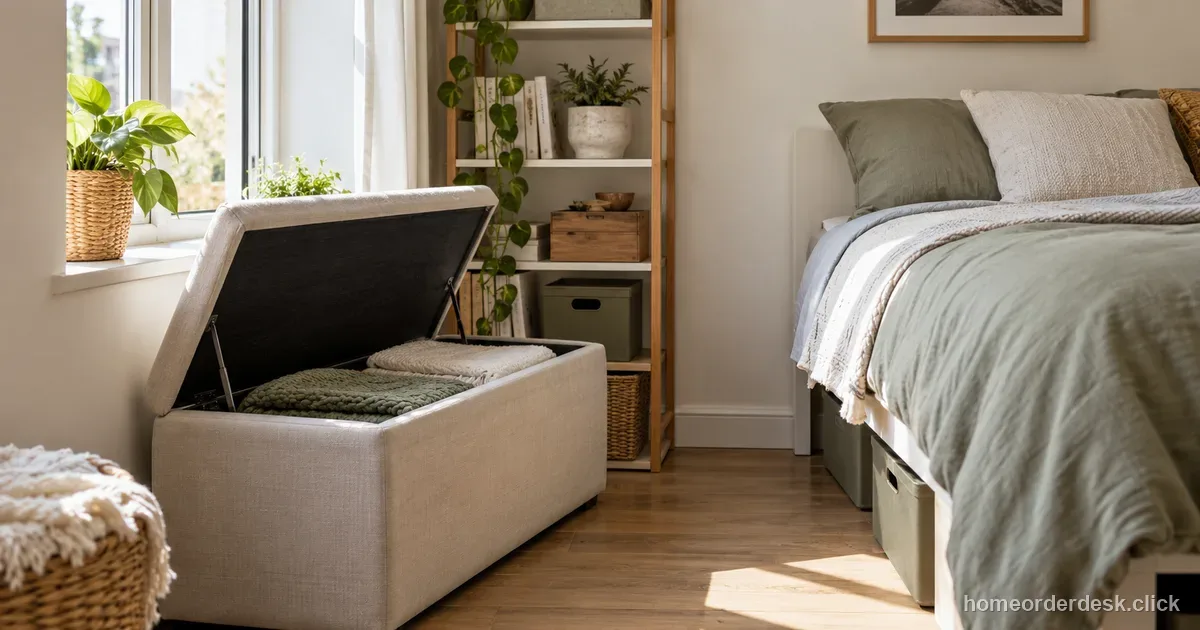
Vertical storage can add capacity to a small apartment, but height should not make the room feel like a warehouse or create tipping and egress hazards. The most useful strategy is to keep daily items between knee and eye level, move light low-frequency items higher, choose furniture that earns its footprint, and preserve clear walkways, windows, and doors.
Measure wall height and walking clearance
Record wall width, ceiling height, door swing, window trim, outlet locations, baseboards, and the width of the path through the room. In a rental, check rules for anchors and wall penetrations before buying tall shelving. A shelf that blocks curtains or narrows a walkway is not free storage.
Put the lightest categories high
Seasonal linens, empty luggage, paper goods, and infrequently used lightweight boxes are better candidates for upper shelves than books, appliances, or dense bins. Heavy items should stay lower to reduce lifting risk and keep tall furniture's center of gravity down.
Keep walking paths, doors, egress, and daily access clear before adding vertical storage.
Anchor tall furniture when required
Follow the furniture manufacturer's anchoring instructions and CPSC tip-over safety guidance, especially in homes with children. Do not assume a narrow bookshelf is stable because it stands upright when empty. Loaded shelves, uneven floors, and climbing can change that calculation.
Use space above existing furniture selectively
A shelf above a desk, dresser, or toilet can add storage without using more floor area if it is mounted safely and does not create a head-strike hazard. Keep the display visually lighter than the furniture below. One useful shelf often feels calmer than stacking several deep boxes to the ceiling.
Choose furniture with an extra function only when access stays easy
A bed with drawers, storage ottoman, or bench with a lift-up seat can earn its footprint when storage opens comfortably in the actual room. Avoid multifunction pieces that require moving another chair or table before they can be used. Measure drawer, lid, and door clearance before purchase.
Protect egress and mechanical equipment
Do not store boxes in front of the apartment entrance, fire escape access, windows needed for egress, radiators, heaters, electrical panels, or sprinkler equipment. Building and fire-safety rules outrank storage convenience. Keep floor paths visible even when guests or deliveries temporarily add clutter.
Use under-bed storage for categories that tolerate dust and low access
Seasonal bedding, off-season clothing, or spare linens can fit under a bed if containers are low enough, breathable where needed, and easy to pull without damaging flooring. Do not store damp textiles, leaking liquids, or items that must be reached every morning in a location that requires kneeling and moving furniture.
Keep visual weight low in the main sight lines
Open shelves packed with mixed boxes can make a small room feel denser even when technically organized. Use closed storage for visually noisy categories and leave some open wall or shelf space. Capacity is not the only goal; the apartment still needs to feel usable and easy to scan.
Use a no-ladder rule for everyday items
If toothbrushes, daily cookware, work bags, or weekly clothing require a step stool, the category is stored too high. Reserve climbing for light low-frequency items and use a stable step stool when necessary. Daily storage should reduce effort, not turn ordinary routines into retrieval tasks.
Test the plan during a normal week
Notice which objects still land on chairs, floor edges, or kitchen counters. Those landing zones reveal missing storage near the point of use. Adjust one category at a time instead of adding another tall shelf. A small apartment becomes calmer when return paths are short, not when every wall is filled. If several unrelated items collect at one spot, consider a shallow drop zone there rather than scattering hooks and baskets across the room.
| Shallow storage | Full-depth furniture | |
|---|---|---|
| Room effect | Uses wall depth while preserving more of the walkway | Projects farther into the room and can narrow circulation |
| Good fit | Narrow cabinets, picture ledges, slim shoe storage, shallow bookcases | A category that needs full depth and has safe door/drawer clearance |
| Measure first | Outlets, handles, baseboards, and path width | Door swing, drawers, windows, and room clearance |
Use shallow depth where full-size furniture would crowd the room
Narrow wall cabinets, picture ledges, slim shoe storage, and shallow bookcases can use overlooked depth without projecting as far into a walkway as a standard dresser. Measure baseboards, outlets, door handles, and the path beside the furniture before buying. Shallow storage is valuable because it preserves circulation, not because every thin strip of wall needs to be filled.
Consolidate cleaning equipment into one narrow service zone
Brooms, a folding step stool, vacuum attachments, and cleaning cloths often spread through a small apartment because no utility closet exists. Choose one safe vertical zone or compact cabinet and keep chemicals according to their labels, separate from food and children where required. A deliberate service zone can replace several small piles while making routine cleaning easier to start.
Favor modular pieces when the apartment may not be permanent
Renters and frequent movers benefit from shelving and storage pieces that can be reconfigured instead of being built for one exact wall. Check anchoring requirements and landlord rules, and keep hardware labeled for the next move. A giant custom unit can maximize today's wall while becoming unusable in the next home. Flexible dimensions are a form of long-term storage efficiency.
Small-apartment storage works when shallow depth, consolidated utility gear, and adaptable furniture preserve daily movement instead of turning every open wall into permanent cabinetry.
Use the backs of doors only for shallow, lightweight categories
An over-door rack can help with scarves, cleaning cloths, or light accessories when it clears the frame and does not damage the door. Check hinge load, rental rules, and closing clearance first. Deep baskets that bang the wall or prevent the door from opening fully trade floor clutter for a new daily obstruction. Confirm the handle remains reachable and the rack does not cover a mirror, switch, or required exit route.
Use cabinet-door organizers only where depth allows
Interior cabinet-door racks can store pan lids, cleaning cloths, or small pantry items when the category fits behind the closed door. Measure shelf and hinge clearance, check the hardware capacity, and keep weight low. Skip a rack that collides with another door, obstructs a latch, or presses against plumbing or electrical components. It should serve one defined category and still let the cabinet close and work normally.
Frequently asked questions
Where is the best place to add storage in a small apartment?
Look first for shallow vertical space, underused wall height, and furniture that can safely serve two jobs without narrowing paths or blocking exits.
Should every empty wall be filled with shelves?
No. Leaving some wall and floor area open preserves light, circulation, and visual rest. Capacity is not the only goal in a small room.
What belongs in under-bed storage?
Low-frequency, clean, dry items that fit in shallow containers and can be retrieved without dismantling the bed area. Avoid turning it into an unindexed overflow zone.
How do I prevent vertical storage from becoming unsafe?
Follow manufacturer anchoring instructions where applicable, keep heavy objects low, and never let storage narrow required exits or normal walking routes.