How to Organize Kids’ Toys in a Shared Living Room
Keep toys usable in a shared living room with broad child-friendly categories, a limited active rotation, safe storage, and a simple cleanup path.
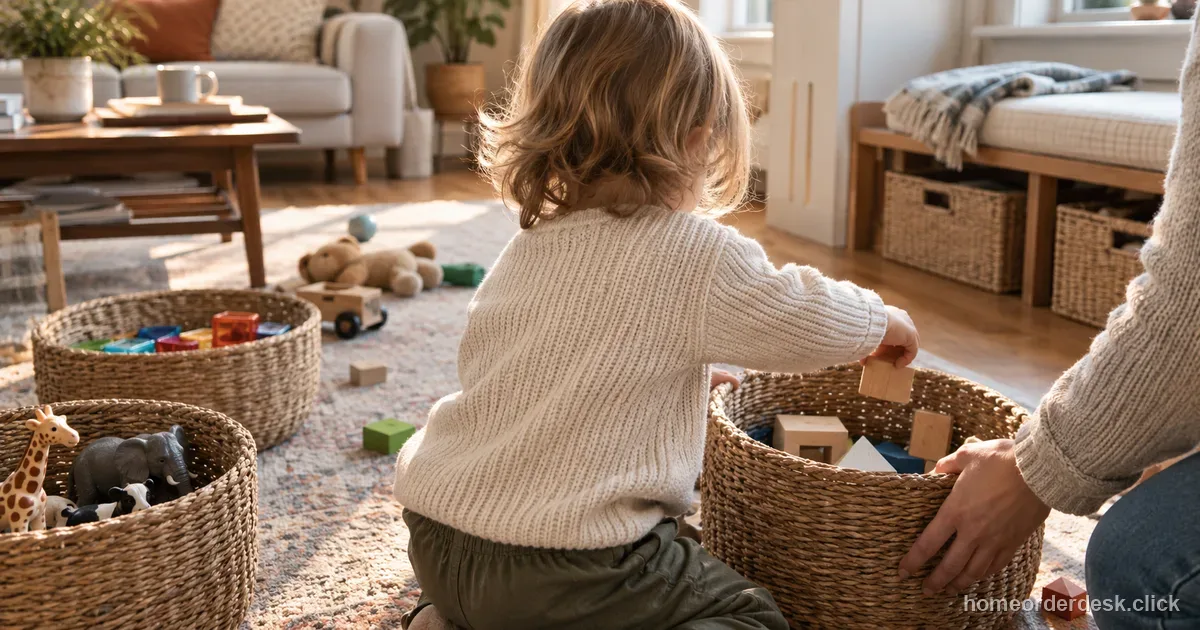
Toy storage in a shared living room has to work for both children and adults. If every toy is visible, the room can feel chaotic; if every toy is hidden behind complicated lids, children may not be able to put anything away. A practical system keeps a limited active rotation within easy reach, gives broad toy types obvious homes, and preserves clear walkways and safe furniture anchoring.
Reduce active toy volume before choosing furniture
Gather toys that currently live in the room and remove broken pieces, outgrown items, and incomplete sets that cannot be used. Move sentimental or future-age toys elsewhere. The active living-room collection should match what children can reasonably play with and reset, not the total number of toys owned.
Use broad categories children can recognize
Blocks, vehicles, dolls, pretend food, art supplies, and puzzles are easier than tiny adult-defined subcategories. Picture labels can help younger children. A bin should be light enough for the child to handle and shallow enough that contents are visible without dumping everything on the floor.
Avoid heavy lids and unstable stacks
Open bins or lightweight baskets are often easier for daily cleanup. Tall furniture should be anchored according to the manufacturer's instructions and CPSC guidance, especially in homes with young children. Do not create climbable stacks of bins or store heavy toys above a child's head.
Create a defined play boundary
A rug, low shelf, or section of the room can mark where most toy play happens. This reduces migration into walkways and makes reset faster. Keep stairs, heaters, emergency exits, and door swings clear even during play. Storage should support safe circulation through the shared room.
Rotate toys instead of overcrowding shelves
Store a portion of toys outside the living room and swap categories periodically. Rotation can make older toys feel fresh while keeping active volume manageable. Label the reserve clearly so adults can find a requested toy without opening every box. Rotation works only if the reserve itself remains limited.
Give tiny or hazardous pieces an adult-controlled home
Loose high-powered magnets and button or coin batteries need an adult-controlled home out of reach of children; check that battery compartments are secured. For small toy pieces and tools, follow age labels, choking warnings, and product directions for younger children using the room.
Living-room storage should be limited, safe, and simple for children to reset.
Separate active projects from general toy bins
A half-built puzzle, train layout, or craft project may need to stay intact for a day. Use one project tray or table zone with a clear limit instead of allowing every unfinished activity to claim the floor. At the end of the project window, pieces return to their normal categories.
Use cleanup time to test whether categories are too detailed
If children repeatedly put animals into the vehicles bin, the distinction may not matter enough for daily life. Broaden the categories until cleanup can happen with minimal adult correction. The system should teach where things go without turning every evening into a sorting lesson.
Review the active set after birthdays and holidays
New toys often arrive in clusters. Before adding another shelf, decide which older toys are outgrown, broken, or ready for rotation. Keep gift decisions separate from gratitude; a toy can be appreciated and still not require permanent living-room storage.
Use a short nightly reset instead of a weekend overhaul
Choose a predictable transition such as before dinner or bedtime for a brief reset of the active play zone. Adults can model the broad categories without aiming for showroom perfection. The system succeeds when the room returns to a usable shared state most days, not when every piece is hidden perfectly.
- During playKeep projects intact in one bounded tray or table zone.
- Each nightReturn broad categories and clear walkways during a short reset.
- After birthdays or holidaysRemove broken or outgrown toys or move some categories into the inactive rotation.
- When rotatingKeep inactive toys out of reach and bring only a limited set back into active storage.
Review active volume after new arrivals and keep a brief reset routine.
Keep multi-piece sets together without micro-sorting everything
Puzzles, train sets, doll accessories, and building kits lose play value when essential pieces disappear into unrelated bins. Use a zip pouch, small inner box, or lidded container for the set, then store that set inside the broader toy category. This preserves complete activities without requiring every loose block or animal to have its own labeled compartment.
Choose one display rule for creations that should stay out
A finished block structure, model, or art project may deserve more than the normal nightly reset. Give displayed creations one shelf or tray and a clear time or space limit. When the display zone is full, the child chooses what remains. This respects active work while preventing every finished project from becoming permanent furniture on the coffee table.
Make books a reading category rather than another toy bin
Keep a small group of current favorites where children can return them upright or face-forward without lifting a heavy stack. Rotate extra books from another shelf if volume is high. Torn pages and outgrown titles can be repaired, donated when suitable, or removed. Treating books separately protects them from being crushed beneath hard toys and makes bedtime reading easier to start.
The living room stays workable when active sets remain complete, creations have a bounded display place, and children can reset broad toy categories without adult-level sorting.
Keep toy storage compatible with vacuuming and floor cleaning
Choose bins and shelves that can be lifted or cleaned around without emptying the whole room. Loose pieces under low furniture quickly become a second hidden toy collection, so use furniture clearances intentionally. A brief floor reset before vacuuming is a practical test: if every cleanup requires dismantling the storage system, simplify it.
Rotation works best when the inactive toys are actually inaccessible
If every rotated toy remains visible in nearby overflow bins, children often pull both sets out and the living room gains storage without gaining simplicity. Keep the inactive group in a defined secondary location and swap a small number of categories at a time. Use rotation to renew interest and reduce cleanup volume, not to hide broken toys or postpone decisions forever. Before a toy enters the inactive group, check that all essential pieces are together and that it is still age-appropriate and safe. When it returns, remove something else so the active storage limit stays meaningful. A small “needs repair or missing piece” container can keep broken toys out of active play without scattering parts, but give it a review date so it does not become a permanent holding zone.
Frequently asked questions
How broad should toy categories be for children?
Broad enough that a child can recognize and return them—blocks, vehicles, dolls, art supplies—without sorting tiny subtypes after every play session.
How many toys should stay in the living room?
Keep an active selection that fits the available storage without overflowing. Rotate less-used toys elsewhere rather than adding more living-room bins.
What makes toy storage safer?
Avoid unstable furniture, heavy objects overhead, and toy chests or lids that pose entrapment or injury hazards. Follow current CPSC guidance for the furniture and containers you use.
How do I know the reset is child-friendly?
A child should be able to see the category, reach the container, and return most toys with minimal adult sorting. If cleanup requires perfect arranging, simplify the categories.