How to Organize School Papers Without Saving Every Sheet
Create a home workflow for permission slips, reference papers, artwork, and sensitive student records so only selected work becomes long-term storage.
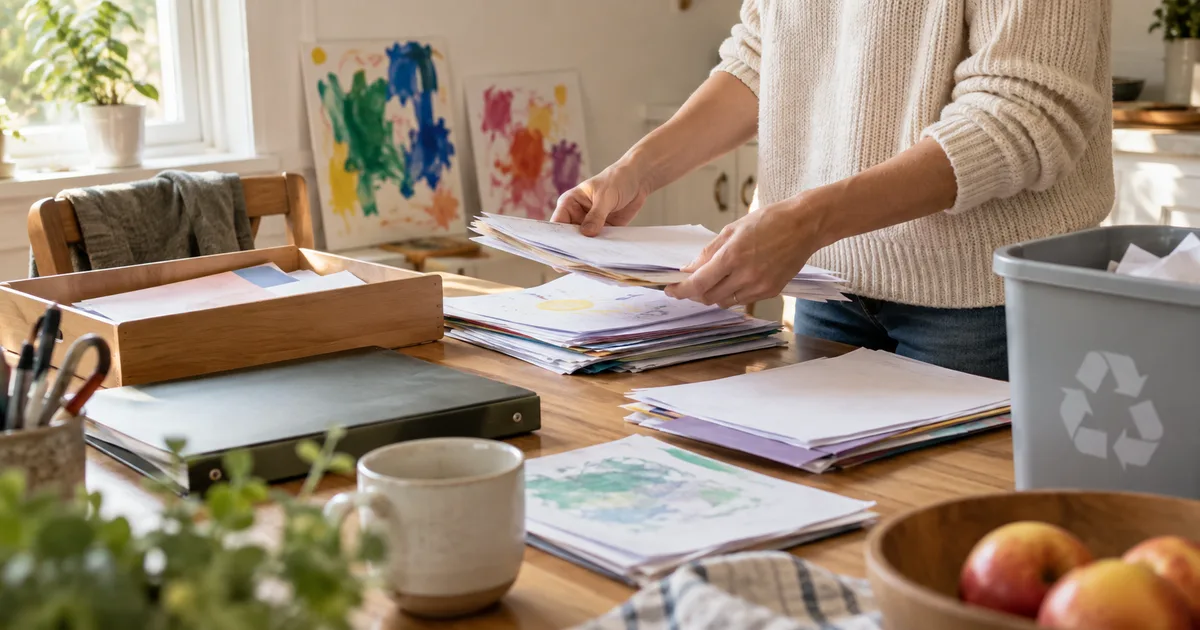
School papers multiply because every sheet arrives with a different level of importance. Some require action tonight, some are reference material for a semester, some are artwork worth keeping, and many can leave after the information is used. The solution is a short processing path at the point where backpacks are opened, not a larger box for unsorted paper.
Create a small inbox that demands action
Use one tray or vertical file near the backpack drop zone for papers that have not been processed. It should hold a few days of material, not a school year. A visible limit prevents forms, flyers, and graded work from becoming permanent background clutter and makes backlog obvious.
Sort into action, reference, memory, and recycle
Action includes permission slips, payments, signatures, and forms with deadlines. Reference includes calendars, current class information, and ongoing project instructions. Memory is a deliberately small group of work worth keeping. Recycle handles duplicates and routine worksheets once their purpose is finished.
Put deadlines on the calendar immediately
When an action paper arrives, enter the due date into the household calendar and place the paper in a dedicated action folder. Do not rely on the refrigerator door as a deadline system. When a form can be completed immediately, sign or respond and return it to the backpack the same day.
Keep current reference material separate from keepsakes
A school handbook needed this semester should not disappear into a memory box with kindergarten artwork. Use a slim current-year reference folder, then purge it at term end. Keepsakes can move to an archival box only after the family chooses representative pieces.
Photograph bulky projects selectively
Three-dimensional projects and oversized posters can be difficult to store. Take a clear photo when the memory is more important than the object, then keep only selected originals. Include the child's name, grade, and year in digital file names so the photo is findable later instead of becoming another digital pile.
Protect documents containing personal information
School paperwork can include student IDs, addresses, health information, or other personal data. Shred sensitive documents when they no longer need to be retained rather than placing them intact in open recycling. Keep required records in a secure household file rather than the children's art bin.
Shred documents with personal information once they no longer need to be retained. Keep records with an ongoing purpose in a secure household file.
Give each child one current-year memory limit
A folder, portfolio, or slim box can hold chosen work during the year. When it fills, compare pieces and keep the ones that best represent growth, personality, or a meaningful event. A physical boundary helps a child participate in curation without requiring an adult to make every sentimental decision.
Separate homework reference from finished work
Vocabulary lists, formulas, reading logs, and project instructions may be needed for weeks. Keep them in a current-schoolwork file or binder until the unit ends, then review. Finished worksheets should not remain simply because they once helped with homework. Their purpose may already be complete.
Run a weekly backpack reset
Empty the backpack at one table, sign upcoming forms, add dates to the calendar, file current reference, let the child choose memory pieces, and recycle routine paper. The inbox should end the chosen reset nearly empty instead of carrying the same pile into the next school week and mixing it with new material.
Review memory papers at the end of each term
At term end, spread the memory candidates together and choose a small representative set: a favorite story, a meaningful drawing, a strong project, or a teacher note. A child's sense of what matters can change. The goal is a record of the year, not a duplicate of every classroom handout.
Create one return-to-school pocket
Forms that are signed, checks that must go back, library slips, and completed permission paperwork need a route out of the house, not another home filing category. Use one clearly marked pocket near the backpack area and empty it into the correct backpack before school. A finished form sitting in the household action tray is still an incomplete task if it never returns to the teacher.
Move long-term student records into the household record system
Report cards, enrollment documents, testing records, service plans, immunization paperwork, or other records that may be needed later should not be buried in the child's artwork box. Keep the records that have an identified purpose in a secure household file, and follow the school, agency, or professional guidance that applies to retention. This separates administrative evidence from sentimental schoolwork.
Let the child help choose what represents the year
At a few points during the school year, ask the child to choose work that shows progress, a favorite subject, a funny memory, or something they are proud of. Adults can preserve context with a date or short note. Involving the child makes the memory file more selective and meaningful, and it reduces the pressure to save every worksheet simply because nobody wants to make the decision.
School paper stays manageable when incoming sheets are processed, outgoing forms have a return path, durable records move to secure household files, and keepsakes are chosen rather than accumulated by default.
Keep teacher contact information with the current-year reference file
Classroom contact details, portal instructions, and current schedules can live with other active school reference material rather than mixed with keepsakes. Review them at the end of the school year and remove outdated copies. This makes a question about a form or assignment easier to resolve without searching old email threads and paper piles.
Separate household copies from records the school already maintains
Parents often keep piles because they are unsure whether a document exists anywhere else. For report cards, evaluations, plans, enrollment records, or other formal education records, understand what the school maintains and what access rights apply before treating every classroom paper as irreplaceable. Keep household copies that are useful for ongoing decisions, but do not let routine duplicate handouts occupy the same protected file as important records. A brief index on the front of a folder can note what you have and where official copies can be requested. This makes retention decisions calmer and gives sensitive student information a more deliberate home.
- When a backpack opensSort new papers into action, current reference, memory, and recycle.
- Before the next school dayAdd due dates to the calendar and move completed forms into the return-to-school pocket.
- WeeklyReset the backpack, return signed forms, and clear routine papers from the inbox.
- At term or year endChoose representative keepsakes, purge outdated reference, and move durable records to the secure household file.
Process incoming forms promptly, then reduce reference and memory piles at natural transitions.
Frequently asked questions
What should happen to papers as soon as a backpack is opened?
Move them into one landing spot, then separate anything needing a signature or deadline from reference papers, keepsakes, and routine recycling.
How much schoolwork should become a keepsake?
Use a physical limit such as one folder or portfolio per child and choose representative pieces. Saving every worksheet makes the meaningful work harder to find.
How should papers with student information be discarded?
Shred or otherwise securely destroy papers containing sensitive personal information when they no longer need to be retained, rather than putting them intact into open recycling.
Which school records deserve longer-term storage?
Keep documents that have an ongoing academic, legal, health, or administrative purpose and follow school or official guidance for records you may need later; routine class handouts can usually leave sooner.