How to Declutter Sentimental Items Without Rushing the Decision
Make slower, lower-regret decisions about sentimental belongings by naming the memory, choosing representatives, documenting stories, and using review time.
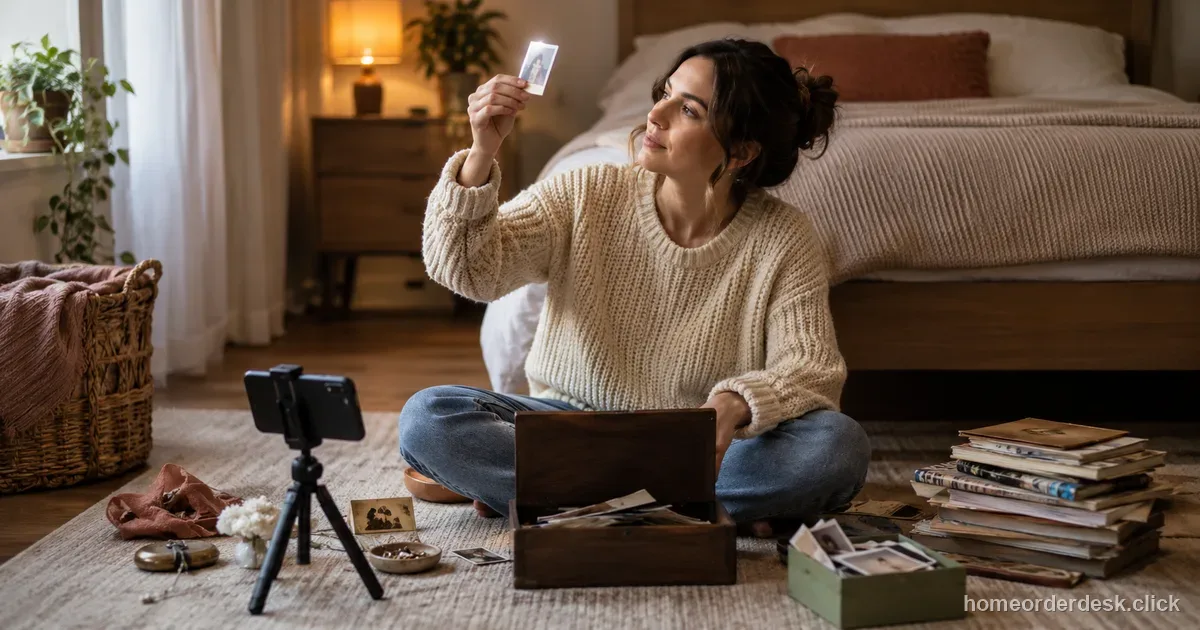
Sentimental belongings are difficult because their value is not primarily practical. Rushing them through the same keep-or-donate process used for duplicate kitchen tools can create regret. A better method separates memory from volume: identify why an item matters, choose representative pieces, preserve stories where useful, and give uncertain decisions time rather than forcing them in one exhausted session.
Start with easier sentimental categories
Do not begin with the most emotionally loaded box in the house. Start with travel souvenirs, greeting cards, children's crafts, or inherited kitchen items where some pieces clearly matter more than others. Building confidence on lower-stakes decisions makes later family-history objects easier to evaluate.
Name the memory attached to each difficult object
Finish the sentence “I want to keep this because…”. The answer may be a person, event, achievement, family story, or guilt about discarding a gift. Once the reason is explicit, you can decide whether the physical object is the best way to preserve that memory or whether the memory can be represented another way.
Choose representative objects from large groups
A collection of forty school projects may be represented by a few pieces that show age, personality, and progress. A box of a relative's kitchen tools may be represented by the utensil tied to a family recipe. Selecting representatives honors the history without requiring every object to remain.
Photograph when the visual memory is enough
A clear photo can preserve an inscription, costume, large craft, or damaged heirloom that is difficult to store. Add names, dates, and a short note while the story is known. Digital capture is not a command to discard; it is another preservation option when physical volume is the main problem.
| Keep the object | Choose a representative | Photograph and document | |
|---|---|---|---|
| Best fit | The object itself carries the memory or has a real use | Several items represent the same person, event, or stage | The visual record and story matter more than storing the full object |
| What to preserve | Give it a respectful, protected home | Choose the piece with the clearest story | Add names, dates, and context to the image or note |
| Keep in mind | Avoid anonymous tubs that hide the story | Selecting a few can honor a larger collection | Digitizing is an option, not a command to discard |
A photo can preserve a story, but keeping the physical object remains a valid choice.
Use one bounded undecided box
Place the hardest items in one container with a physical limit and a check-in date that fits your circumstances. The date is a prompt to reflect, not a deadline to discard; extend it if grief or a major transition still makes the decision feel rushed. During review, note whether you thought about or looked for any of the stored items.
- NowWrite down the memory or story attached to the object.
- Set asidePlace only uncertain wearable or meaningful items in one labeled box with a review date.
- At the check-in date you chooseNotice whether you thought about or looked for any of the stored items; extend the pause if deciding now would feel forced.
- At reviewUse that experience and the recorded story to decide what deserves a protected home.
Use deliberate delay to gather evidence, not to create permanent unlabeled storage.
Offer family items without transferring guilt
When an inherited object may matter to another relative, offer it once with enough information to make a choice. Do not discard another household member's belongings without their agreement, and do not distribute boxes of unwanted heirlooms as obligations. If nobody wants an item, that is useful evidence and does not erase the family relationship or the person being remembered.
Record stories before the storyteller is gone
Some objects matter because only one person knows what they are. Photograph the item and record a short voice note or written caption with names, dates, and context. The story can become more valuable than the object itself. Documentation also helps later family members distinguish a meaningful heirloom from an anonymous household item.
Separate grief from deadline pressure
After a death, estate cleanout, divorce, or major transition, it may be reasonable to postpone a limited group of difficult decisions. Secure documents and valuables first, handle obvious household goods separately, and keep one labeled sentimental group for later. Time can reduce regret when the situation allows it.
Give kept objects a respectful home
Sentimental items that survive review should have a real place: a framed textile, recipe card in the kitchen, small memory box, or heirloom tool used for its original purpose. Keeping meaningful objects buried in ten anonymous tubs preserves volume more than memory.
Review the collection by story overlap
If five items all represent the same trip, person, or childhood stage, compare which one carries the strongest story or is easiest to preserve. You do not have to keep every object that proves the same memory happened. A curated set can make the stories easier to revisit.
Keep provenance with objects that depend on a story
An inherited tool, unlabeled photograph, medal, or travel object may lose much of its meaning once nobody remembers who owned it or why it mattered. Add a short note with names, dates, location, and the story while that information is available. Keep the note physically with the object or in a clearly linked digital record. This is especially useful when several relatives may eventually share or inherit the collection.
Store fragile memories for the material, not for convenience
Old photographs, letters, textiles, and paper ephemera can be damaged by damp basements, hot attics, acidic packaging, or direct light. Use archival or conservation guidance appropriate to the material when an item is genuinely worth preserving. A smaller collection in stable storage is often better protected than a large sentimental tote kept in a harsh environment.
Write a handoff note for heirlooms with future meaning
If a kept object is intended for a particular relative, record that intention and the object's story rather than relying on everyone to remember years later. This is not a substitute for formal estate planning where legal ownership matters, but it can prevent family context from disappearing. A simple label or family inventory can turn an anonymous object into an understandable heirloom.
Sentimental decluttering works best when the collection becomes both smaller and better documented: fewer objects, clearer stories, and storage that actually protects the things chosen to remain.
Digitize selectively so the archive remains usable
Scanning hundreds of letters or photographs only helps if the files can later be found. Use dates, names, and short descriptive file names, and back up important material. Prioritize fragile or story-rich pieces instead of turning every sentimental object into a digital duplicate that creates a second unmanaged collection.
Provenance can matter more than the number of objects kept
For inherited items, write down who owned the object, how it was used, approximate dates, and the story that gives it meaning while someone still remembers. A small labeled group with good context can preserve more family history than several boxes of unidentified belongings. Use archival-safe methods for fragile papers or textiles when preservation matters, and keep labels or notes physically associated with the item or in a reliable digital index. If several relatives want different pieces, record where important objects went rather than treating distribution as loss. Decluttering can improve the quality of the family record when it removes anonymous volume and protects the stories attached to what remains.
Frequently asked questions
What is the safest category to start with when sentimental clutter feels overwhelming?
Begin with lower-emotion duplicates or collections where a few representative pieces clearly matter more than the rest. Save irreplaceable family-history objects for later.
Can a photograph replace a sentimental object?
Sometimes the visual memory and story are what matter; sometimes the physical object is the point. Photographing is an option, not a rule or permission to discard.
How should fragile heirloom textiles be stored?
Use conservation guidance appropriate to the material—clean, cool, dry storage and archival methods are safer than stuffing fragile textiles into ordinary plastic bins.
What if I cannot decide about an item today?
Use one bounded undecided box with a future review date. Delay can be useful when it is deliberate and limited, rather than expanding into indefinite storage.