How to Organize a Refrigerator for Faster Meals and Less Waste
Organize a refrigerator around food safety and visibility, with predictable cold zones, a leftover review point, leak control, and fewer hidden duplicates.
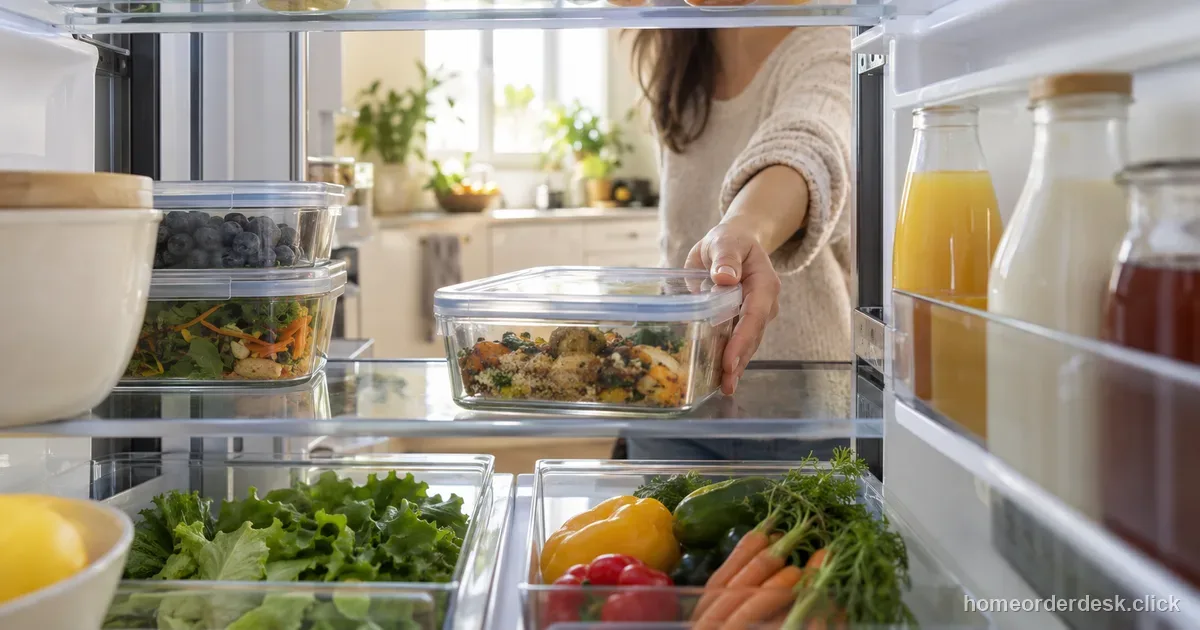
A refrigerator is a food-safety appliance first and a storage cabinet second. Good organization should help cold air circulate, keep raw foods from dripping onto ready-to-eat foods, and make leftovers visible before they are forgotten. The most useful layout is built around temperature, cross-contamination risk, and the household's real cooking rhythm rather than matching containers.
Verify the refrigerator is cold enough before rearranging food
USDA and FDA guidance recommends keeping the refrigerator at 40°F (4°C) or below. Use an appliance thermometer if the built-in display is absent or unreliable. An attractive layout cannot compensate for unsafe temperature, a failing door seal, or vents blocked by overpacking. Fix the appliance problem before treating organization as the solution.
Use the appliance manual for temperature-sensitive foods and drawer settings.
Contain raw meat on a low shelf
Store raw meat, poultry, and seafood in leak-proof containers or on a tray where drips cannot fall onto produce, leftovers, or ready-to-eat food. A lower shelf is often practical for containment. Keep packages within their safe storage windows and clean any leaked liquid promptly rather than letting a 'meat bin' become a permanent dirty zone.
Create one visible eat-first lane
Use an eye-level shelf or shallow bin for opened foods and leftovers that should be used soon. Date leftovers when the container itself does not make timing obvious. This zone reduces duplicate cooking and makes tomorrow's lunch visible before somebody opens a new package. It should be small enough that old food cannot hide behind new food.
Use crisper drawers for produce instead of miscellany
Crisper drawers can help manage humidity for fruits and vegetables, but settings vary by refrigerator. Follow the appliance manual. Do not turn every drawer into a general-purpose bin because hidden food is more likely to spoil. Keep raw animal foods separately contained rather than using a produce drawer simply because it is empty.
Protect cold-air pathways
Avoid packing food tightly against vents or the back wall when the appliance manual warns against it. Overfilling can create warm pockets and freeze items in unintended places. Shallow bins can help retrieval, but they should not block circulation or make spill cleanup harder. Visibility matters more than using every cubic inch.
Treat the door as convenient, not automatically coldest
The door experiences temperature changes each time it opens. Condiments and less temperature-sensitive items often fit well there, while milk, eggs, and other perishables may keep better on interior shelves depending on the refrigerator design. Check the appliance manual for any dedicated dairy, deli, or beverage compartment rather than relying on generic diagrams.
Give tall containers a deliberate home
Pitchers, milk cartons, and tall bottles often force shelf changes that create unusable pockets elsewhere. Decide whether one adjustable shelf should be dedicated to tall items and group shorter foods separately. Do not stack fragile containers precariously just to preserve a visual grid. Stable access is more important than symmetry.
Run a quick inventory check before shopping
Before making a grocery list, scan the eat-first lane, produce drawers, dairy area, and condiments. Move older duplicates forward and decide which leftovers will become a meal. This brief check turns organization into purchasing control. If the same food is repeatedly bought while an unopened package sits behind another, visibility has failed.
Use grocery day as the stress test
Put away a normal week's groceries without moving half the refrigerator first. If new food has no safe place, decide whether the problem is excess inventory, oversized containers, or poor zoning. Do not respond automatically by buying more bins. A refrigerator needs enough open capacity for ordinary replenishment and airflow.
A leftover example shows the point of eye-level storage
If two containers of cooked food keep disappearing behind taller groceries, move them to a visible front lane and date them. Keep raw chicken contained below and tall unopened beverages to the side. After the next grocery trip, see whether the lane remains visible. If it is buried again, reduce the volume in that zone before adding more structure.
Keep condiments from becoming a door-sized archive
Group similar condiments together and periodically compare duplicates. If three open bottles of the same sauce are taking space, finish the oldest acceptable one before opening another. Wipe sticky bottle bottoms so the door shelves stay easy to clean. A condiment category can consume surprising capacity because small bottles rarely look individually excessive.
Use transparent containers when leftovers are visually ambiguous
A clear container can make cooked food easier to identify than an opaque takeout box, but only if the container is food-safe and the label remains useful. Date prepared food and avoid stacking so high that the bottom container disappears. Visibility is the reason to repackage, not the desire for a matching refrigerator aesthetic.
Clean one shelf at a time during rotation
When a shelf empties enough to wipe, clean spills promptly according to the appliance instructions rather than waiting for a full refrigerator cleanout. Working one shelf at a time keeps food cold and avoids long door-open periods. A clean shelf also makes new leaks and expired food easier to notice during the next grocery cycle.
Fridge organization is successful when food stays cold, risky drips are contained, older food remains visible, and groceries can be put away without rebuilding the shelf system.
Designate a visible “eat first” area
Food waste often comes from items that are safe but forgotten, especially half-used ingredients and leftovers with short useful windows. Reserve one small, visible section for food that should be used soon and review it before deciding what to cook or ordering takeout. This is not a substitute for food-safety dates or safe storage temperatures; discard food that is spoiled or outside applicable safety guidance. Keep the area small enough that it cannot become a second miscellaneous shelf. A transparent bin can help if it does not block airflow, but the real system is the routine of moving priority food there and checking it.
- Before shoppingScan the eat-first lane, produce, dairy, and condiments; move older duplicates forward.
- Put groceries awayUse existing zones and keep vents and the back wall clear as directed by the manual.
- After a mealReturn leftovers to the visible lane so they are easy to use before opening another package.
- At the next grocery tripIf groceries do not fit safely, adjust inventory, container size, or zones instead of automatically adding bins.
The layout should accept ordinary groceries without blocking cold-air paths.
Frequently asked questions
Where should ready-to-eat leftovers go?
Use a visible, consistent shelf or bin so they are reviewed before new food hides them. Keep raw foods separated according to food-safety guidance.
How can I stop buying duplicate refrigerator items?
Give frequently duplicated products one defined location and check it before shopping. Visibility is more useful than adding another container.
Should produce stay in original packaging?
Follow the food’s storage guidance and the refrigerator design. Use drawers and humidity settings as intended rather than repackaging everything for appearance.
What is a practical refrigerator reset?
Before a grocery trip, discard spoiled food, bring older leftovers forward, wipe spills, and make room for the incoming shop without dismantling the whole fridge.