How to Organize a Freezer So Food Does Not Disappear
Turn a freezer into a usable inventory by grouping meal types, dating packages, preserving airflow, and rotating older food forward before shopping.
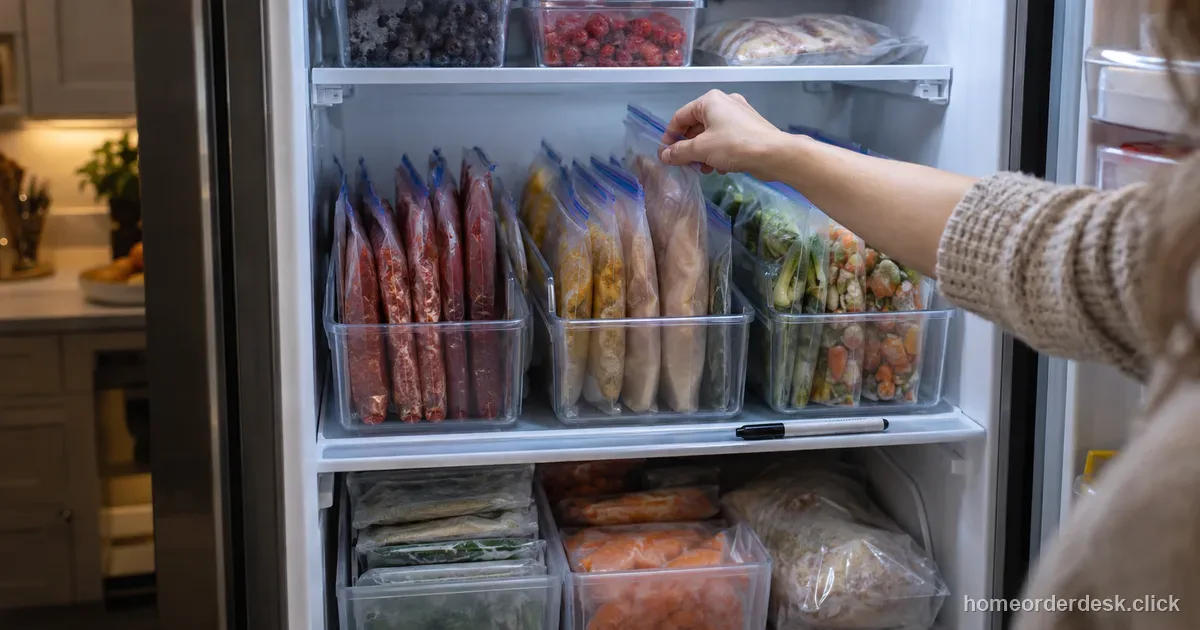
A freezer fails quietly: food is still frozen, but nobody remembers what is underneath the top layer. Organization should preserve safe temperature, make packages identifiable, and rotate older food forward. The best system is simple enough to maintain with cold hands and a door that should not stay open for long.
Verify temperature and the door seal before sorting
FDA guidance recommends keeping a freezer at 0°F (-18°C) or below. Use an appliance thermometer when needed and make sure packages do not prevent the door from sealing. Organization cannot fix a warm freezer, excessive frost, or a failing gasket. Resolve the appliance issue before rearranging food.
Keep the system simple enough to update during normal use.
Label food before it becomes an anonymous block
Write the food name, preparation state, and freezing date on containers or freezer-safe labels. “Soup” is less useful than “chicken soup, cooked, Aug 22.” Flat packages can be filed vertically after freezing if the container allows it, making the label visible without unpacking a pile.
Group food by cooking decision
Separate proteins, prepared meals, vegetables, bread, and baking ingredients, or choose categories that match the household's routine. Keep frequently used breakfast and lunch foods near the opening. Large holiday items can occupy a less convenient zone without interfering with weekday meals.
Use bins as removable drawers, not permanent walls
Open bins can corral small bags and let one category come out briefly. They should not block vents or keep the door open while you search. Measure the interior and account for drawers, shelves, and the movement of a chest-freezer lid before buying organizers. The bin should shorten retrieval, not add another lid to open.
Rotate older packages toward the easiest reach
When new frozen food enters, move older matching items forward. Keep one use-soon basket for partial packages or food that has been frozen the longest. Freezing preserves food, but quality still changes over time, so visibility matters. Rotation also exposes duplicates before another grocery trip.
Give chest freezers a vertical retrieval plan
A chest freezer makes the bottom hard to see. Use sturdy baskets for broad categories and keep a simple inventory list nearby if the volume is large. Do not create so many stacked baskets that retrieving one item requires leaving several others at room temperature for a long search.
Keep raw foods contained even when frozen
Packages can leak before they fully freeze or during thawing. Use intact freezer-safe packaging and keep raw meat from contaminating ready-to-eat frozen foods. Clean leaked juices promptly. Organization should support food safety during the transitions into and out of the freezer, not just when everything is rock solid.
Plan a thawing lane instead of losing food during defrost
When something moves from freezer to refrigerator for thawing, put it in a visible refrigerated zone and contain any drips. Do not move an item to the fridge and immediately forget it. A small whiteboard or meal plan can record what was pulled so the freezer system connects to actual meals.
Use grocery day to audit frozen inventory
Before buying frozen berries, meat, or bread, look in the relevant bin and at the inventory list if you use one. Remove empty boxes and consolidate partial packages only when safe. This short check prevents the freezer from becoming a long-term archive of duplicates that nobody can see.
Defrost excessive ice by the appliance method
If frost buildup is stealing space, follow the freezer manufacturer's defrost procedure rather than chipping ice with a sharp tool. Transfer food safely during the process and clean spills before reorganizing. Repeated heavy frost may signal a door-seal or appliance problem that needs service rather than another basket.
Flatten liquids safely before filing them vertically
Soups, sauces, and cooked grains can sometimes be frozen flat in freezer-safe bags, then stored upright once solid. Follow the bag maker's fill limits and leak guidance, and cool food safely before freezing. Flat packages use space well because the label remains visible, but only if seals are reliable and bags are not punctured by sharp frozen items.
Keep an emergency-power mindset for tightly packed freezers
A full freezer can hold cold well during an outage, but organization should still allow the door to stay closed and important foods to be identified quickly afterward. Keep a thermometer inside and know where high-value or medically important items are located. Do not reorganize during an outage just to improve visibility.
Give ice and frozen treats a bounded quick-access zone
Frequently opened categories such as ice packs, popsicles, or breakfast items can live near the top or door where the model allows it. Limit that zone so loose small items do not spill into other baskets. Quick-access food should be genuinely quick to retrieve, reducing the amount of warm room air that enters while the door stands open.
Use freezer burn as a packaging lesson
If food repeatedly develops dry, pale freezer-burned areas, review packaging rather than only reorganizing shelves. Freezer burn affects quality, not safety, when food has remained properly frozen. Remove excess air where the packaging method allows it and use materials designed for freezing. A visible, well-labeled package still loses quality if it is poorly sealed.
A freezer is organized when you can name what is inside without digging to the bottom. Labels, broad meal categories, older-food rotation, and a safe temperature do more than a complicated grid of containers.
Create one inventory habit for hard-to-see food
Chest freezers and deep bottom drawers hide food even when categories are labeled. Use a simple list on the lid, appliance side, or phone for large proteins, prepared meals, and other items that disappear below the top layer. Update only the categories that are genuinely hard to see; an elaborate item-by-item database is unlikely to survive normal family use. Pair the list with physical zones so you can retrieve an item without unloading the entire freezer. When the written count and the actual contents stop matching, simplify the system rather than adding more tracking detail. For foods that look alike once frozen, such as sauces, stocks, and cooked grains, the label should identify the contents before frost or opaque packaging makes visual recognition impossible.
- Before freezingLabel the food, preparation state, and date while the package is easy to identify.
- When new food entersMove older matching packages forward and place hard-to-see stock in a broad category bin.
- When food thawsMove it to a visible refrigerator zone and note it on the meal plan or small list.
- Before grocery dayCheck the relevant bin or inventory list, remove empty boxes, and avoid buying hidden duplicates.
Update physical zones and any short inventory list as food moves in and out.
Frequently asked questions
How should freezer packages be labeled?
Use a readable item name and date, and add portions or reheating notes when they prevent mystery packages later.
Why group freezer food by meal type?
Zones for proteins, vegetables, breakfasts, prepared meals, or ingredients make inventory faster and reduce the need to unload the freezer to find one item.
Can a freezer be packed completely full?
A full freezer can be efficient, but do not block vents or prevent the appliance from circulating cold air as designed. Follow the manufacturer guidance for your model.
What is the easiest way to rotate frozen food?
Place new packages behind or beneath older equivalents and review one category before shopping. Rotation should happen during normal use, not only during a yearly cleanout.