How to Organize Food Storage Containers and Lids
End the container-and-lid scramble by keeping complete sets, choosing a workable nesting method, separating specialty pieces, and limiting orphan lids.
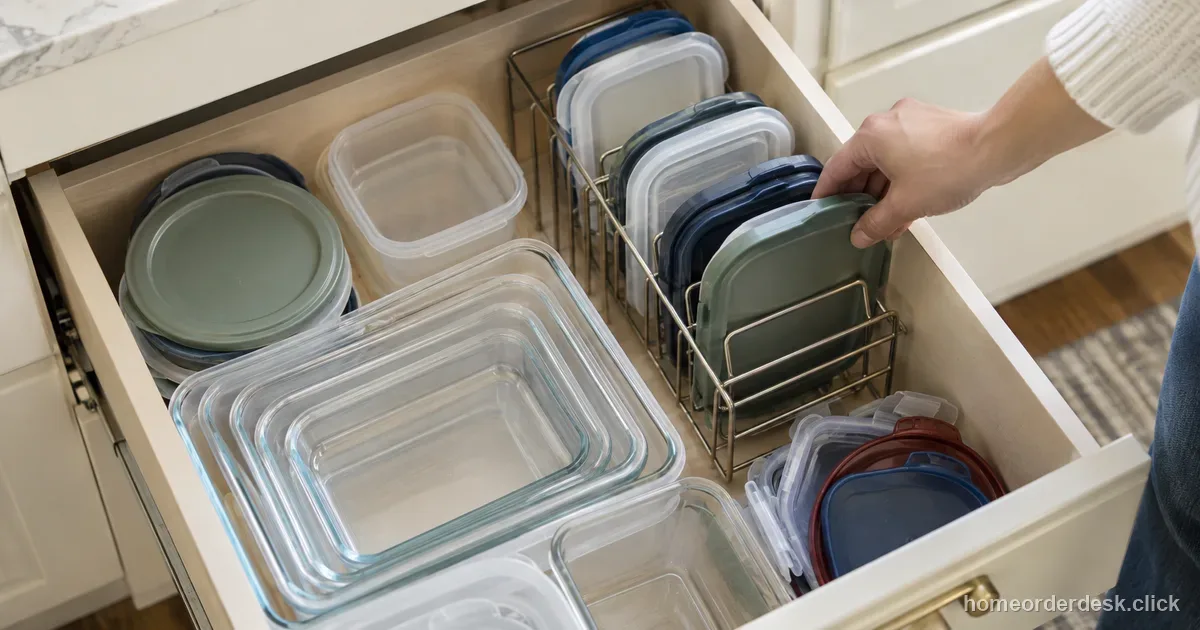
Food-storage containers become chaotic because two shapes have to stay matched: the container and its lid. The practical fix is to reduce the number of incompatible systems, keep lids visible instead of buried, and give the whole category a firm boundary. If a base has no lid or a lid has no base after a full matching session, it is not useful storage inventory.
Match every base and lid before buying a rack
Empty the container area onto a table and pair each base with the lid that actually fits. Recycle or discard damaged pieces according to local rules, and remove takeout containers the household never reuses. Do not keep mystery lids for months on the theory that their partners may appear. The matching session tells you the real inventory.
Group by shape and compatible system
Nest square containers with square containers and round with round. If several brands use near-identical sizes but incompatible lids, consider standardizing gradually as pieces wear out. The goal is not brand loyalty; it is reducing the number of visual decisions when packing leftovers and preventing a drawer full of almost-fitting lids.
Store lids vertically when the drawer permits it
A narrow bin, sturdy divider, or plate rack can keep lids upright and visible. Arrange them by size so one can be pulled without lifting a pile. Test the organizer with the drawer closed and with the heaviest lids inside. An over-tall rack that catches the shelf or tips forward is not an improvement.
| Nested bases, separate lids | Lids attached to bases | |
|---|---|---|
| Main benefit | Uses less space | Keeps each pair matched |
| What to check | File lids where they stay visible | Do not snap damp containers closed |
| Best fit | When the drawer can hold shallow base stacks and a vertical lid lane | When matching time matters more and the cabinet avoids jams |
Limit how deeply containers nest
A little nesting saves space, but a tower of ten tight plastic containers can require both hands and a countertop just to retrieve one. Create two or three shallow stacks by size. Glass containers are heavier and may be safer in a lower drawer or cabinet where they do not need to be lifted overhead.
Give the category one physical boundary
Choose one drawer, shelf, or cabinet as the home for everyday food containers. When clean pieces no longer fit without force, remove cracked, duplicated, or rarely used sizes before expanding into another cabinet. A fixed boundary prevents the category from slowly occupying every spare shelf in the kitchen.
Separate lunch, freezer, and party pieces from daily leftovers
Lunch boxes, freezer cubes, canning jars, and oversized party containers may have legitimate uses but do not need prime access every day. Keep the small set used for leftovers and lunches easiest to reach. Put specialty sizes in a secondary location with their matching parts so they do not interrupt daily retrieval.
Store glass and plastic according to weight and heat use
Heavy glass is best where it can be lifted safely, while plastic pieces should be inspected for warping, cracks, and manufacturer restrictions on microwaving or dishwashing. Do not keep a warped lid merely because it can be forced onto a base. Condition and safe use matter as much as organizational fit.
Use an orphan-parts rule after each breakage
When a container cracks, decide immediately whether its lid still has another compatible base. When a lid warps, check whether the container remains useful. This prevents the system from accumulating unmatched parts after ordinary wear. The rule is simple: broken pair, immediate rematch decision.
Test the drawer with a normal leftover night
After reorganizing, pack several different leftovers without staging the process. Can you find a base and matching lid in one reach? Can a clean container return without rebuilding the stacks? If the answer is no, adjust the stack depth or lid storage before buying a more elaborate insert.
A drawer that explodes on opening points to compression, not just clutter
If one pulled lid releases a pile of containers, match every piece, remove orphans, create shallow base stacks, and place lids upright along one side. Move heavy glass lower if needed. Then watch which size is always missing during a week of meal prep; future replacement purchases should fill that real gap instead of adding another random set.
Keep microwave and freezer compatibility visible
If some containers are freezer-safe but not microwave-safe, or lids have different venting instructions, preserve that information. A small label or keeping manufacturer markings visible prevents someone from choosing a container purely because it fits. Safe use matters more than a perfectly standardized drawer.
Do not store lids snapped tightly on damp containers
After washing, let containers and lids dry fully before nesting or closing them for storage. Trapped moisture can create odor and make a clean cabinet feel musty. Store pieces loosely or separately until dry, then return them to the system. Organization should support the dishwashing cycle rather than interrupt it.
Cull giveaway and takeout containers on a schedule
Disposable or restaurant containers accumulate because each one seems useful. Set a modest limit for the few sizes you actually reuse and recycle or discard the rest according to local rules. If the stack expands every month, the problem is not the drawer layout; it is incoming volume with no exit rule.
Container storage is organized when a person can choose a base and the correct lid in one reach. That is a clearer success test than how perfectly nested the stack looks with the drawer open.
Specialty containers should justify their footprint
Very large party containers, tiny sauce cups, meal-prep sets, glass baking dishes with lids, and freezer-specific boxes all solve different jobs. Keeping them together as one generic category can make daily containers hard to reach. Separate specialty pieces that are used only for batch cooking, holidays, or lunches, and store them according to frequency. If a specialty piece has not been used through the season or event it was meant for, reconsider whether it deserves permanent cabinet space. The goal is not to own only one container type; it is to keep the high-frequency sets accessible without a tower of rare pieces falling forward. If one family member packs lunches every day, let that recurring task determine where the most-used sizes live; a system optimized for occasional leftovers can still be frustrating when daily containers are buried.
Frequently asked questions
What should I do with containers that have no matching lid?
Give the household one short matching session, then recycle or repurpose unmatched pieces according to local options instead of keeping permanent “maybe” lids.
Is it better to store lids on or off containers?
Either can work. Nesting bodies with lids filed separately saves space; keeping lids attached saves matching time. Choose the method your cabinet can support without jams.
How many food containers should I keep?
Keep enough for real leftovers, lunches, and freezer use plus a modest buffer. If clean containers never return to the cabinet because it is full, the category is oversized.
How do I stop the cabinet from becoming messy again?
Return each clean container only if its matching lid still exists, and clear cracked or badly warped pieces during normal unloading rather than waiting for a major purge.