How to Organize a Pantry So You Can See What You Own
Organize a pantry for stock rotation rather than display perfection, keeping dates and duplicates visible while protecting open packages and heavy items.
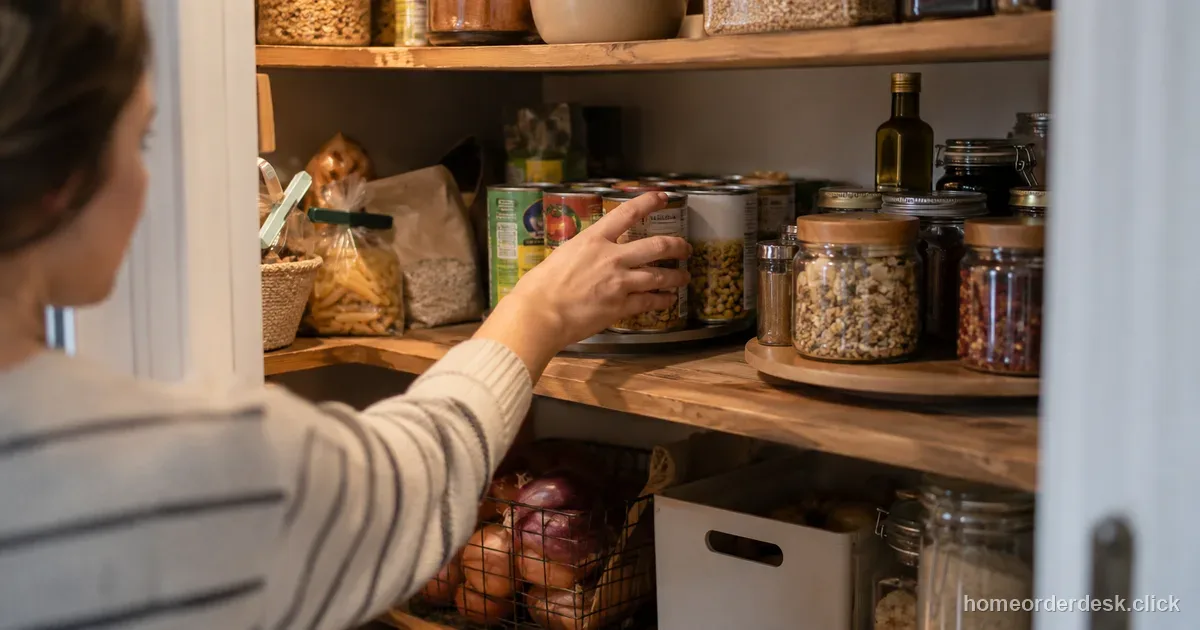
A pantry becomes hard to use when shelf depth hides duplicates and opened packages are mixed with unopened back-stock. The fix is not to line every shelf with identical bins. It is to make inventory visible, group food by how it is cooked, and give older or opened food the shortest path to someone's hand.
Pull forward duplicates before you buy containers
Work shelf by shelf and group identical or closely related foods on the counter. Put opened flour beside unopened flour, canned tomatoes together, and snack refills with the active snack supply. This reveals whether the pantry has a storage problem or a purchasing problem. Set aside damaged, leaking, or pest-affected packages before planning shelves. Do not treat every printed date as a safety deadline; check the product label and food-safety guidance, including any special use-by directions for infant formula.
Build zones around meals and cooking jobs
Breakfast, baking, dinner staples, snacks, beverages, and back-stock are useful categories because they match household decisions. A person making pancakes should not search three shelves for flour, leavening, and syrup. Keep ingredients that are often used together within the same visual zone while still respecting product-specific storage instructions.
Use shelf depth intentionally
Deep shelves are where duplicates vanish. Put active or opened packages toward the front and unopened reserve stock behind them, or use a shallow pull-out bin that keeps one category together. Avoid very deep opaque containers that simply replace a dark shelf with a dark box. Labels should identify a real category, not become decoration.
Keep heavy jars and bulk cans in a safe lifting range
Large jars, bulk cans, and small appliances are awkward overhead. Reserve high shelves for lighter back-stock or rarely used paper goods. Dense items are easier to manage between knee and shoulder height. If a household member needs a step stool, store a stable one safely rather than encouraging climbing on a chair.
Create a firm boundary between food and chemicals
Do not store cleaning chemicals where they can leak onto food or be mistaken for ingredients. Keep products in original labeled containers and use child-resistant storage appropriate for the household. Pest-control products, batteries, and household repair chemicals sometimes drift into pantries; give them another safe location instead of squeezing them beside cereal.
Store cleaning and pest-control products in original labeled containers, away from food. Choose child-resistant storage appropriate for the household.
Use a first-opened, first-visible rule
When a new package enters, check for an opened one before starting it. Move the opened package to the front and the unopened one behind. For foods that need timely use under their label or storage guidance, rotate older stock forward. This habit is more important than decanting every dry good into a matching jar and then forgetting its date.
| Opened package | Sealed backup | |
|---|---|---|
| Where it goes | Front, where it is easy to use | Behind the active package or in the back-stock lane |
| Main goal | Finish one before starting another and protect it from humidity or pests | Keep extras visible without creating hidden reserves |
| Container choice | Seal in a food-safe, washable container when that improves use | Keep useful product and date information with the package |
Decant only when the container improves use
Clear containers can help with frequently used dry goods when they are food-safe, easy to clean, and large enough for the full package. Keep cooking directions, allergen information, lot codes, or expiration details when those matter. Do not decant simply for appearance if the household then loses important package information or creates partial bags elsewhere.
Create one back-stock limit instead of many hidden reserves
Choose a single shelf or lane for unopened extras. When that lane is full, the answer is not a second secret reserve behind appliances. Use what is already open and adjust the shopping list. A visible back-stock boundary prevents repeated purchases of the same ingredient while making bulk buying a deliberate choice rather than accidental duplication.
Let the grocery list audit the system
If an item appears on the shopping list while an unopened duplicate sits at the back of the shelf, visibility has failed. Before shopping, scan each zone and update the list. If duplicate buying continues despite clear sight lines, change the purchasing routine rather than expanding the pantry system.
A rice-and-flour example shows the rotation logic
If you find three bags of rice and two half-used flours, keep opened packages forward and unopened rice in the defined back-stock lane. Store the weekly flour with baking ingredients and specialty flour farther back. Combine products only when they are truly identical and safe to combine, and preserve useful label information when original packaging is discarded.
To carry this approach into the rest of the kitchen and beyond, Room by Room Home works through the house one space at a time.
Protect opened dry goods from pests and humidity
Flour, grains, cereal, nuts, and pet food may benefit from sealed food-safe containers once packages are open, especially in humid or pest-prone homes. Choose containers that can be washed and dried fully. If an infestation is found, follow pest-control and food-safety guidance rather than simply transferring questionable food into a nicer jar.
Give special-diet foods an obvious boundary
Allergen-free, medical-diet, or household-member-specific foods may need a clearly separated zone so the wrong product is not grabbed during a rushed meal. Use labels that communicate the restriction plainly. Organization cannot prevent every cross-contact risk, so follow medical and food-allergy guidance when separation is safety-critical.
Keep a small pantry inventory only for true back-stock
A written list is useful for bulk cans, emergency food, or items stored out of sight, but it becomes burdensome if every snack must be logged. Track only categories that are hard to see or easy to overbuy. The system should reduce duplicate purchasing without turning grocery storage into a bookkeeping project.
A good pantry makes “What do we already have?” answerable in seconds. Visible open stock, deliberate back-stock, safe separation, and meal-based zones do more for that goal than perfectly matched containers.
Open packages need a different rule from sealed backups
Once flour, cereal, snacks, rice, or baking ingredients are opened, the package may need better closure, pest protection, or a more visible location than sealed stock. Group opened items ahead of backups so the household finishes one package before starting another. If you decant, transfer the product name, relevant date, cooking directions, and allergen information when needed. Do not pour a new batch onto an old unknown batch simply to make a container look full. This small distinction between active and backup food improves rotation more than arranging every pantry shelf by package color or container style.
Frequently asked questions
How should pantry duplicates be arranged?
Keep like items together and put the older package in front or on top so it is used first. A backup only helps if you can see that it exists.
Do pantry foods need clear containers?
No. Decant only when it improves sealing, access, or quantity visibility; keep cooking directions and allergen information available when they matter.
Where should heavy pantry items go?
Store large cans, bulk liquids, and heavy appliances on lower sturdy shelves rather than above head height.
What should I check before making a pantry shopping list?
Scan each category for open packages, duplicates, and food nearing its best-use window. The inventory check should happen where the food is stored, not from memory.