How to Organize Kitchen Cabinets Without Buying a Full System
Arrange kitchen cabinets around prep, cooking, serving, and dishwasher flow, keeping heavy pieces low and measuring before buying organizers.
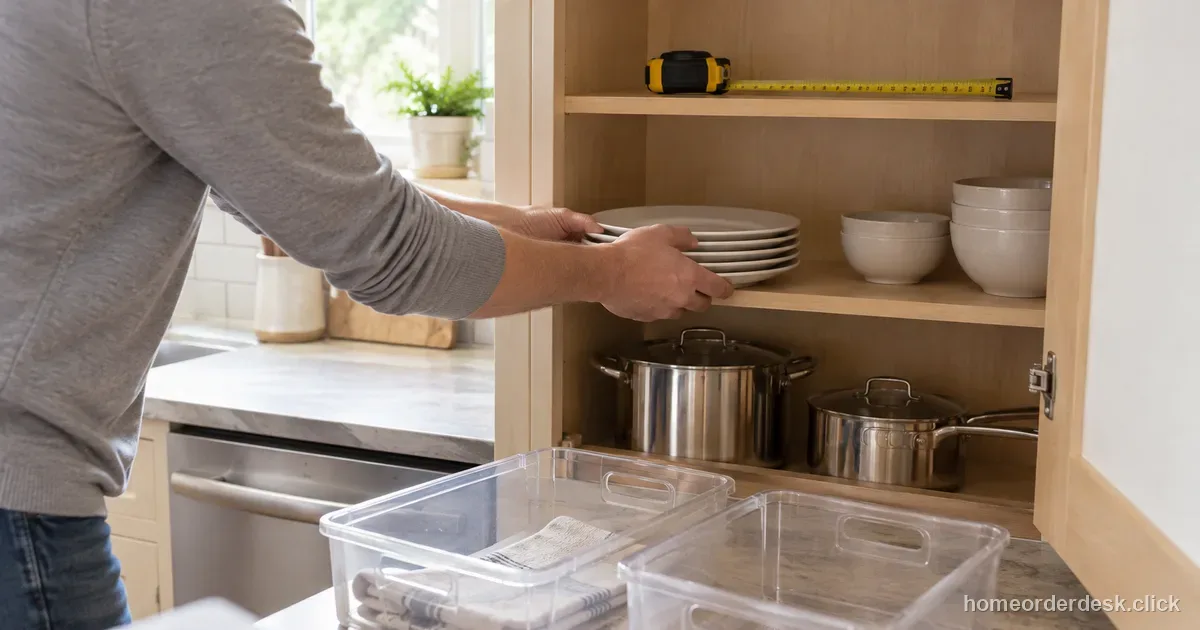
Kitchen cabinets work best when they mirror the sequence of cooking and cleanup rather than the shape of a storage catalog. The useful first question is not which organizer to buy, but what you reach for at each cabinet and what has to move before you can get it. A cabinet holding dinner plates, mixing bowls, medicine, and appliance manuals is four jobs competing for one shelf.
Map cabinet doors to actual kitchen tasks
Stand at the sink, prep counter, range, coffee area, and table. Notice which doors you open during breakfast and dinner. Everyday dishes belong near where they are put away and used; baking tools belong near the baking workspace; occasional serving pieces can accept a higher or less convenient shelf. This task map is more useful than dividing shelves evenly.
Empty one cabinet instead of detonating the whole kitchen
Choose the cabinet with the most daily friction and remove only its contents. Wipe the shelf, discard expired food or broken items, and move obvious outsiders to their real homes. Working one cabinet at a time keeps the kitchen functional and makes it easier to judge whether the new layout actually improved a task instead of merely changing the scenery.
- Map the taskNotice which cabinet you open during a normal cooking or cleanup task.
- Reset one cabinetEmpty the highest-friction cabinet, wipe the shelf, and move obvious outsiders home.
- Measure the real fitCheck shelf width, depth, hinge clearance, and the tallest frequent item before choosing a riser or divider.
- Run an ordinary mealNotice what returns easily and what lands on the counter; adjust only the category that causes friction.
- Buy only to solve a measured problemChoose the smallest organizer that improves access without taking more space than it creates.
Use one cabinet to test the task path and keep the kitchen usable while you adjust it.
Adjust shelf height around the tallest frequent item
Empty air above short dishes is wasted while tall bottles can force an entire category elsewhere. Before buying risers, measure shelf width, depth, hinge clearance, and the height of your normal stack. Leave enough vertical room to lift an item out without scraping the shelf above. Moving an adjustable shelf to fit the tallest frequent item may solve the access problem without another organizer.
Keep dense cookware below shoulder height
Dutch ovens, cast-iron pans, and stacks of ceramic bakeware are safer on lower shelves or deep drawers. Reserve high cabinets for lighter, infrequently used pieces. If lifting a pot requires one hand to move another object while the other hand supports the weight, the cabinet is overfilled even if the door still closes.
Accessible space should go to the items used most often and moved most safely.
Separate food, cleaners, and medicines
Food should not share a shelf with household cleaners, and medicines deserve storage appropriate to their label and the household rather than a random spice cabinet. Under-sink chemicals need their own safety logic. In homes with children or pets, use poison-prevention guidance and child-resistant storage where appropriate instead of relying on height alone.
Give lids, trays, and cutting boards a vertical lane
Flat items stored horizontally under heavier pieces create recurring frustration. Pot lids, sheet pans, cutting boards, and trays may work better vertically in a sturdy divider if the cabinet permits it. Test the divider with the actual load. A weak rack that tips when one lid is pulled creates more friction than a simple controlled stack.
Use upper corners for truly low-frequency items
The deepest upper cabinet corner is not a good home for a mug used every morning. Put holiday platters, backup serving bowls, or rarely used appliances there instead, and label opaque bins if needed. Prime storage should be assigned by frequency, not by trying to give every category the same amount of accessible shelf space.
Run a weeknight test without trying to be tidy
Cook one normal meal without consciously following the new system. Notice where you reach, where a door blocks another door, and which items land on the counter instead of returning to storage. If plates return easily but mixing bowls migrate, adjust that bowl shelf alone. A useful layout survives rushed cleanup, not just a staged photo.
Buy organizers only for a measured problem
A turntable can help bottles in a deep corner, a shelf riser can split vertical space, and a shallow bin can corral packets. None of those products fixes too much inventory or an inconvenient location. Measure first, assign the category, then choose the smallest organizer that solves a specific access problem without stealing more space than it creates.
Leave a little air in the busiest cabinet
A cabinet packed to exact capacity fails the next time clean dishes return from the dishwasher or one new pan enters the home. Leave enough breathing room to put items away with one hand. If that margin disappears, compare duplicates and low-use pieces before expanding storage. Capacity should support normal cycles, not only the moment after a perfect reset.
Treat awkward corner cabinets as a separate retrieval problem
A blind corner cabinet can swallow appliances and serving pieces because items at the back are invisible. Keep only low-frequency categories there or use a measured pullout if the cabinet truly needs one. Do not stack everyday bowls in front of seasonal equipment and then call the entire corner organized; the front zone should remain easy to use.
Use cabinet labels sparingly
Labels help when several people share the kitchen or when categories are not visually obvious, but labeling every shelf can add noise. Label back-stock, specialty baking tools, or a household member's dedicated area when it prevents confusion. Everyday plates and glasses rarely need words. The best label reduces a decision rather than decorating a container.
Review one cabinet when a new appliance enters
A new blender or pressure cooker changes both volume and workflow. Decide which older appliance, attachment, or serving piece may need to move before squeezing the new item onto a shelf. This keeps cabinet capacity tied to actual use and prevents every purchase from pushing something else into an inconvenient overflow location.
A cabinet is organized when cooking requires fewer unnecessary moves and cleanup has an obvious return path. The goal is predictable access to the things the household actually uses, not equal spacing between objects.
Use the dishwasher as a map for cabinet placement
A simple way to test cabinet logic is to unload one normal dishwasher load and count how many steps or awkward reaches are required. Everyday plates, bowls, glasses, and food-storage pieces should return with minimal crossing of the kitchen. Items used only for holidays or special baking can accept less convenient shelves. This test often reveals that the cabinet problem is not insufficient storage but poor assignment. Before buying pullouts or shelf risers, move one category to a more logical cabinet for a week. If unloading becomes easier and counters stay clearer, the new location has earned its place without any new hardware.
Frequently asked questions
Which cabinets should hold everyday dishes?
Put them near the dishwasher or dish-drying area if that shortens the return path. The best cabinet is determined by the work sequence, not by symmetry.
Where should heavy cookware go?
Use a lower, sturdy shelf or deep drawer so lifting is controlled and heavy pieces are not pulled down from overhead.
Do shelf risers and bins help every cabinet?
Only after the cabinet categories and measurements are clear. Add a riser when it solves inaccessible vertical space, not simply because an organizer fits.
How often should I reset kitchen cabinets?
There is no fixed reset schedule. Revisit a cabinet when daily items become hard to reach, a new appliance changes capacity, or items stop returning easily after meals.