How to Organize Under the Kitchen Sink Safely
Use the under-sink cabinet without hiding leaks or mixing incompatible products by protecting plumbing access and keeping chemicals labeled and contained.
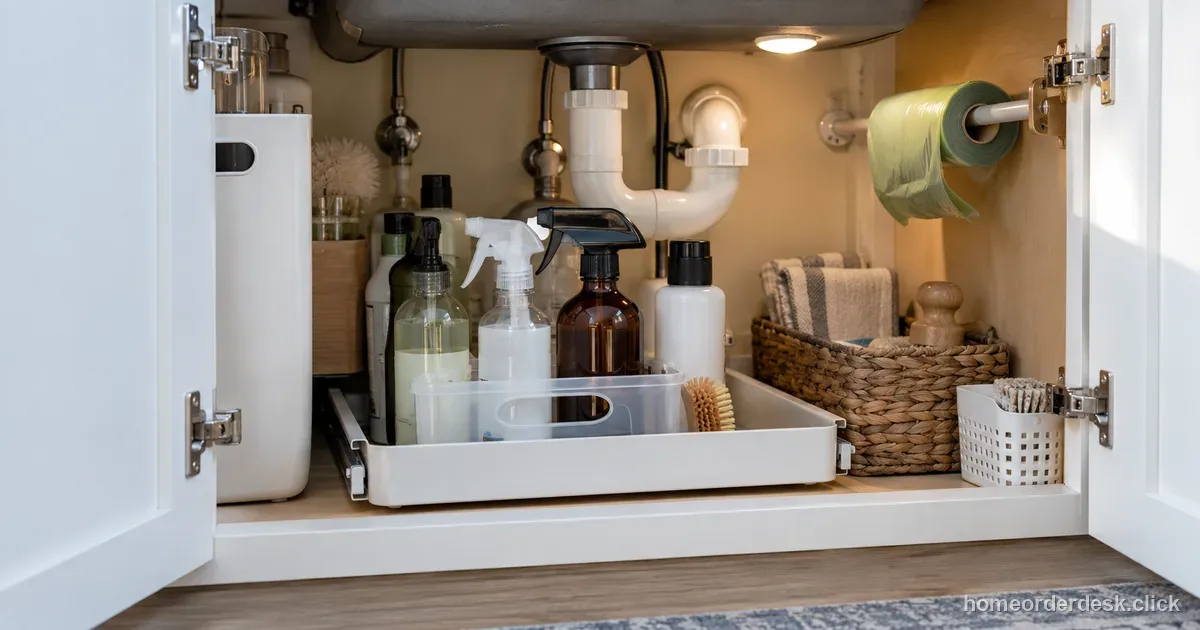
The cabinet under a kitchen sink is plumbing space first and storage space second. Pipes, shutoff valves, a disposal body, and leak risk make it a poor place for uncontrolled piles. Organization here should preserve access to plumbing, contain liquids, separate hazardous products from food, and keep child safety in mind.
Empty the cabinet and inspect for active moisture
Remove everything and look for drips, swollen particleboard, mildew, rust, or a damp cabinet floor. Run the faucet and disposal if present while checking connections. Fix a leak before installing liners or bins that would hide the next drip. A dry cabinet is the foundation of the entire storage plan.
Keep shutoff valves and service areas reachable
Do not pack bins tightly around supply valves, the P-trap, disposal reset area, or electrical connections. A plumber should not have to empty twenty bottles during an emergency. Leave a clear hand path to the shutoffs and enough sight line to notice whether a fitting is leaking.
- Inspect for moistureCheck for drips, swelling, mildew, rust, or a damp floor before placing a liner or bin.
- Keep service access clearLeave a hand path and sight line to shutoff valves, connections, the disposal, and filters.
- Separate what belongs elsewhereMove food-contact items and paper goods to a dry cabinet; keep chemicals in original labeled containers.
- Contain compatible daily-use bottlesUse a removable leak-resistant tray only where it does not block plumbing or hide the cabinet floor.
- Leave backup stock outKeep only products used at the sink; store refills elsewhere according to their labels.
Solve plumbing problems before adding storage that could hide them.
Contain liquids without pretending containment makes them compatible
Place compatible cleaning bottles upright in a leak-resistant tray or caddy. Keep products in original labeled containers. A tray can prevent a small bottle leak from soaking the cabinet floor, but it does not make bleach, ammonia, acids, or other reactive products safe to mix or store carelessly together.
A leak-resistant tray can catch a spill, but it does not make bleach, ammonia, acids, or other reactive products safe to mix or store carelessly together.
Separate reactive cleaning products
Read product labels and avoid storage that encourages accidental mixing. Never decant cleaner into food jars or beverage bottles. If children live in the home, follow poison-prevention guidance and use child-resistant locks where appropriate. Height under a sink is not a safety strategy because the cabinet is already low.
Move food-contact items to a dry cabinet
Dish towels, reusable food containers, pet-food scoops, and paper goods do not benefit from living beneath plumbing and chemical bottles. Give them a dry drawer or cabinet. The under-sink area should serve tasks that genuinely happen at the sink rather than becoming miscellaneous kitchen overflow.
Use the cabinet door only after checking clearances
A shallow door rack can hold lightweight items if it clears pipes and closes without striking bottles. Do not mount something heavy that stresses hinges or blocks plumbing access. Measure the door swing, disposal protrusion, and bottle heights before drilling or applying adhesive.
Keep backup cleaners somewhere safer and less crowded
The under-sink cabinet does not need three unopened refills of every product. Store daily-use items there and move true back-stock to a secure location that meets label requirements. Fewer bottles make leaks easier to see and reduce the chance that incompatible chemicals end up pressed together.
Put leak detection ahead of decorative liners
A waterproof tray or removable mat can protect the cabinet floor, but avoid a setup that traps water underneath or hides the wood. Choose something that can be lifted for inspection. A slow drip discovered early is more valuable than a perfectly coordinated liner that conceals swelling until the cabinet is damaged.
A slow-leak example shows the right order
Remove all supplies, repair the leak, and let the cabinet dry completely. Return only the few cleaners used at the sink in a contained tray, move backup bottles elsewhere, and leave shutoff valves visible. A small caddy can hold dishwashing tools if those tools stay separate from chemical spills.
Make leak checking part of replenishment
Whenever a bottle is replaced or once a month, touch the cabinet floor and inspect fittings. Look behind bins instead of assuming a dry front edge means a dry cabinet. Fast leak detection is the best maintenance habit in this space, and it costs nothing in storage capacity.
Keep frequently used dishwashing tools on the dry side
A sponge caddy, brush, or dishwasher tablets may belong near the sink, but wet tools should drain rather than sit inside a closed chemical tray. Follow product labels for dishwasher detergent storage because concentrated pods and powders can be hazardous to children. Separate damp cleaning tools from backup chemical bottles when practical.
Do not block a garbage disposal with storage
If the sink has a disposal, preserve access to its reset button, electrical connection, and plumbing. A bin wedged against the disposal body may hide leaks or make service difficult. Keep the area around moving or electrical components clear according to the appliance manual rather than treating every empty inch as storage.
Use the cabinet floor as an early-warning surface
A bright removable tray or light-colored mat can make small drips easier to see, but inspect beneath it periodically. Dark felt liners or permanently glued coverings can conceal moisture. The floor is valuable because it tells you about plumbing health; an organizing product should not erase that signal.
Move rags that are wet with strong chemicals out safely
Do not leave solvent- or chemical-soaked cloths crumpled under the sink. Follow the cleaner label for rinsing or disposal and keep incompatible residues separate. Some products have specific fire or ventilation precautions. A tidy cabinet is not the right goal if contaminated materials are being stored unsafely inside it.
Under-sink organization succeeds when a leak is easy to see, a shutoff is easy to reach, and nobody has to sort through incompatible chemical bottles to find a basic cleaning tool.
Build the layout around the plumbing, not around rectangular bins
The disposal body, trap, supply lines, filter cartridges, and shutoff valves create irregular space. Forcing one large organizer around them can make a leak difficult to see or a valve hard to reach. Start with the plumbing footprint and leave a clear hand path to shutoffs. A shallow removable tray can hold daily dishwashing supplies on one side while vertical or narrow storage uses safer open space. Keep paper products and absorbent bulk stock elsewhere so a small leak does not ruin them. If you notice corrosion, damp cabinet material, or recurring drips during organization, stop and solve the plumbing issue before optimizing storage. Take a quick photo of the clear plumbing layout before loading the cabinet so future leaks, filter changes, or shutoff access can be compared against a known unobstructed arrangement.
Frequently asked questions
What must remain accessible under the kitchen sink?
Shutoff valves, disposal or filter components, and plumbing connections should not be buried behind stacked bins.
Can household cleaners be decanted into nicer bottles?
Keep hazardous products in their original labeled containers unless the manufacturer explicitly directs otherwise. Labels carry use, warning, and first-aid information.
How should I protect the cabinet from small leaks?
A removable tray can catch drips and make moisture visible, but it should not hide an active plumbing problem. Fix leaks rather than organizing around them.
What belongs somewhere else?
Bulk paper goods, food, medicines, and unrelated overflow are usually better stored away from plumbing and household chemicals, especially in homes with children or pets.