How to Organize a Small Bathroom With Almost No Counter Space
Protect scarce bathroom counter space by separating daily grooming from backups and storing medicines, cleaners, towels, and electrical tools safely.
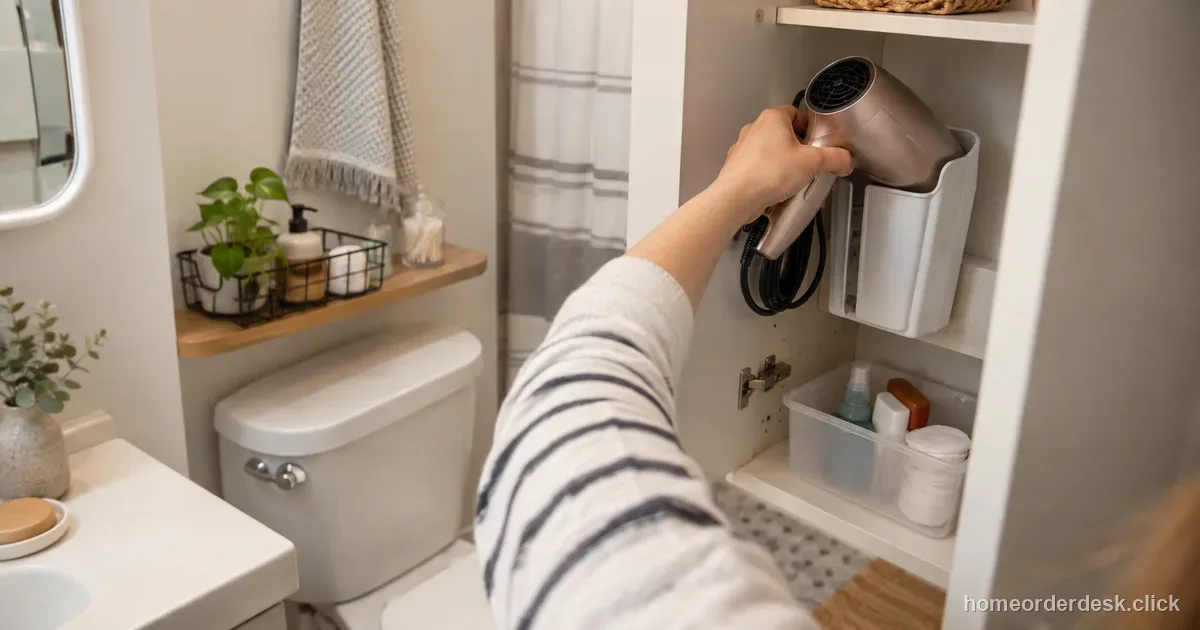
A small bathroom has very little tolerance for objects without a defined job. Counter space needs to stay available for washing and grooming, medicines and chemicals need appropriate storage, and damp towels need room to dry. The most useful plan separates daily grooming from backup stock, then uses shallow vertical storage without crowding ventilation, plumbing, or electrical areas.
Clear the counter down to true daily use
Remove duplicates, expired cosmetics, empty packaging, rarely used tools, and products that belong in another room. Keep only items used during a normal morning or evening routine. A small tray can define that daily set, but the tray should not become a container for every bottle in the house.
Keep prime counter and drawer space for the items used in a normal routine.
Move backup stock away from prime space
Extra toilet paper, unopened shampoo, bulk soap, and guest supplies do not need the same access as a toothbrush. Use a high shelf, hallway linen storage, or a labeled cabinet elsewhere if the bathroom cannot hold them safely. Prime bathroom storage should support today's routine.
Use shallow wall storage without creating a hazard
A medicine cabinet, narrow shelf, or over-toilet unit can add capacity, but it must be mounted according to the manufacturer and clear of head space, doors, vents, and electrical fixtures. In a rental, follow lease rules for anchors. Heavy bottles belong lower than lightweight towels. Keep open shelves to a few items that are attractive or need to dry; use a closed cabinet or drawer for mixed daily products that otherwise make a small room feel visually busy.
Give wet towels an actual drying path
Hooks placed too close together can keep towels damp. Use enough spacing or a bar so air reaches the fabric, and run the exhaust fan to manage bathroom humidity. A storage basket full of damp towels is an odor and mildew problem disguised as organization.
Keep medicines and cleaners out of casual reach
Bathroom humidity can be unsuitable for some medicines, and children or pets add safety concerns. Follow medication labels for storage conditions and poison-prevention guidance for cleaners. Do not put bleach, drain cleaner, and personal-care products together in an unlabeled open bin.
Use drawer dividers only after categories are reduced
Group dental care, hair tools, skin care, and first-aid supplies by routine. In a shared bathroom, give each regular user a small assigned section or removable caddy so one person’s products do not bury another’s daily items. A few adjustable dividers can prevent small tubes from rolling together, but custom inserts are unnecessary if half the drawer is expired product. Make the categories fit first, then divide the space.
Keep electrical grooming tools dry and away from the sink edge
Hair dryers, trimmers, and heated tools need storage that respects their manufacturer instructions and electrical safety. Let hot tools cool before enclosed storage. Route cords so they do not fall into water or create a trip hazard, and do not overload an organizer mounted on a thin cabinet door.
Use vertical space above the toilet carefully
An over-toilet shelf can hold light towels or backup paper when mounted securely and clear of the tank lid. Avoid storing heavy glass bottles where they could fall. Leave enough room for plumbing service and do not block a window or exhaust vent simply to gain one more shelf.
Create one restock point instead of hiding extras everywhere
Choose a single backup basket or cabinet for unopened toiletries. Before buying more, check that location. This prevents one shampoo bottle under the sink, another behind towels, and a third in a bedroom closet from becoming accidental overstock.
Check the backup zone when you restock
Small bathrooms become crowded through replenishment. Before buying another bottle, check the single backup location and compare it with what is already open. Follow product labels for expiration and disposal; wipe leaks promptly and return categories to their space limit. Tying this check to shopping or restocking keeps it useful without adding an arbitrary calendar task.
Match drawer height to product geometry
Short jars, tall tubes, toothbrush heads, and hair accessories waste space when they are all forced into the same deep drawer. Stand tall products only where the drawer can close without catching them and use shallow trays for small items that otherwise disappear underneath. Measure the inside height before buying inserts. A divider that steals half an inch can make an entire row of bottles unusable.
Keep toilet-cleaning tools physically apart from grooming supplies
A toilet brush, plunger, and toilet cleaner should not share an open basket with towels, cosmetics, or dental care. Give those tools a contained, ventilated location that can be cleaned and that follows product safety instructions. This separation is both hygienic and practical: nobody should have to move a chemical bottle or toilet tool to reach a hairbrush.
| Personal care | Toilet-cleaning tools | |
|---|---|---|
| Examples | Dental care, hair tools, skin care, and first aid | Toilet brush, plunger, and toilet cleaner |
| Storage | Dry drawer or shelf with daily and backup zones separated | Contained, ventilated place that can be cleaned |
| Keep separate from | Toilet tools and chemical bottles | Towels, cosmetics, and dental care |
Use removable bins to make cleaning the room easier
Small bathrooms collect dust, hair, and product drips quickly. A few removable trays or bins can let you lift one category, wipe the shelf or drawer, and return it without handling ten bottles separately. Choose containers with smooth surfaces that can be washed and dried. Avoid elaborate fixed inserts in areas prone to leaks because they can hide residue and make maintenance slower.
A small bathroom stays orderly when storage respects product shape, separates dirty cleaning equipment from personal care, and can be lifted out quickly enough that the room itself remains easy to clean.
Keep guest supplies bounded and easy to reset
A few spare towels, a sealed toothbrush, and travel-size basics can live in one small guest bin instead of spreading through prime daily storage. If the bathroom cannot spare that space, use a hallway linen closet. Refill the bin before a visit, then return unused items to the same home; avoid keeping hotel-style backup stock on the counter year-round. Medicines follow their own labels and storage conditions rather than joining the bathroom guest kit. This preserves hospitality without making occasional-use items compete with the household's daily routine.
Frequently asked questions
What should stay on a tiny bathroom counter?
Only the products and tools used in a normal daily routine. Backups and occasional supplies should move to a cabinet, shelf, or another dry storage area.
Is the bathroom a good place to store medicine?
Often not. FDA notes that damp bathroom cabinets can reduce the effectiveness of some medicines; follow each medicine’s label and choose a cool, dry location when directed.
How should cleaners be stored in a family bathroom?
Keep them in original labeled containers and, where children are present, use appropriate locks or latches and keep hazardous products out of reach.
What is the most useful vertical-storage rule in a small bathroom?
Use shallow, securely mounted storage that does not block vents, doors, lights, or electrical fixtures, and keep heavy bottles lower than lightweight towels or paper goods.