How to Declutter Clothes Without Regretting Everything Later
Reduce an overfull wardrobe using fit, condition, duplicates, and real use as evidence while protecting legitimate special-purpose clothing.
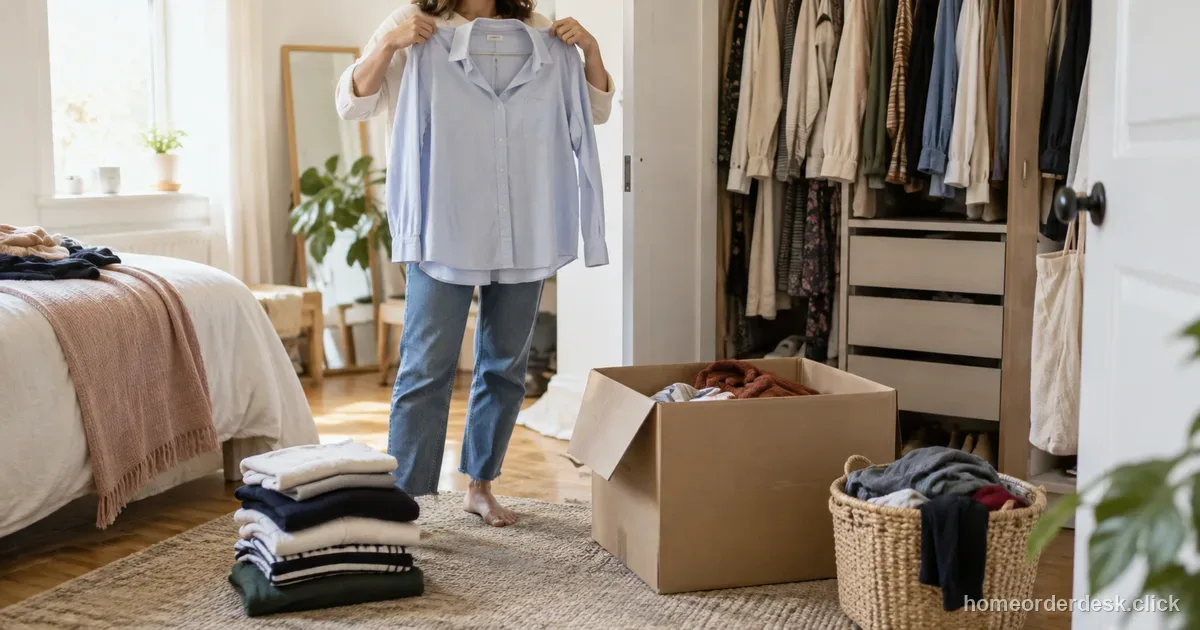
Clothing decluttering goes badly when every garment is judged by a single emotional question in one exhausting session. A slower method uses fit, condition, frequency, duplicates, and real wardrobe needs. The aim is to create enough space to see and maintain the clothes you use while avoiding impulsive disposal of pieces that serve a legitimate but infrequent purpose.
Start with one clothing category
Choose T-shirts, jeans, work trousers, or coats rather than emptying the entire closet onto the bed. Gather that category from laundry, drawers, and hooks so duplicates are visible together. A contained category can be finished in one session and leaves the bedroom functional if you need to stop.
Remove damaged items that already have a clear outcome
Separate clothing that is torn beyond repair, permanently stained, or missing essential parts. Decide whether each item belongs in textile recycling, repair, donation, or trash based on local options and condition. Do not mix 'needs a button' with 'will never be wearable again'; those require different decisions.
Test fit in the way the garment is actually worn
Sit, bend, walk, and use the normal underlayer or shoe. A garment that technically zips but is uncomfortable all day is not serving the same role as one you reach for weekly. Keep a small alterations group only if there is a realistic repair plan and deadline.
Compare duplicates by function
Put similar black trousers, hoodies, or white shirts next to one another. Keep the versions that fit, wash, and coordinate best. Duplicates can be useful for uniforms or frequent laundry cycles, so the question is whether the number matches actual use rather than whether duplicates are inherently bad.
Protect legitimate special-use clothing
Funeral attire, interview clothes, formalwear, protective work clothing, maternity items being saved for a planned use, and climate-specific gear may be used rarely but still have clear roles. Store them outside prime daily space rather than forcing them to compete with everyday clothing.
Use a quarantine box for uncertain pieces
For garments that trigger indecision, place them in one labeled box with a review date rather than donating in a rush. If an item is retrieved during the trial, return it to the wardrobe. If months pass and the box remains untouched, the evidence makes the later decision easier.
- Gather one categoryBring the same type of clothing together from the closet, laundry, drawers, and hooks.
- Resolve clear damageSeparate repairable pieces from items that need recycling, donation, or disposal.
- Test real fit and useTry garments in the way they are actually worn and compare duplicates by comfort and frequency.
- Set aside special rolesMove legitimate occasional or protective clothing out of prime daily space.
- Pause on uncertain piecesUse a labeled quarantine box with a review date instead of making an exhausted decision.
- Write gaps lastMake a short replacement list only after the remaining wardrobe is visible and workable.
Keep the bedroom usable and postpone uncertain decisions instead of donating in a rush.
Separate size transitions from fantasy sizes
Keeping one bounded set of clothes for a realistic near-term size change can be sensible. Keeping several full wardrobes for every past size usually consumes a large amount of space. Choose the range tied to an actual circumstance and review the rest without using guilt as a storage strategy.
Use laundry behavior as evidence
Notice which garments cycle repeatedly from body to washer to closet. Those pieces are doing real work. Items that never appear in the laundry may still have seasonal or formal roles, but the pattern deserves explanation. Laundry frequency is a more concrete signal than vague memories of when something might be useful.
Compare condition after washing, not only on the hanger
Pilling, stretching, shrinking, staining, and seam failure can make a once-favorite garment unreliable. Evaluate condition when the piece is clean and dry. If it requires constant special handling that you no longer perform, that maintenance burden belongs in the keep-or-release decision.
Finish by making the remaining clothes easy to return
Decluttering without a workable closet recreates the pile. Assign enough hanger space, drawer room, and laundry capacity for the clothes that remain. Leave some open space so a normal clean load can be put away without forcing garments into compressed stacks or onto a chair.
Count maintenance burden as part of usefulness
A garment that requires special dry cleaning, constant ironing, hand washing, or a repair after every few wears may no longer fit the way you live even if it still fits your body. Put high-maintenance pieces together and ask which ones are worth the time and cost. Keep the special-care items you genuinely choose to wear; release the ones that remain untouched because the maintenance requirement has quietly become a barrier.
Set a quality threshold for donations
Donation should not be a way to transfer stained, torn, badly stretched, or unusable clothing to somebody else. Check the receiving organization's guidelines and separate textile recycling or disposal where appropriate. Clean, wearable clothing with useful life remaining is a better donation candidate. This step also keeps the declutter from producing bags that sit for months because you are unsure whether the contents are acceptable.
Write a short gap list only after the closet is edited
Once the remaining clothes are visible, note genuine gaps such as one missing work layer, replacement underwear, or a raincoat that no longer functions. Do not shop while the keep/donate decisions are still in motion. A post-declutter list prevents the common rebound in which clearing ten garments becomes justification for buying six unplanned replacements before you know what the wardrobe actually needs.
Clothing decluttering is complete when the remaining wardrobe is wearable, maintainable, and easy to put away—and when any future shopping is tied to a real gap rather than the temporary excitement of extra space.
Donation quality is part of the decision
A donation bag is not a substitute for trash, textile recycling, or repair. Before sending clothes out, separate clean wearable garments from pieces with severe stains, broken zippers, missing parts, or damage that a local charity may not accept. Check the organization’s current rules rather than assuming every textile belongs in a donation bin. This extra pass keeps the declutter honest: an item has not truly left the decision process until it has a realistic destination. For sentimental or valuable clothing, use appropriate storage instead of forcing a quick donation simply because the everyday closet is crowded. Before a donation pickup, remove personal items from pockets and check garments one final time for belts, jewelry, receipts, or alterations notes that can easily travel out with the clothing by mistake.
Clean, wearable clothing is different from repair, textile recycling, or damaged items.
Frequently asked questions
What clothing category is easiest to declutter first?
Start with a contained group such as T-shirts, jeans, or coats so duplicates can be compared side by side without emptying the whole wardrobe.
How should I handle clothes that almost fit?
Keep a small, bounded group only when there is a realistic near-term reason to expect use. Several full wardrobes for hypothetical sizes consume working space quickly.
What belongs in a trial box?
Use it for wearable pieces you are genuinely unsure about, not damaged clothing with an obvious outcome. Add a review date so the box does not become permanent storage.
Should special-occasion clothing count against everyday space?
It can be stored separately when it has a clear legitimate role. Rare use is not the same as no use, but those garments do not need prime daily access.