How to Organize Shoes in a Closet Without Losing Pairs
Store shoes by wear frequency, dirt level, height, and drying needs so pairs stay together and wet footwear stays away from clean clothing.
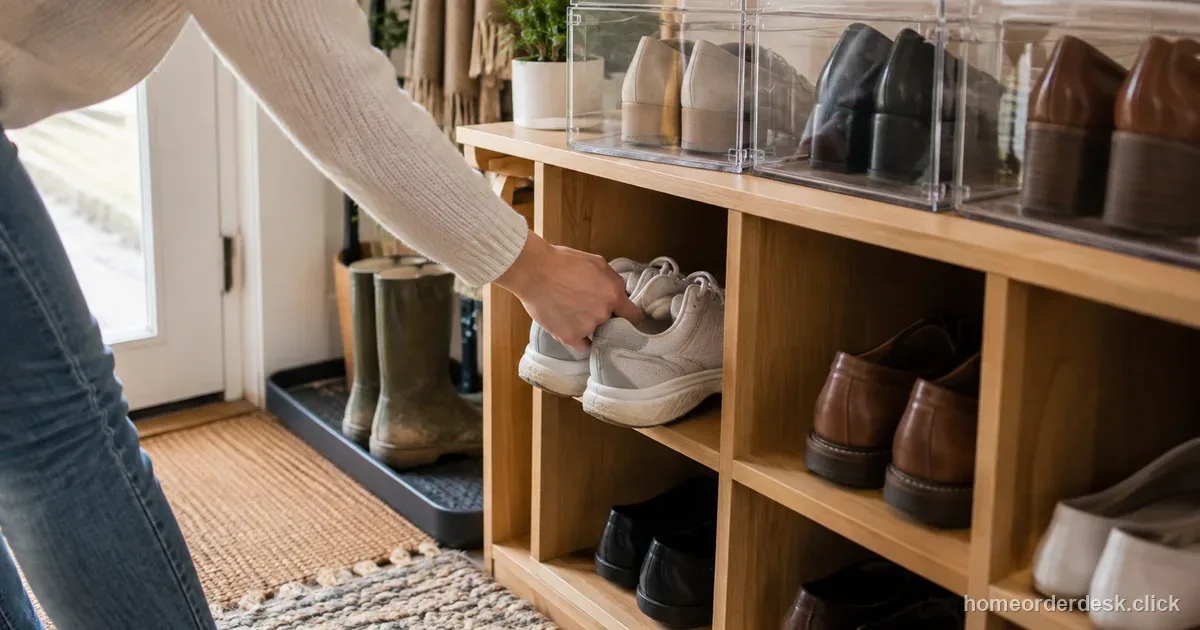
Shoes are easier to organize when storage matches how dirty, bulky, and frequently used each pair is. A daily sneaker, muddy boot, dress shoe, and seasonal sandal should not all compete for the same eye-level shelf. The system should keep pairs together, allow wet footwear to dry, and prevent a pile from blocking the closet floor or entry path. A clear route also keeps loose shoes from becoming a tripping obstacle.
Count pairs by use rather than by owner
Make groups such as daily, weekly, special occasion, work, and seasonal. Within them, separate boots and bulky footwear from low shoes. This shows whether the problem is too many pairs, an undersized shelf, or simply storing occasional footwear in prime space. One person's ten active pairs may need more access than another person's twenty rarely worn pairs.
Let damp shoes dry before enclosed storage
Rainy boots, sweaty athletic shoes, and snow-covered footwear need airflow. Use a mat or ventilated area until they are dry, then return them to the closet. Sealing damp shoes in plastic bins can trap odor and moisture and may affect leather, adhesives, or nearby textiles.
Keep each pair visible or physically linked
Side-by-side shelves work when space is wide enough. In a deep closet, clear-front boxes or labeled breathable boxes can keep occasion shoes paired without burying them. Avoid stacking loose shoes in a heap; it damages shapes and turns one missing shoe into a search through the entire floor.
Give tall boots enough height and support
Tall boots can slump and crease when shoved under a low shelf. Use boot shapers appropriate for the material or store them in boxes with enough height. Heavy boots belong low enough that retrieving them does not require lifting over the head. Keep wet winter boots out of a closed closet until dry.
Protect leather and suede from the storage environment
Leather and suede should be clean and dry before storage. Follow the maker's care instructions for dust bags, stuffing, and conditioners. Avoid hot attics, damp basements, or direct sunlight for valuable pairs. A storage system that deforms or dries the material is not an organizational improvement.
Wet shoes need airflow before returning to enclosed storage.
Use the entryway only for the active rotation
A small tray or rack near the door can hold the pairs being worn this week. When the rack fills, return less-used shoes to the closet instead of buying a second entry rack. This keeps outdoor dirt contained and prevents the hallway from becoming overflow storage.
Give children's shoes a pair-return rule
For school mornings, assign a low labeled slot or basket to each child's daily pair and keep backups elsewhere. Shoes return as a pair once dry. If one sneaker still migrates, the return location may be too far from where shoes are removed or the bin may be shared with too many unrelated items.
Separate repair decisions from storage
A shoe waiting for a new heel, glued sole, or cleaning can live in one small repair basket with a deadline. Do not keep damaged pairs mixed among ready-to-wear shoes, because they consume access while remaining unusable. If the repair never gets scheduled, decide whether the pair is genuinely worth keeping.
Use season changes for a material-care check
Before storing sandals or winter boots for months, clean them according to their material, dry fully, and inspect for damage. Store only pairs you expect to wear again. Seasonal rotation is the natural time to remove worn-out shoes rather than carrying them through another year in a labeled box.
Do not keep a pair solely because storage space exists
Pairs that hurt, are damaged beyond repair, or have not matched the household's actual activities can be donated, recycled where programs exist, or discarded appropriately. Specialty shoes with real roles can stay even when used rarely. The decision is deliberate use, not an arbitrary minimum.
Keep shoe-care supplies beside the pairs that need them
A small kit for brush, cloth, waterproofing product, spare laces, or polish can make maintenance easier, but the products should be stored according to their labels and away from children where required. Do not let leaking polish or aerosol products share an open basket with clean fabric shoes. If only two leather pairs need regular care, a compact labeled kit is more useful than a large catch-all box of old products.
Label occasion shoes without turning every pair into a box
Formal shoes or specialty footwear used a few times a year can live in breathable manufacturer-appropriate boxes or dust bags if that protects their shape. Put a photo or plain-language label on opaque storage so the pair can be found without opening a stack. Daily shoes rarely need this treatment; boxing them adds friction to every morning and encourages the entryway pile to return.
Check sole and fit before storing a pair for another season
Seasonal rotation is a good time to inspect worn tread, loose heels, cracked uppers, and shoes that no longer fit comfortably. Decide on repair before the pair goes into storage and set a date for the work. Storing damaged shoes for six months simply postpones the same decision. A pair that is clean, dry, wearable, and easy to locate deserves storage more than one kept only because a shelf has space.
A useful shoe system protects material, keeps dirty footwear from contaminating clean pairs, and gives each shoe a storage method proportional to how often and how carefully it is used.
- Before storageClean according to the material, dry fully, and check the sole, fit, and upper.
- If repair is neededDecide on the repair and set a date before the pair disappears into storage.
- Put awayUse breathable, shape-safe storage and label or show a photo for opaque boxes.
- At next seasonReturn wearable pairs to the active rotation; reconsider damaged or unused pairs.
A pair should be clean, dry, wearable, and easy to locate before it earns storage space.
Make a plan for shoe-care supplies too
Polish, brushes, waterproofing products, spare laces, insoles, and boot shapers often become a separate clutter pocket far from the shoes they support. Keep a small shoe-care kit near the main storage area while following product labels and keeping chemicals away from children or heat. Discard dried-out or leaking products through the appropriate local waste route. For leather or suede, clean and dry footwear before longer storage and use supports that do not distort the shape. When shoes need repair, create one bounded repair group with a date for the cobbler or DIY task; otherwise broken pairs can occupy useful shelf space indefinitely.
Frequently asked questions
Where should wet or muddy shoes go?
Give them a washable tray or ventilated drying spot away from clean clothing. Do not seal damp footwear into a closed box or cabinet.
How can I keep pairs from separating?
Use one defined slot per pair or a shallow row where both shoes are visible. Deep mixed baskets make the second shoe harder to return and find.
Do shoe boxes save space?
They can protect occasional pairs, but only if labels or transparent fronts keep contents visible and the stack remains stable and reachable.
What should stay by the entry door?
Only the active rotation—pairs worn this week or needed for weather. Move seasonal and special-occasion shoes back to the main storage area.