How to Remove Grease From Suede Shoes and Bags
Draw grease out of suede with an absorbent powder and a suede-safe cleaner, not the water, soap, or heat that set the stain and flatten the nap.
Suede is leather with the napped underside turned out, and that soft surface is exactly what makes grease so difficult to remove. Oil wicks along the fibers, darkens them, and stiffens the nap, and unlike a woven fabric you cannot soak, rinse, or machine wash suede back to normal. The methods that rescue a greasy shirt will leave a suede shoe or bag with a permanent water ring, a flattened patch, or a dark shadow that no amount of brushing lifts.
The working principle for grease on suede is to pull the oil out with a dry absorbent while disturbing the nap as little as possible, then to save any liquid product for a purpose-made suede cleaner used sparingly at the very end. Everything about the job rewards patience over force.
Blot first, then bury the mark in powder
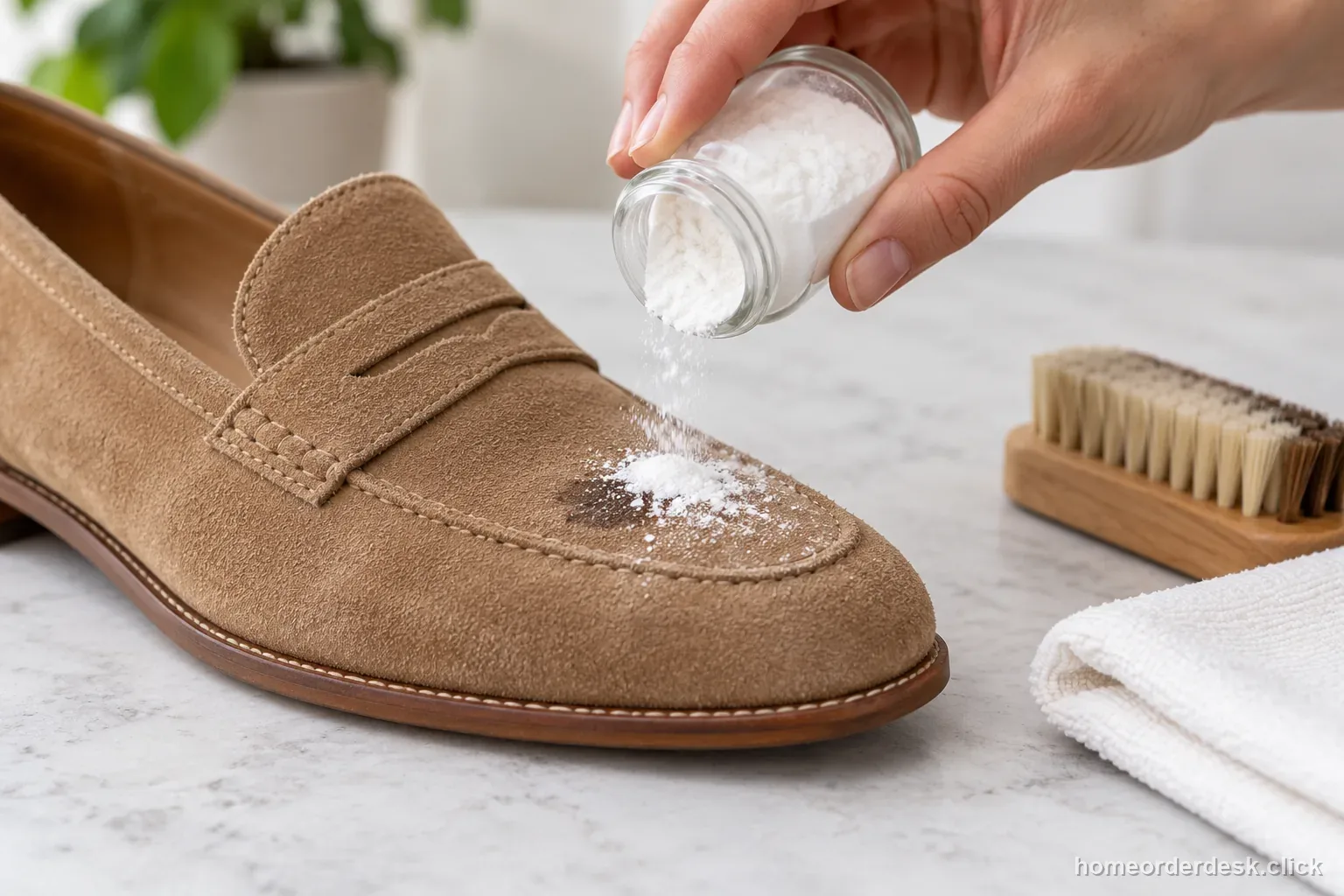
If the grease is fresh, press a paper towel straight down on it to take up whatever sits on the surface. Do not rub, because rubbing drives oil deeper into the nap and widens the edge of the stain. Then cover the whole spot with a thick layer of an absorbent powder. Cornstarch, plain talcum, or fuller's earth all work well. Press it gently into the pile with a fingertip so the powder makes real contact with the oily fibers rather than just sitting on top.
Leave the powder in place for several hours, and ideally overnight. It draws oil up out of the leather by capillary action, and a fresh spot often lifts almost entirely in one long sitting. Brush the spent powder away with a suede brush, working in short strokes, and check the mark in daylight before deciding whether to go again.
Repeat the powder before you escalate
A second powder cycle may help if the first pass lifts some oil; brush it away gently and reassess before trying again. Results vary with the oil, finish, age of the stain, and suede, so stop if the nap or color changes. Use the item maker’s care instructions for your specific material.
Do not warm the grease with a hair dryer. Heat can change the leather, spread the oil, or set the mark, and there is no reliable home temperature that makes this safe.
- Fresh spotBlot straight down, then cover the grease with absorbent powder.
- Several hours or overnightLet the powder draw oil from the nap before brushing it away.
- Second or third cycleIf needed, repeat once and reassess; do not heat the spot or force a result.
Repeat only if the suede remains unchanged; heat and household solvents can damage the nap.
A suede-safe cleaner for what is left
If powder alone stops making progress, move to a product built for suede and nubuck: a suede cleaning bar, a nubuck eraser block, or a spray suede cleaner from a shoe-care brand such as Saphir, or the care line sold by the boot maker itself. Work a small section at a time, following the directions, usually with the dedicated brush and no added water.
Products that are fine on smooth leather are not safe here. Saddle soap, leather conditioner, dish soap, and white vinegar will each darken suede, mat the nap, or dry to a visible ring. If all you have is a household option and the item is already ruined in your eyes, the outer limit is a trace of dish soap on a barely damp cloth followed by fast drying and heavy brushing, and even that often leaves a mark you can see in certain light.
| Suede-specific product | Dish soap | |
|---|---|---|
| When it fits | For what remains after powder stops helping | Only as a last resort if the item is already written off |
| How to use | Use sparingly and follow the product directions | Trace amount on a barely damp cloth, then dry fast |
| Main risk | Choose a product made for suede or nubuck | Can darken suede, flatten the nap, or leave a visible ring |
Why water and heat make it worse
Suede shows water the way few materials do. A damp patch dries with a visible tide line, so spot-treating one area of a shoe leaves a halo against the rest of the panel that can look worse than the grease did. If you have to introduce any moisture at all, lightly mist the entire panel so it dries as one piece, stuff the item with plain white paper to hold its shape, and let it air dry well away from any heat source.
Direct heat from a radiator, a sunny dashboard, or a heat can stiffen suede and may set or spread remaining oil. Slow air drying at room temperature, over a day or two if needed, is the only safe method and it costs you nothing but time.
Bringing the nap back
Once the item is dry and as clean as it is going to get, work the whole area with a suede brush, first against the lie of the nap to raise it and then in the natural direction to settle it. A suede eraser takes down any stiff or shiny spots where the grease crusted and dried. Do not hold suede over a kettle or other steam source. If the nap remains flattened after it is dry, brush gently with a suede brush; ask a suede specialist about persistent damage.
If the color looks uneven after all of this, a suede renovator spray in a matching shade blends the treated area into the rest of the item far better than continued cleaning ever will, and it also re-adds a little water resistance.
Old grease and the honest limit
Grease that has been in suede for weeks, or that has been through a heat cycle in a hot car, has usually stained the leather itself rather than only coating the nap. Repeated powder treatments will lighten it, but a faint dark cast can be permanent, and pushing harder with solvents risks stripping color and thinning the pile until the damage is worse than the stain.
For an expensive pair of shoes or a designer bag, a specialist leather cleaner has solvents, tools, and re-dyeing options that a home treatment does not, and the cost is small next to replacing the item outright.
Keeping grease off suede
A suede protector spray, reapplied every few weeks and always after any cleaning, makes oil bead on the surface long enough to blot rather than soak straight in. Keep suede shoes off the kitchen floor and away from the dinner table, carry a suede bag on the crook of your arm rather than pressed against a greasy takeaway bag on a car seat, and treat any spot the same day it happens. Fresh grease under a mound of cornstarch is a manageable job. Month-old grease that has been walked on and warmed usually is not.
Frequently asked questions
Can I use dish soap and water on grease in suede?
Avoid household soap if possible; it can alter the nap or leave a water mark. Follow the item maker’s care instructions and use a suede-specific cleaner only if its label allows it.
How many times should I repeat the powder step?
Try one careful powder cycle, brush it off, and reassess. A second may help if color and nap remain unchanged; stop if the suede looks or feels different.
Can I warm a grease stain with a hair dryer or steam?
No. Heat or steam can alter the leather or spread or set the grease. Let the item dry naturally away from heat and brush only when dry.
Will a suede protector stop grease stains?
A protector may add resistance if the maker approves it, but it is not a guarantee. Follow its label and your item’s care directions.