What to Do After You Accidentally Mix Cleaning Chemicals
After cleaners are accidentally combined, stop adding products, leave the area, get fresh air, follow emergency guidance, and keep labels for responders.
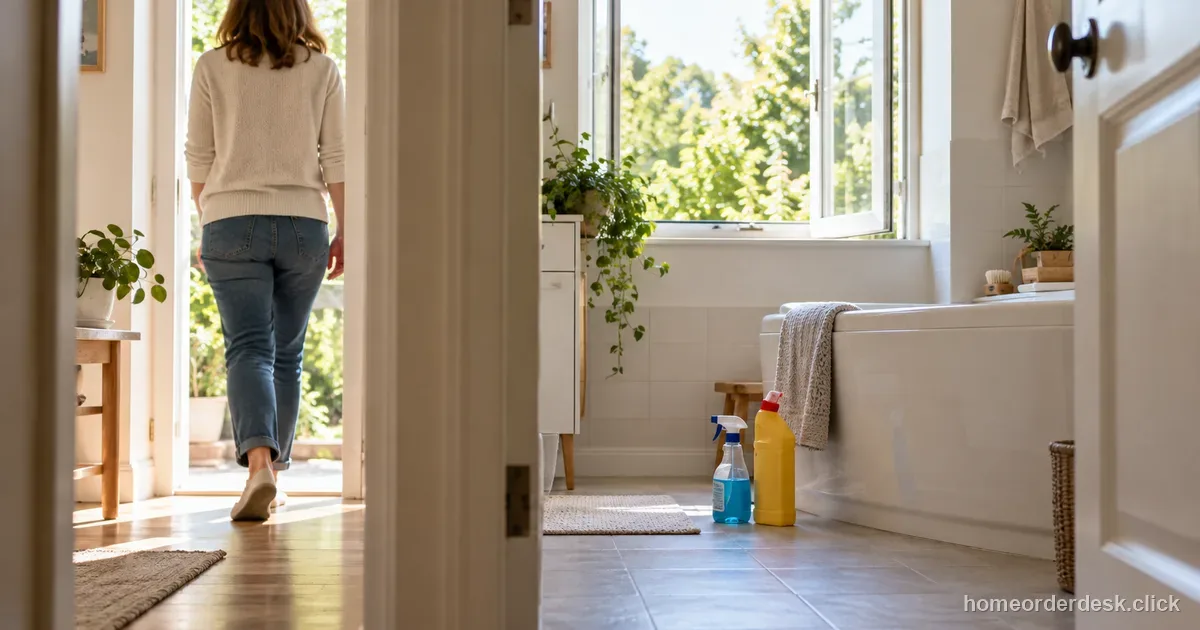
If cleaning chemicals were accidentally mixed and strong fumes, coughing, burning eyes, or breathing difficulty occur, stop cleaning and treat the situation as a chemical exposure. Do not stay in the room to identify the perfect neutralizer. Move to fresh air, keep other people and pets away, and contact emergency services or Poison Control as appropriate for the symptoms and location.
Leave the contaminated area instead of trying to finish the job
Move yourself and anyone else exposed to fresh air. If the mixture is in a small bathroom, closet, or laundry room, do not remain inside while deciding what happened. A strong odor is a warning to increase distance, not a prompt to lean over the bucket and investigate.
Use Poison Control or emergency services for case-specific guidance
In the United States, call Poison Control at 1-800-222-1222 for case-specific advice; call 911 for severe breathing difficulty, collapse, or another emergency. Outside the United States, use local poison-center or emergency procedures. Share product names and labels only if they are already accessible from a safe place.
Move to fresh air first; do not stay to identify or neutralize the mixture.
Do not add another chemical to neutralize the first two
Adding vinegar, baking soda, peroxide, more bleach, or another cleaner can create additional reactions and aerosols. Household cleanup is not a chemistry-lab neutralization exercise. Follow instructions from emergency or poison professionals, product labels, and local hazardous-material guidance instead of improvising.
Do not add vinegar, baking soda, peroxide, more bleach, or another cleaner. Leave the area, keep others away, and follow emergency or poison-control guidance.
Ventilation must not require hazardous re-entry
Do not re-enter a fume-filled room to open windows or switch on a fan. If doors or windows can be opened on your way out without delaying escape or increasing exposure, do so only when it is safe. Otherwise, leave and follow Poison Control, emergency responders, or local authorities about ventilation and when the room is safe.
Follow label first aid for eye or skin contact
If liquid splashed on skin or eyes, follow the product label's first-aid directions and poison-control guidance. Remove contaminated clothing when instructed and rinse with clean water for the specified duration. Do not apply other chemicals to skin in an attempt to cancel the first one.
Keep original containers or photographs of labels
Once everyone is safe, retain original containers or clear photos of their labels. Product names, active ingredients, EPA registration details when present, and first-aid statements help professionals understand the exposure. Do not decant a remaining mixture into a food or drink container for disposal.
Do not seal an unknown reactive mixture in a bottle
Do not touch, move, pour, or dispose of an unknown mixture while fumes or a reaction may be present. Keep people and pets away and ask Poison Control, emergency responders, or local hazardous-waste staff what to do with the remaining product. Do not move it through the home to reach a drain or trash bin.
Re-entry depends on what was mixed and the advice received
After immediate danger passes, the room may still need ventilation or professional assessment. Follow the specific guidance you received rather than using odor alone as proof of safety. A product fragrance fading does not necessarily mean all irritating gases are gone, especially in a poorly ventilated room.
Handle contaminated cloths as part of the incident
Rags, mop heads, and paper towels may carry product residue. Leave them where they are if retrieving them would expose you; tell Poison Control or responders what materials are in the area. Handle and dispose of them only after receiving safe, product-specific guidance.
Prevent a repeat by reconstructing the exact sequence
After the incident, identify which labels were overlooked and where the handoff failed. Maybe bleach followed an acid toilet cleaner, or an ammonia glass spray remained on a surface. Store incompatible products separately, keep labels readable, and adopt a rule that one chemical process must be completely rinsed or finished before another begins.
Do not drive yourself if exposure affects breathing or vision
If eyes are burning, breathing is difficult, or you feel dizzy or confused, do not add the risk of driving. Call emergency services or have another person follow Poison Control guidance. Chemical exposure can worsen after you leave the room, and safe transport is part of the response.
Separate people who were exposed from those who were not
Keep children, pets, and bystanders away from the contaminated room. Do not send an unexposed person inside to retrieve a mop, phone, or product bottle unless professionals say it is safe. Accurate product information is helpful, but it is not worth creating a second exposure.
Document the incident after everyone is safe
Write down the product names, approximate amounts, time of mixing, symptoms, first-aid steps, and advice received. This record can help medical professionals and can guide changes to household storage. Do not spend time taking notes while someone is still in a contaminated area; documentation comes after fresh air and urgent care.
After the event, discard the idea of a universal cleanup recipe
What remains after an accidental mixture depends on the exact chemicals, amounts, room size, ventilation, and surfaces involved. One incident may need simple ventilation after professional advice; another may require fire-department or hazardous-material response. Do not copy a disposal method from a different chemical incident online. Use the exact product labels and case-specific guidance you received.
Once chemicals are accidentally mixed, the priority changes from housekeeping to exposure safety. Distance, fresh air, expert guidance, and accurate product information come before stain removal or surface appearance.
Do not re-enter just to finish the cleaning task
After an accidental chemical mix, the unfinished chore is irrelevant compared with exposure safety. Leave the area, keep other people and pets away, and follow emergency or poison-control guidance. Do not return to retrieve towels, open extra windows, or sniff the container if doing so requires moving back through concentrated fumes. From a safe location, gather product names or photos of labels only if they are already accessible. Responders may advise ventilation or cleanup steps based on the chemicals involved. Wait for that guidance rather than assuming a room is safe because the odor became weaker. If another person may enter the home before the area is cleared, warn them from a safe location and keep children and pets away rather than assuming the smell alone will alert them to the hazard.
Frequently asked questions
What is the first action after household cleaners were accidentally combined?
Stop adding products and leave the contaminated area. Move to fresh air rather than leaning over the container to identify the smell.
Should I pour water or another cleaner into the mixture?
Do not improvise a neutralization step. Additional chemicals can create another reaction; follow product labels and emergency or poison-control advice.
What information is useful if I call for help?
Keep the product containers or photos of the labels available from a safe location. Ingredient names, product names, time of exposure, and symptoms can help responders.
When does chemical exposure need emergency attention?
Severe breathing trouble, chest pain, confusion, fainting, or significant eye or respiratory symptoms require urgent medical or emergency guidance.