How to Cut Through Baked-On Grease Above the Stove
Soften and lift the sticky brown grease film on the wall and cabinets behind a stove with a warm degreaser, without stripping the paint finish.
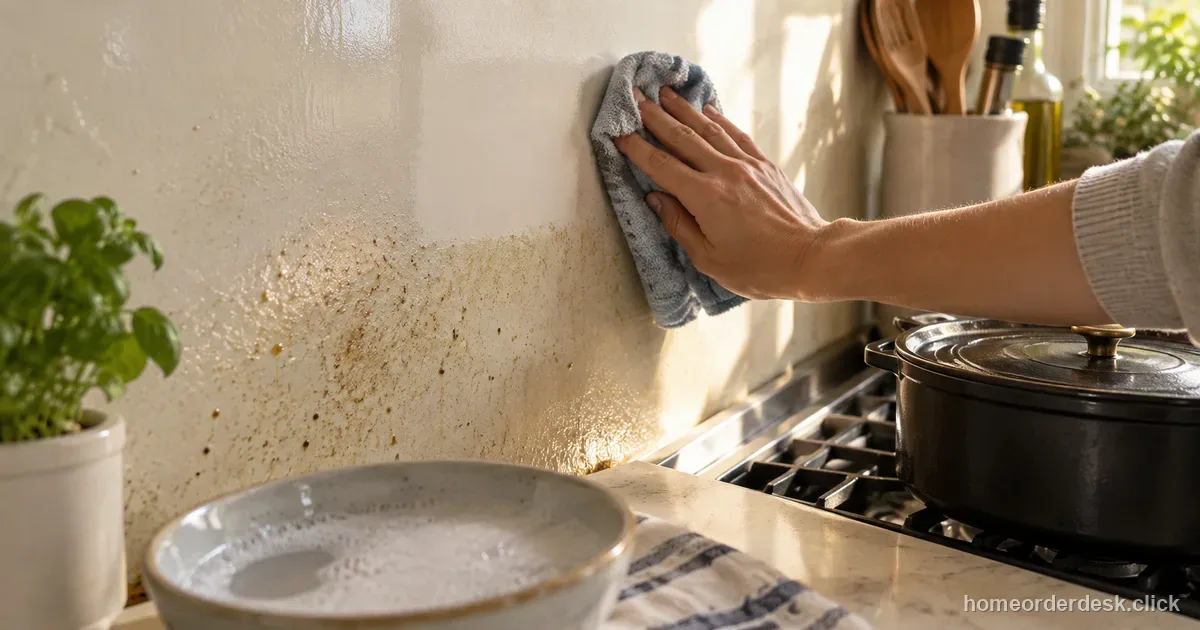
Grease on a kitchen wall can be difficult to remove without changing the paint finish. Paint type, sheen, age, cure time, and prior cleaning all matter. Cabinets, tile, glass, outlets, and painted drywall are different surfaces; do not use one degreaser method across all of them. Identify the wall paint or check with its maker before cleaning.
Know what your surface can take
A paint sheen alone does not confirm that a strong degreaser is safe. Matte, eggshell, satin, and gloss finishes differ, and the paint may be worn, uncured, or previously cleaned. Start with the paint maker’s directions; use the mildest approved cleaner and do not scrub an area that begins to change sheen or color.
Test only a cleaner that the paint maker allows, following its label. Use a small inconspicuous area and a soft cloth, then check after it dries for color transfer, loss of sheen, tackiness, or a visible boundary. A test lowers risk but does not guarantee an older or exposed section will react the same way.
Finish alone does not establish resistance to a particular degreaser or scrubber.
Start with the paint maker’s mildest method
Sherwin-Williams recommends a mild grease-cutting dishwashing-soap solution for certain painted-wall grease stains, while Nippon Paint advises identifying paint type and finish first. For your wall, use warm water and soap only if the paint maker permits it; apply with a soft cloth, avoid scrubbing, and wipe away residue as directed.
Work a small area at a time and blot or wipe gently. Rinse the cloth in clean water so grease is not carried back to the wall, and dry only as the paint maker recommends. Stop if the finish changes or paint transfers to the cloth.
Use stronger cleaner only when approved
Do not assume grease has polymerized into a varnish or that a kitchen degreaser is suitable. Use a stronger product only if the wall-paint maker lists it for that finish. Follow its dilution, contact time, application, and rinse instructions; do not spray directly near outlets, switches, seams, or unsealed edges.
Remove cleaner residue only by the method the paint or product maker states. Use a clean, soft cloth and do not repeatedly wet the same area; extra rubbing can burnish or lift paint even if the cleaner itself is mild.
Clean corners without abrasion
Avoid baking-soda paste, scouring pads, melamine foam, and stiff brushes on painted walls unless the paint maker explicitly approves them. Abrasive action can remove or polish paint. For grease in cabinet grooves, use a compatible cleaner on a soft cloth or ask the cabinet maker for its finish-care directions.
Painted walls and cabinets may have different coatings from unfinished wood, tile, or glass. Do not transfer a wall cleaner onto nearby surfaces without checking their care guidance; protect sockets and switches from liquid and do not wet electrical fittings.
What to avoid
Avoid oven cleaner, strong solvents, abrasive powders, and melamine sponges on paint unless the maker explicitly approves them. Do not allow liquid to run behind a stove or into outlets and switches. Keep the area ventilated and follow each cleaner’s label.
Do not choose an ammonia cleaner by default. Use only a product approved for the wall paint and follow its ventilation directions. Never mix ammonia with bleach or other cleaners; if changing products, follow both labels for rinse and residue removal.
Wait for new paint to cure
Do not wash a recently painted wall based on a general cleaning recipe. Sherwin-Williams advises waiting at least two weeks before using water or cleaner on its painted walls; the paint maker for your exact product may give a different cure period. Follow that guidance before cleaning, even if the wall already feels dry.
If grease is on an uncured wall, blot loose residue only if safe and ask the paint store or installer how to proceed. Early washing or rubbing can mark the finish before it has cured.
The range hood and backsplash
A hood filter is a separate appliance part, not a painted wall. Remove and clean it only as the hood maker instructs; dishwasher and degreaser compatibility vary by filter material. Do not apply a wall-cleaning solution to the filter or motor housing.
Tile and glass backsplashes have separate manufacturer instructions. Use a cleaner labeled for that surface, protect adjacent paint and grout, and do not use an abrasive pad unless its maker permits it.
Finish and paint age change the risk
Paint finish can affect cleanability, but sheen does not guarantee resistance to a particular chemical or abrasive. Use the paint manufacturer’s method for that product and test carefully. If grease has penetrated or cleaning changes the appearance, repainting may be safer than stronger scrubbing.
If gentle, approved cleaning does not remove the mark without changing the wall, stop. Ask the paint manufacturer or a painter whether touch-up or repainting is appropriate; do not apply stain-blocking primer or a new finish over a dirty or greasy surface without proper preparation.
Use one product at a time and follow its label. Never mix bleach-containing products with ammonia or vinegar; ventilate as directed.
Follow cleaner safety instructions
Never mix cleaning products. In particular, keep ammonia away from chlorine bleach and follow label directions if changing products. Ventilate as directed and avoid using multiple cleaners sequentially without the required rinse.
If the paint maker approves washing, work in small manageable sections and follow its recommended direction and rinsing method. Use a clean cloth and fresh solution as needed; do not let drips dry on the wall. Protect nearby counters and electrical fittings from liquid.
If paint color transfers to the cloth, the surface becomes tacky, or the sheen changes, stop immediately and do not apply a stronger degreaser. Let the area dry and contact the paint maker or a painter about repair. Repainting may be needed if the finish has been removed; a stain treatment cannot restore missing paint.
Reduce future grease deposits
Prevent buildup by using the range hood according to its instructions and cleaning the wall only with the paint maker’s approved method. Routine frequency depends on cooking and finish; avoid an automatic weekly wipe if it causes sheen changes or wears the paint.
Frequently asked questions
Why does ordinary spray cleaner leave grease on my kitchen wall?
The right cleaner depends on the paint type, finish, age, and product directions. Start with the paint maker’s mildest approved method; do not assume a degreaser or dwell time is safe.
Can I use a degreaser on flat or matte wall paint?
Only if the paint maker approves it for that finish. Test a compatible product gently and stop if color transfers or the surface changes.
How do I clean grease from cabinet grooves?
Check the cabinet finish instructions and use an approved cleaner with a soft cloth. Avoid baking-soda paste or a stiff brush unless the maker permits abrasion.
How do I prevent grease from building up?
Use the range hood according to its instructions and clean painted walls only with a paint-compatible method. Routine wiping frequency depends on the finish and cooking.