Soap Scum vs Etched Glass: What Comes Off a Shower Door and What Doesn't
Tell removable soap scum and hard-water film from permanent glass etching, and clear the film that can be cleared with the right acid or paste.
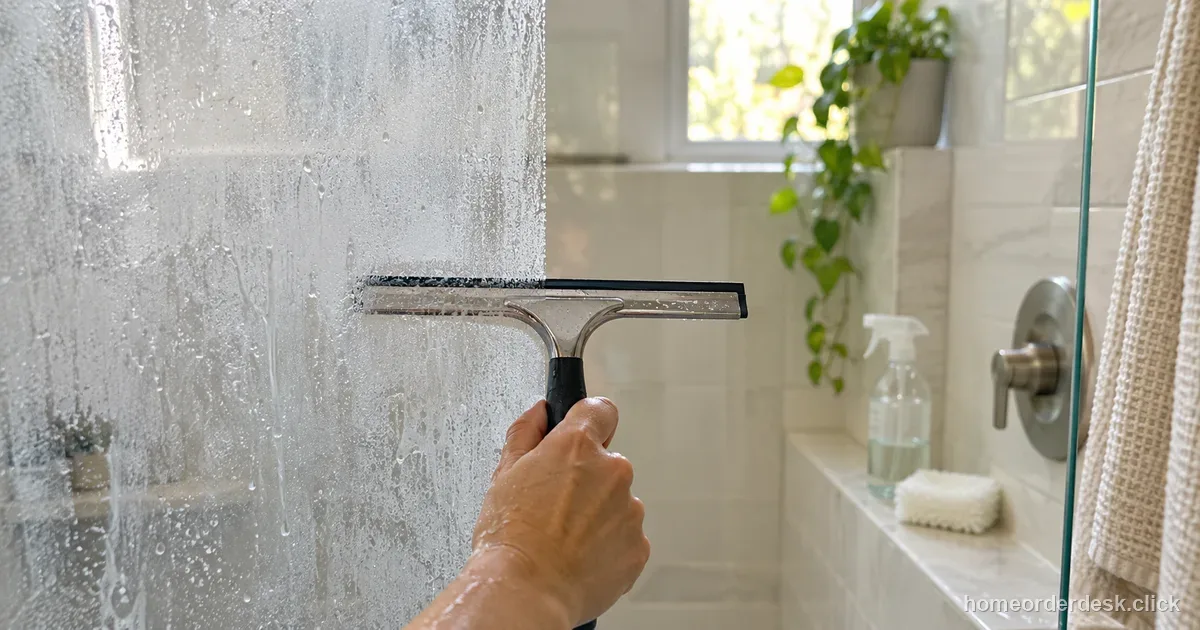
Cloudy shower glass can have soap residue, mineral deposits, surface wear, or more than one cause. A single visual test cannot reliably identify the deposit or prove the glass is etched. Before cleaning, check the shower-door maker’s care guide and identify any factory-applied treatment, decorative finish, or special hardware.
Identify the glass before treating it
A glass panel’s appearance when wet or dry is not a dependable way to identify a coating or diagnose etching. If you are unsure whether a treatment is present, ask the installer or manufacturer. Start only with the method the maker allows and avoid scraping, acids, or abrasives until the glass type is confirmed.
A door may have residue and permanent surface change at the same time. An approved gentle cleaning may remove loose residue, but it cannot confirm or reverse etching. Stop if the surface remains cloudy or the cleaning method changes the glass, coating, or hardware.
Water beading and wet/dry appearance do not reliably identify a coating or damage.
Clean deposits with a maker-approved method
For removable deposits, use a cleaner that the shower-door maker approves for the exact glass and hardware. Some general guides suggest vinegar for bare glass, but that does not establish safety for a coated panel, frame, seals, tile, or stone. Do not warm vinegar or use a fixed dwell time unless the manufacturer specifies it.
Use a commercial scale remover only if the product label and shower-door instructions both allow it. Follow its dilution, ventilation, contact time, and rinsing directions; keep it off metal finishes, natural stone, sealants, and adjacent surfaces unless they are specifically listed as compatible.
Avoid abrasive home mixtures
Do not apply baking-soda paste or an abrasive to shower glass by default. Even products described as non-scratch can damage a factory treatment or hardware. If an approved cleaner does not remove the residue, ask the door maker or a glass-care professional before trying a more abrasive method.
Avoid razor blades, steel wool, scouring powder, and abrasive pads unless the glass manufacturer explicitly approves a specific tool for your exact pane. Coatings and decorative finishes can be damaged even when the underlying glass appears smooth.
Factory treatments have specific instructions
Some shower doors have factory-applied water-repellent treatments, but beading alone does not identify them. Read the door label, purchase paperwork, or maker’s care guide. For example, Kohler advises against abrasives on CleanCoat-treated glass and recommends soft-cloth/water or a squeegee; other door systems may have different instructions.
When the treatment is unknown, use only a mild method the door maker permits and avoid acids, solvents, blades, and abrasives until you identify the panel. If you cannot locate a manual, ask the installer or manufacturer for the model-specific guide.
A careful first cleaning pass
Once you have the care instructions, remove loose soap residue using the mildest method they list. Use a clean, soft cloth or squeegee only if approved, and work on a small section so you can see how the glass and frame respond. Apply the cleaner in the way its label directs; some products should go on a cloth rather than being sprayed into the enclosure.
Rinse or wipe away residue exactly as instructed and dry the panel with a clean soft cloth if the maker recommends it. Keep cleaner off metal hardware, sealants, painted surfaces, and natural-stone tile unless each is listed as compatible. Never mix products or layer an acid cleaner over detergent residue without following both product labels.
If the surface changes, the coating looks streaked, or the frame finish dulls, stop and rinse only if the care instructions say to do so. Do not keep repeating the same step with longer contact time; a cleaner’s stated dwell limit is not a suggestion to extend it for a stronger result.
| Glass panel | Frame, seals, tile, and hardware | |
|---|---|---|
| Cleaner | Only a product approved for the exact pane/treatment. | Follow each surface maker’s directions; do not assume glass cleaner is safe. |
| Tools | Soft cloth or squeegee only if approved. | Avoid liquid in tracks, joints, and electrical or wall openings. |
| If residue remains | Stop before acids, blades, or polishing compounds. | Contact the manufacturer or glass-care professional. |
When cloudiness remains
Do not try a polishing compound, abrasive pad, sealant, or rain-repellent product to hide possible etching unless a glass professional confirms it is appropriate. Polishing can distort the panel or coating, and a sealant does not repair damaged glass. Ask a glass-restoration professional to assess a persistent cloudy area.
If a specialist confirms the glass itself is damaged, ask about repair limits and replacement. Do not assume a household coating or water repellent can restore the original surface.
Frames, seals, and the track
Clean metal frames, seals, and tracks according to their own material and manufacturer instructions. A cleaner safe for glass may damage anodized metal, paint, stone, or rubber. Use a soft cloth and avoid pushing liquid into tracks, seals, or wall joints.
What can cause a cloudy appearance
Hard-water deposits and soap residue can contribute to a cloudy appearance, but appearance alone cannot establish etching or its cause. Avoid repeated acid or abrasive treatment; if a residue remains after an approved clean, get the material assessed before escalating.
A squeegee or dry soft cloth after use can reduce standing water and residue on many doors, but follow the maker’s advice for treated glass and hardware. This maintenance may reduce buildup; it cannot guarantee that spots or surface changes will never occur.
Use protective coatings only if approved
Use a glass-protection or water-repellent product only if the door manufacturer approves it. Such products do not remove deposits or repair etching and may affect coatings, seals, or hardware. Follow the product’s compatibility and reapplication instructions.
Do not use vinegar or a lime remover based only on the fact that a door beads water. Follow the exact glass-treatment and hardware instructions; Kohler’s CleanCoat guidance is specific to its product and cannot be generalized to other doors.
Keeping the glass clear
After each shower, squeegee or dry the glass if the door maker recommends it. For periodic cleaning, use the approved product and schedule rather than a universal weekly or monthly acid treatment.
Frequently asked questions
Can I use vinegar on shower glass?
Only if the glass-door maker permits it for the exact panel and nearby frame, seals, tile, and stone. Do not generalize bare-glass advice to coated doors.
How can I tell if the glass has a factory coating?
Do not rely on water beading or a wet/dry test. Check the door label or care guide, or ask the manufacturer or installer.
Can I use a razor or baking soda on a cloudy shower door?
Avoid blades and abrasives unless the glass maker explicitly approves them for that pane. Abrasion can damage factory treatments or finishes.
What if the cloudiness remains after cleaning?
Stop before stronger acids or polishing. Ask the door maker or a glass-restoration professional to assess the surface and coating.