Never Mix Bleach and Ammonia
Learn why bleach and ammonia must never be combined, how accidental mixing happens, and what to do immediately if dangerous vapors are released.
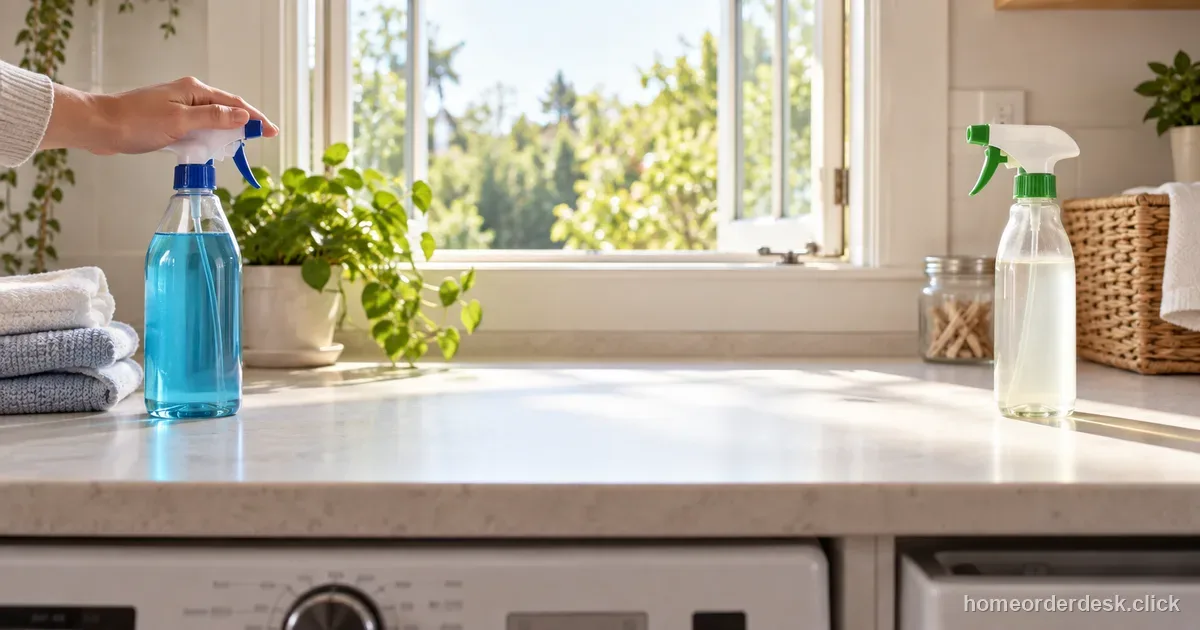
Bleach and ammonia should never be mixed. Combining chlorine bleach with ammonia can release toxic chloramine gases that irritate the eyes, nose, throat, and lungs and can cause serious breathing problems. The safe household rule is broader than memorizing one pair: use one cleaner at a time, read the label, rinse when directed before changing products, and keep the room ventilated.
Know where ammonia can hide in ordinary cleaners
Ammonia is listed in some glass and multipurpose cleaners. Read the product label rather than relying on the brand, bottle color, or fragrance. Never apply bleach over another cleaner or unknown residue; follow both labels for any required rinse and drying before switching products.
Remember that bleach also reacts dangerously with acids
Do not mix chlorine bleach with vinegar, acidic toilet-bowl cleaners, rust removers, or other acids. Those combinations can release chlorine gas. A bathroom or laundry room is a particularly bad place to experiment because the space may be small and ventilation limited. Product labels may identify bleach as sodium hypochlorite and may name acids or ammonia in ingredients and warnings. If the active ingredients are unclear, leave the products separate and contact the manufacturer; do not test compatibility by combining a small amount.
Use label dilution instead of guessing stronger
Household bleach products vary in concentration. Follow the product label for dilution, surface compatibility, contact time, personal protection, and whether rinsing is required. Adding extra bleach does not make a solution proportionally safer or more effective, and high concentration can damage surfaces and irritate skin and lungs.
Keep products in their original containers
Original containers preserve the warning label and reduce the chance that someone mistakes cleaner for water or another liquid. Do not pour bleach or ammonia products into drink bottles, unlabeled spray bottles, or containers that previously held another chemical. Store cleaners where children and pets cannot access them.
Finish one chemical process before considering another
When one cleaner does not solve a soil problem, stop and read both labels. Determine whether the first product needs to be rinsed away and the surface dried before a different cleaner is considered. Do not layer sprays in a sink, toilet, tub, or bucket. Removing one product is different from chemically mixing two products in place.
Treat coughing and burning eyes as an exposure warning
Coughing, burning eyes, chest tightness, shortness of breath, nausea, or strong irritating fumes after chemicals are combined require fresh air and appropriate medical or poison-control guidance. Leave the area rather than spending time neutralizing the bucket or finishing the bathroom. Do not re-enter concentrated fumes just to add another chemical.
Do not try to identify a mixture by smell or add a chemical to neutralize it.
Avoid assuming a small amount is harmless
Hazard depends on product concentration, quantity, ventilation, and exposure, not on whether the spill looked small. There is no safe household amount for intentionally combining bleach and ammonia. Do not use smell, visible fumes, or a lack of immediate symptoms to judge whether a mixture is safe. Never lean over a container to investigate it.
Use separate tools if residues cannot be confidently rinsed
Buckets, mop heads, and spray bottles can retain product residue. Use each container only as its label permits, and do not refill an unlabeled or uncertain container with another chemical. If you cannot confirm that a tool is safe to reuse, set it aside and follow product or local disposal guidance.
Teach a one-product rule to everyone who cleans
Keep product labels readable and store cleaners in their original containers. Use one product at a time; do not combine or layer products unless the exact label explicitly instructs it. A stronger smell does not mean better cleaning, and odor is not a test of chemical compatibility.
A glass-cleaner-to-bleach scenario shows the handoff risk
If an ammonia-containing glass cleaner was used on a sink, do not apply bleach over it. Follow the glass cleaner label for any required rinse and drying before considering another product. If bleach has already been applied, stop and follow the exposure guidance in the companion article rather than re-entering to rinse the surface.
- Read the ingredient and warning statements; do not rely on brand name or fragrance.
- Follow the label dilution, contact time, surface limits, and personal-protection directions.
- Check whether the first product must be rinsed away or the surface dried before another step.
- Rinse reusable buckets and tools as directed before they hold another cleaner.
- Keep products in their original, labeled containers and use one cleaner at a time.
Do not rely on smell to identify chemical compatibility
Some hazardous mixtures produce irritating odors, but absence of a strong smell is not proof that a combination is safe. Fragrance can mask warning odors and people differ in sensitivity. Read labels before mixing or sequencing products. Compatibility should come from product instructions, not from whether the first spray 'smells mild.'
Rinse reusable buckets and spray equipment thoroughly
Before starting, check the product and tool labels and confirm what was used on the surface. If the previous product is unknown, do not add bleach or another cleaner; pause and identify a manufacturer-approved cleaning sequence.
Keep children away from active cleaning setups
Do not leave a bucket of diluted bleach, an open toilet cleaner, or mixed cleaning tools unattended while taking a phone call or moving to another room. Children and pets can contact liquids or knock products together. Prepare only the amount needed, supervise the area, and return products to secure storage when the task is finished.
Use product purpose as a reason to simplify, not combine
A disinfectant, degreaser, glass cleaner, and toilet cleaner are formulated for different jobs. If a surface needs both soil removal and later disinfection, follow a labeled sequence that includes any required rinse or dry step. Do not assume combining two specialized products creates a stronger all-purpose cleaner. It can instead create toxic gas, damaged surfaces, or both.
Use one labeled product at a time, at the labeled dilution and with the stated ventilation and protective equipment. Do not combine cleaners, and do not rely on ventilation to make an incompatible mixture safe.
Check the surface before switching products
Accidental mixing can happen when products are layered or a surface still holds residue from an earlier cleaner. Before using bleach, read the first product’s label and complete any stated rinse and drying steps. If you cannot identify the residue or know that the surface is ready, do not add bleach; use one approved product at a time.
Frequently asked questions
Why is mixing bleach and ammonia dangerous?
The combination can release toxic chloramine gases that irritate the eyes and respiratory system and can cause serious injury.
Where can an accidental bleach-ammonia mix happen?
It can occur when different cleaners are layered in a toilet, sink, floor bucket, or spray bottle, or when a surface already contains residue from another product.
What should I do if I accidentally mixed them?
Stop cleaning, leave the area, get to fresh air, and follow poison-control or emergency guidance based on symptoms and the exposure. Do not add another chemical to “neutralize” the mixture.
Does opening a window make the mixture safe to keep using?
No. Ventilation is important during labeled product use and after an exposure, but it does not make an unsafe chemical combination acceptable.