How to Remove Red Wine From Carpet Without Scrubbing
Blot a red wine spill with a clean white cloth, test a carpet-safe treatment, and rinse away residue without soaking or damaging the pile.
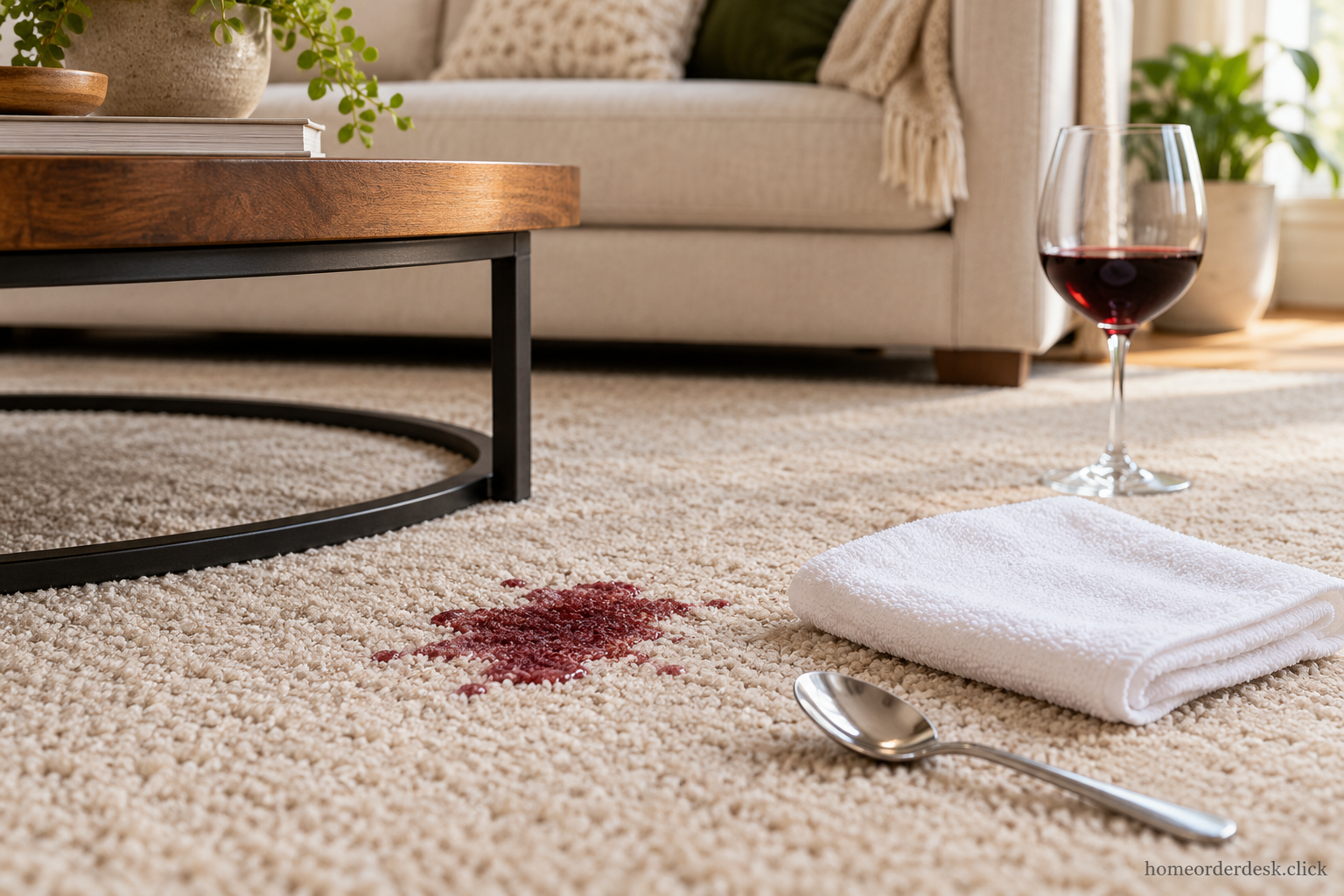
Red wine spreads quickly across carpet because the liquid can move between yarns and into the backing. The first goal is not to erase the color in one pass; it is to absorb as much liquid as possible without pushing the spill outward or roughing up the pile. A clean white cloth, a small amount of a tested cleaner, patience, and a careful rinse are safer than a fast pour of several household products.
This advice is for ordinary synthetic wall-to-wall carpet unless the maker says otherwise. Wool, silk, hand-knotted, antique, and other specialty rugs may need a different process. Check the carpet or rug care instructions first, and pause if the material or dye is uncertain. A test spot can reveal a problem, but it cannot make a prohibited product safe.
Do these things before the wine dries
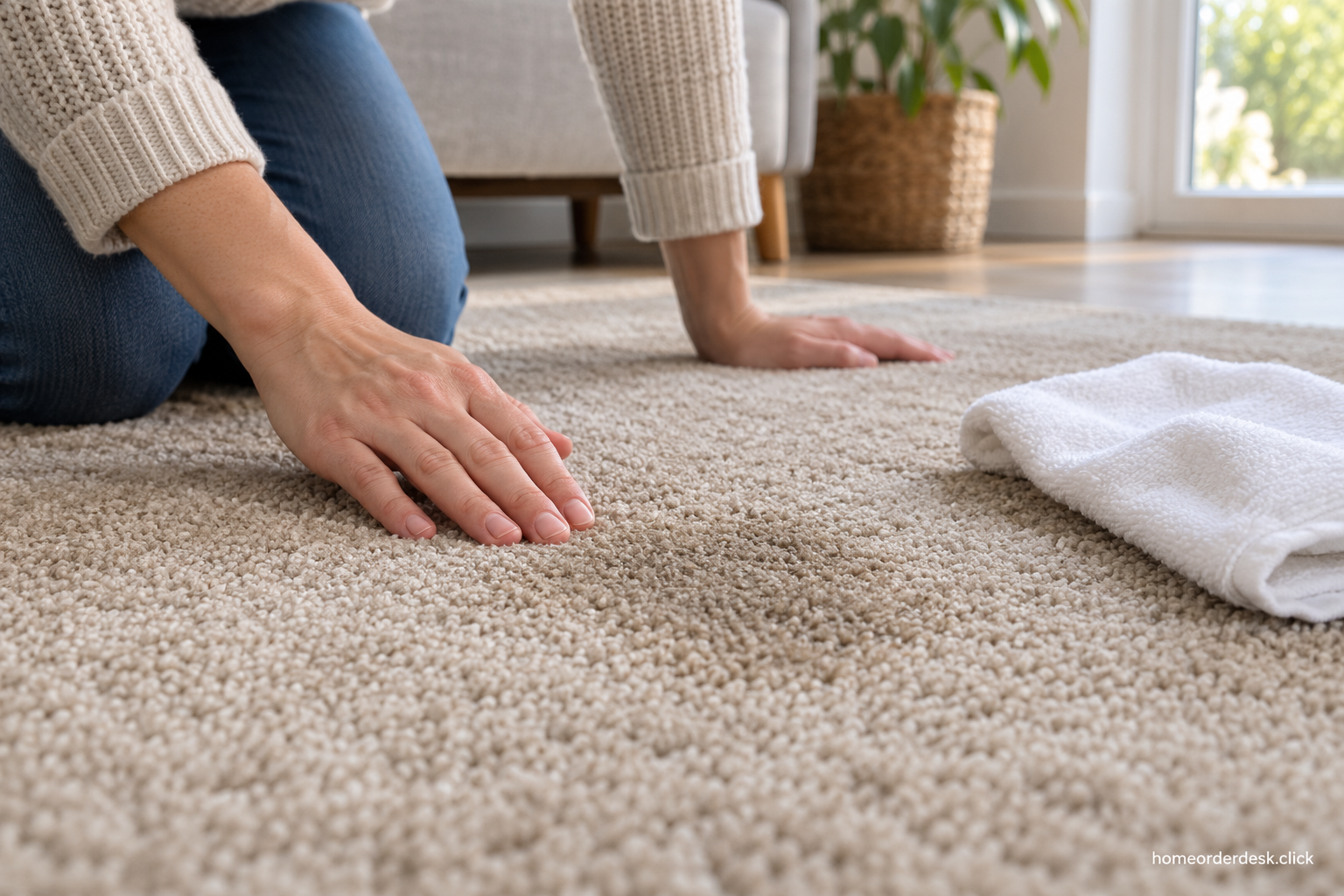
Move nearby breakable items. If the spill also includes food, lift solids with a rounded spoon; do not smear them across the carpet. Then press a dry white absorbent cloth or plain white paper towel onto the wine and lift it straight up. Turn to a clean part of the cloth after each press so you do not put red liquid back into the carpet. A printed or colored towel may transfer its own dye to damp fibers.
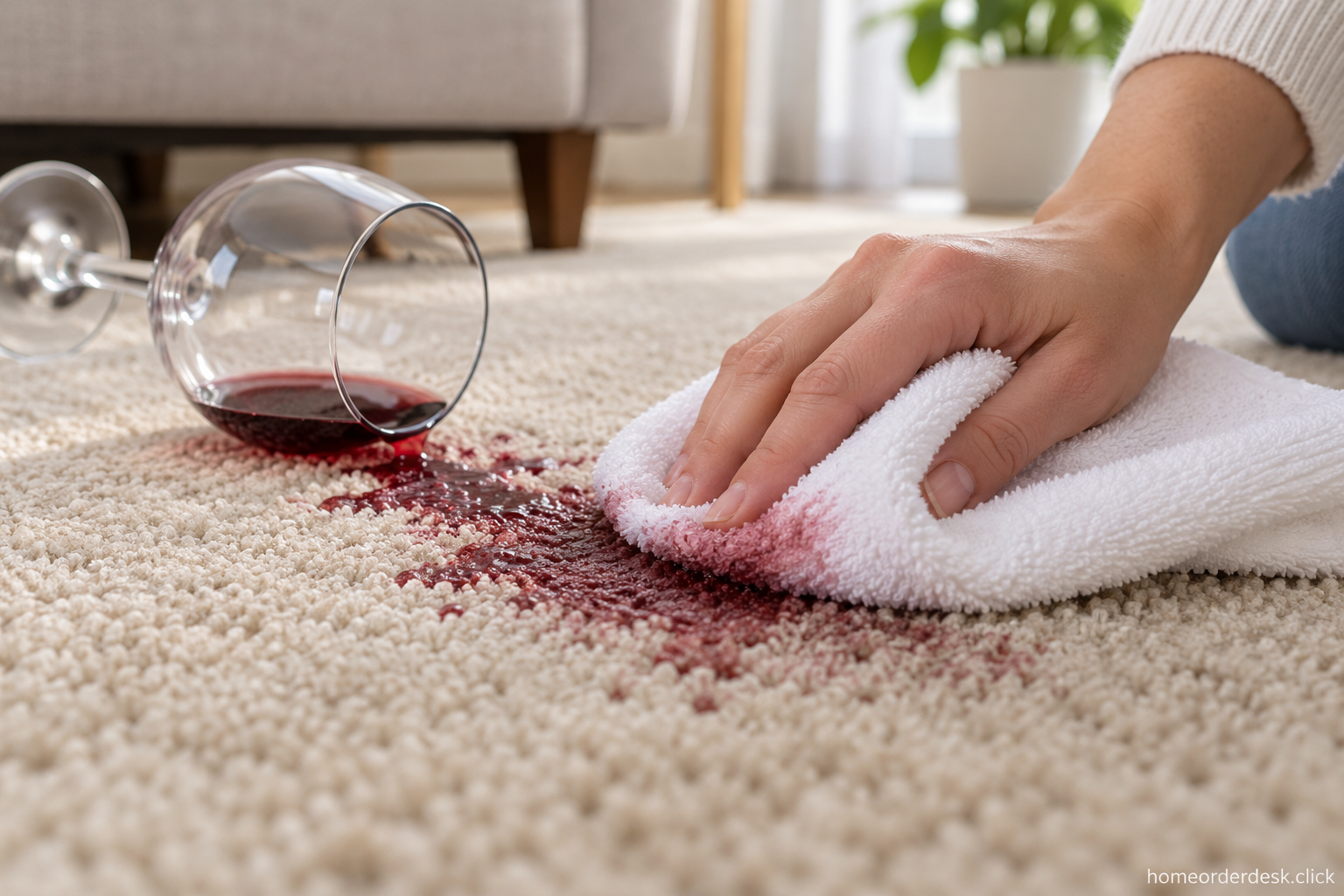
Keep blotting until the cloth takes up less liquid and the carpet is only slightly damp. Avoid stomping, scrubbing, brushing, or dragging a towel across the pile. The Carpet and Rug Institute warns that scrubbing and brushes can distort carpet texture, while excess moisture can carry a spill deeper. If the wine reached a seam, cushion, or pad, note that; a surface-only treatment may not reach liquid below the visible pile.
Identify the carpet and test the treatment
Read the carpet maker’s care sheet if available, especially for wool or stain-resistant finishes. Use a cleaner approved for the carpet type. Before applying it near the wine, place a few drops on an inconspicuous area and press a white cloth against that spot. Look for dye transfer, color change, texture change, or damage. If anything changes, stop and select a different method recommended by the maker or a professional.
Use only one product at a time and follow its label exactly. Do not pour cleaner straight from the bottle onto the carpet; put a small amount on a white cloth instead. This gives you better control over how wet the area becomes. Avoid mixing stain removers with each other or with household cleaners. A carpet product’s directions and the carpet warranty matter more than a generic recipe.
Blot the wine from the outside in
Apply the selected cleaning solution to a clean white cloth, then gently work at the edge of the spill and move toward the center. The Carpet and Rug Institute’s wine Spot Solver advises applying a small amount to the cloth, allowing it to remain briefly, then blotting rather than rubbing. Use the dwell time stated by the specific product; do not assume every formula needs the same wait.
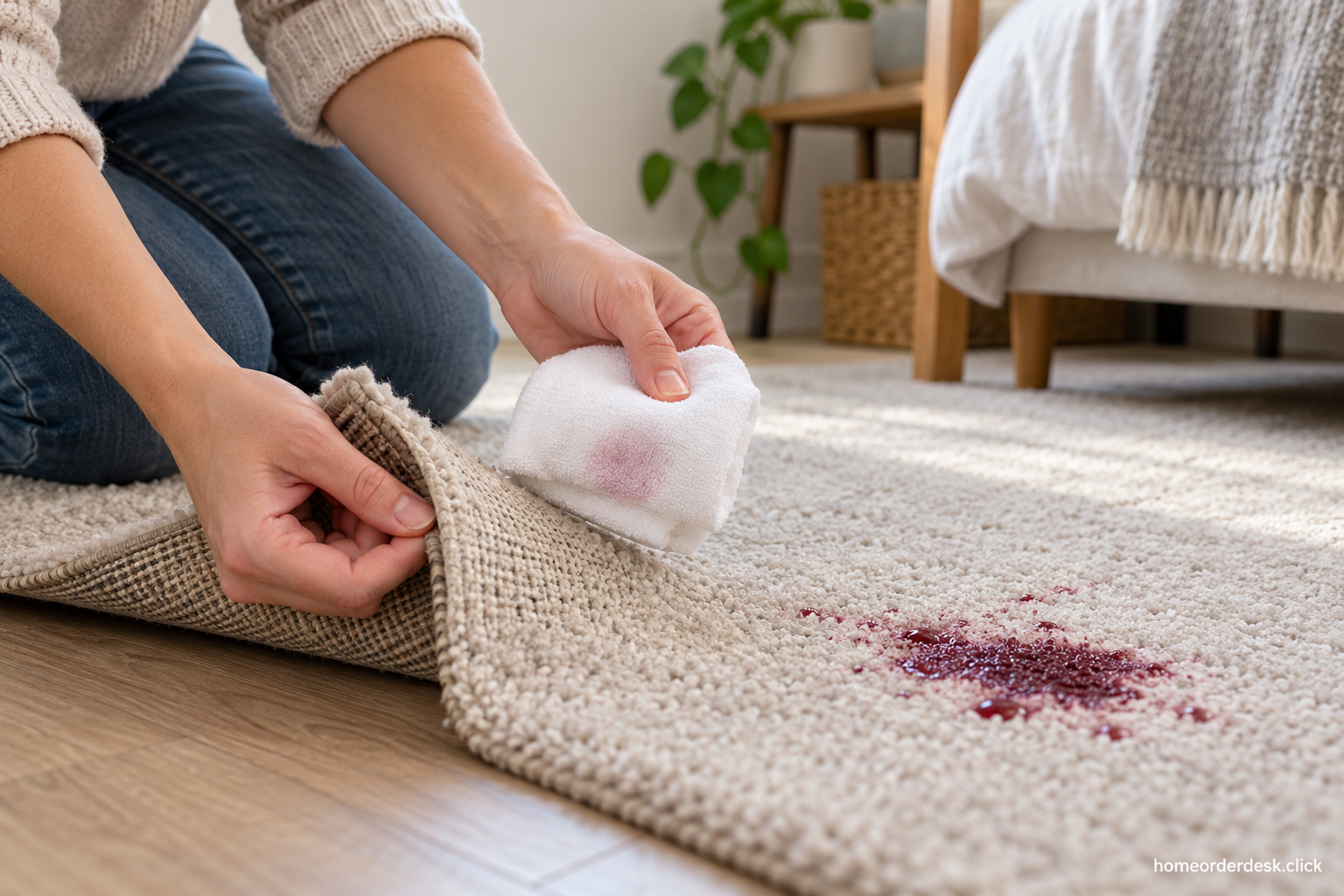
After each pass, check whether wine is transferring to the cloth. If color is still lifting and the carpet looks unchanged, repeat the same step with a clean section of cloth. Change cloths as they become stained. Repeating one tested step is easier to judge than switching among dish soap, club soda, salt, peroxide, vinegar, and a carpet spray in one session. If transfer stops but a shadow remains, follow the cleaner’s label before trying another product.
Work in small sections and keep the treated area close to the original spill size. If the stain is broad, divide it into manageable areas so you can see where moisture is going. Stop adding solution if the carpet begins to feel saturated or the spot spreads. Blot with a dry white cloth between treatments to lift liquid from the pile.
Rinse and dry without leaving cleaner behind
Once the visible wine is removed, use a small amount of cool tap water on a clean cloth to rinse the treated area, if the product directions allow it. The goal is to remove residue, not to flush the carpet with a stream of water. Press and lift with dry towels after each light rinse. Some solutions need more than one rinse; follow the cleaner’s directions and avoid over-wetting.
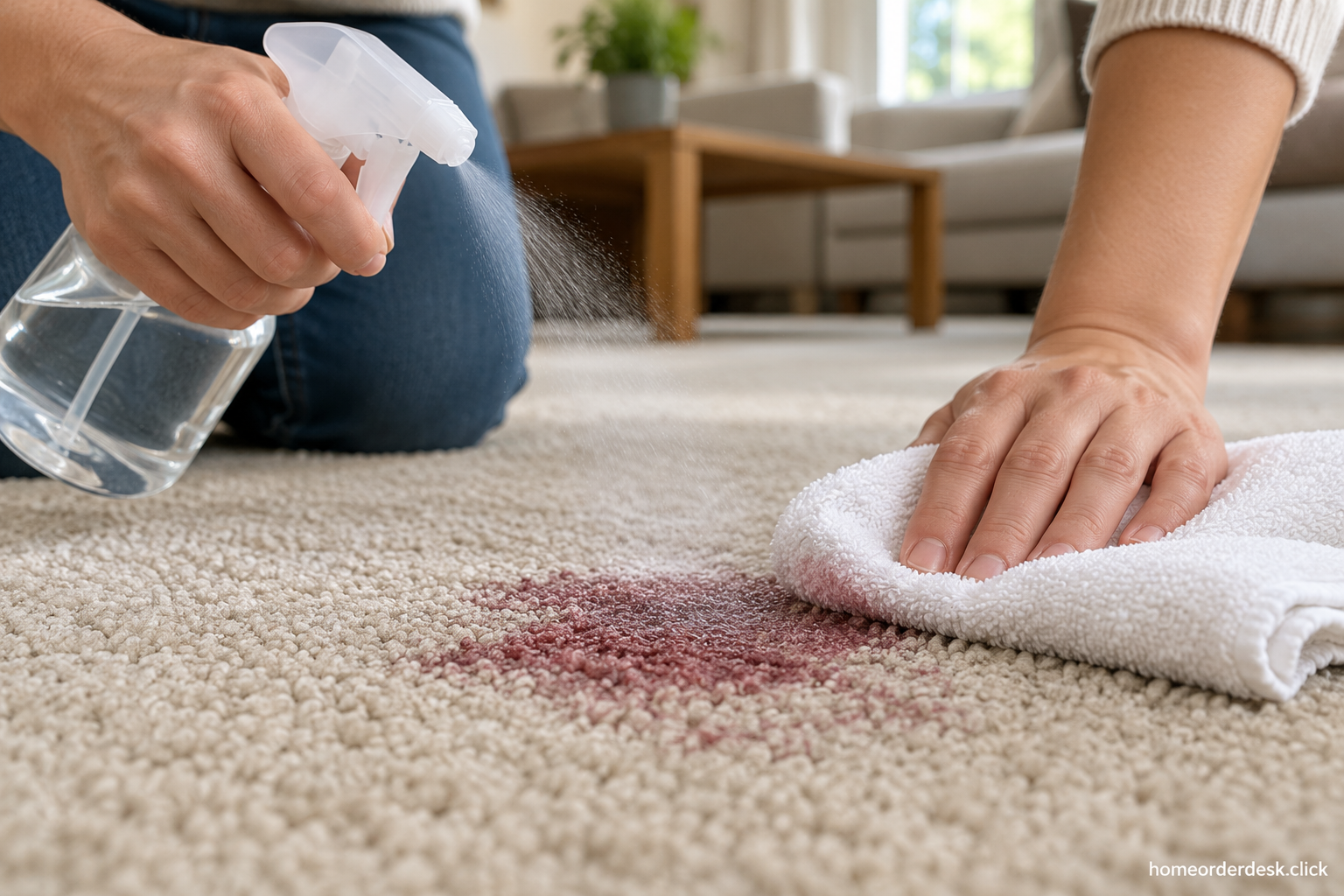
Residue left in carpet can attract soil and make the area look dirty again. Continue blotting until a dry cloth picks up little moisture. Then let the area dry with ordinary airflow. Keep people and pets off it while damp, and do not use a hair dryer, iron, steam wand, or heated tool on the spot unless the carpet maker specifically directs that method. When the pile is dry, gently restore its direction only if the maker’s care advice allows brushing.
What if the red wine has already dried?
A dried wine mark may need a different treatment and can be harder to remove fully. Start by vacuuming loose dry residue if present, then check the carpet maker’s instructions and the CRI Spot Solver for wine. Do not re-wet the area heavily in an attempt to make it fresh again. Use a tested, carpet-safe product in small amounts and follow the stated dwell and rinse steps.
If the stain was treated before and has a pale ring, the remaining mark may be cleaner residue, altered dye, or wine below the visible yarns. Appearance alone cannot identify which. Repeating the original product without rinsing can build residue. If the carpet is wool, has a specialty backing, is still under warranty, or shows color change, call the manufacturer or a qualified carpet cleaner before further treatment.
Skip the shortcuts that risk a larger mark
Do not scrub the spill, use a colored towel, or saturate the carpet with water or cleaner. Do not apply a second chemical on top of the first one before rinsing and drying as directed. Household bleach, peroxide, ammonia, and unknown solvent blends can discolor fibers or damage backing; do not use them unless the carpet maker specifically approves the exact product and method.
Do not sprinkle salt or baking soda over a wet spill as a substitute for blotting. Powders can be difficult to remove from deep pile and do not replace the controlled spot-treatment steps. Club soda is also not a guarantee; the carpet type and product instructions still govern. When in doubt, absorb the liquid, protect the fibers, and get a professional opinion rather than escalating the chemistry.
When to call a carpet professional
Ask a professional for help when the spill is large, has reached the backing or padding, returns after drying, or sits on a delicate rug. A specialist can inspect fiber and dye, choose compatible equipment, and extract moisture from deeper layers. Photograph the spot, note what was applied, and tell the cleaner how long it sat; that information helps avoid repeating a treatment that already caused a change.
For a small, fresh spill on ordinary carpet, prompt blotting and one tested cleaner may be enough. Results still vary by fiber, finish, dye, and time. The practical stopping point is when the cloth no longer picks up wine, the product has been rinsed as directed, and the carpet is drying without a visible change. Do not trade a faint stain for a larger bleached or distorted area.
Frequently asked questions
Should I scrub red wine out of carpet?
No. Blot with a clean white cloth and work from the outer edge toward the center. Scrubbing can spread the spill and distort carpet pile.
Can I use dish soap on every carpet?
No. Follow the carpet maker’s instructions and choose an approved product for the fiber. Test any permitted treatment in a hidden area first.
How do I keep the stain from coming back?
Rinse cleaner residue as directed and blot the area dry. Residue and wine below the pile can make a spot reappear; call a professional if it returns.
What if the carpet is wool or a handmade rug?
Check the rug maker’s care directions and contact a qualified cleaner before applying a general carpet product. Wool and specialty dyes can react differently.