How to Remove a Coffee Stain From a Cotton Shirt
Treat a coffee spill on washable cotton with cool water, a fabric-safe pretreatment, and a careful check before drying. Learn what changes for milk, sugar, and set-in rings.
A coffee mark on a cotton shirt looks simple until a pale brown ring remains after the wash. The useful first moves are ordinary: lift any liquid, use cool water, pretreat with a product that is safe for the garment, and inspect the damp fabric before it sees dryer heat. Coffee can include milk, cream, sugar, or syrup, so there is no single treatment that fits every spill.
This guide is for washable cotton shirts. The garment care label and the cleaner’s directions take priority over a general stain tip. If the label says dry clean only, the shirt is silk, wool, rayon, acetate, or a delicate blend, stop and ask a cleaner rather than testing a home remedy on the visible area.
Start with the spill, not the stain remover
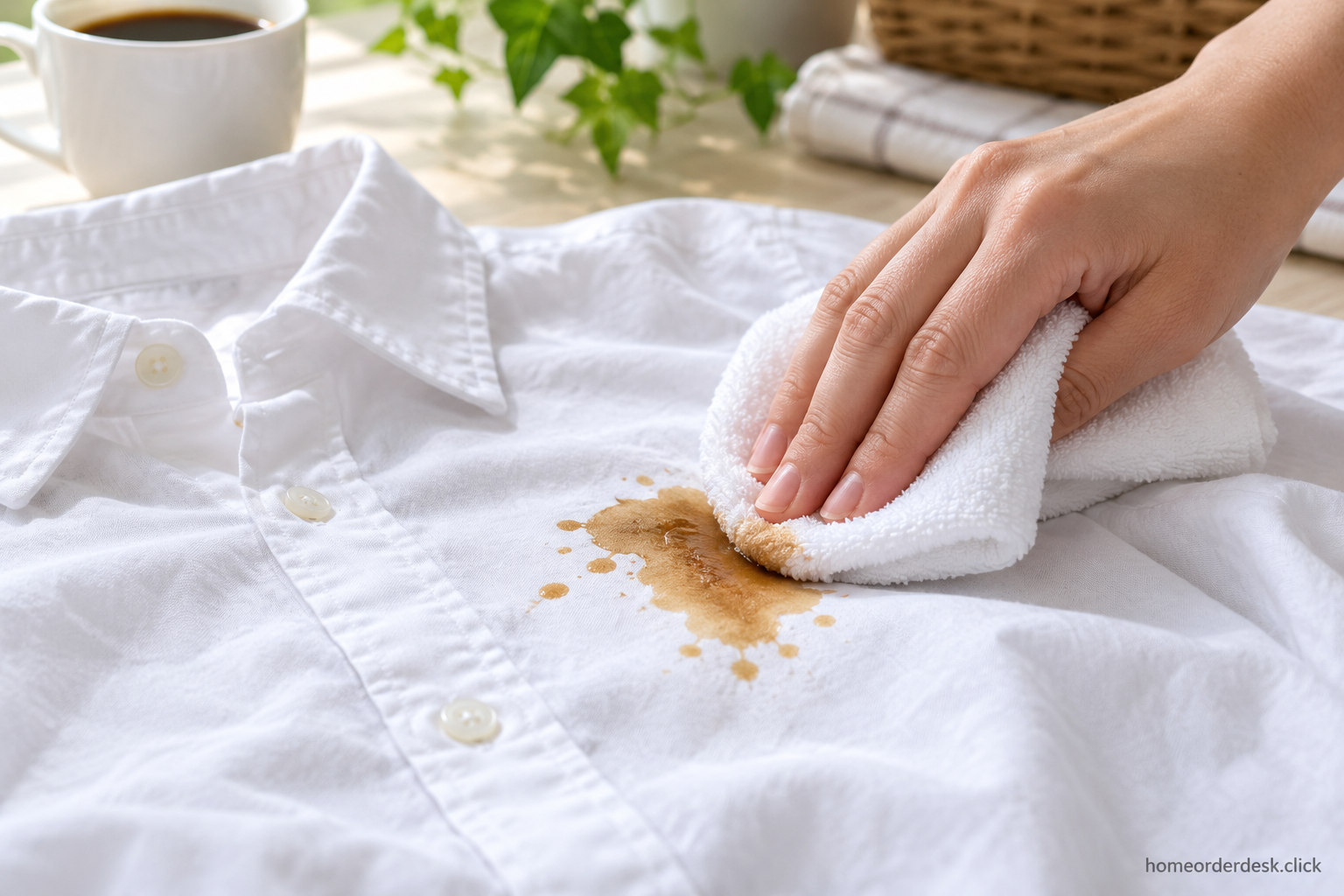
Take the shirt off if you can do so without pulling the wet area across clean fabric. Put a clean white towel behind the mark to keep it from transferring to the other side. If coffee is still pooled on the surface, lift it with a spoon or the corner of a white cloth. Press; do not scrub. A colored towel can transfer dye, and rough rubbing can widen a small splash into a larger damp patch.
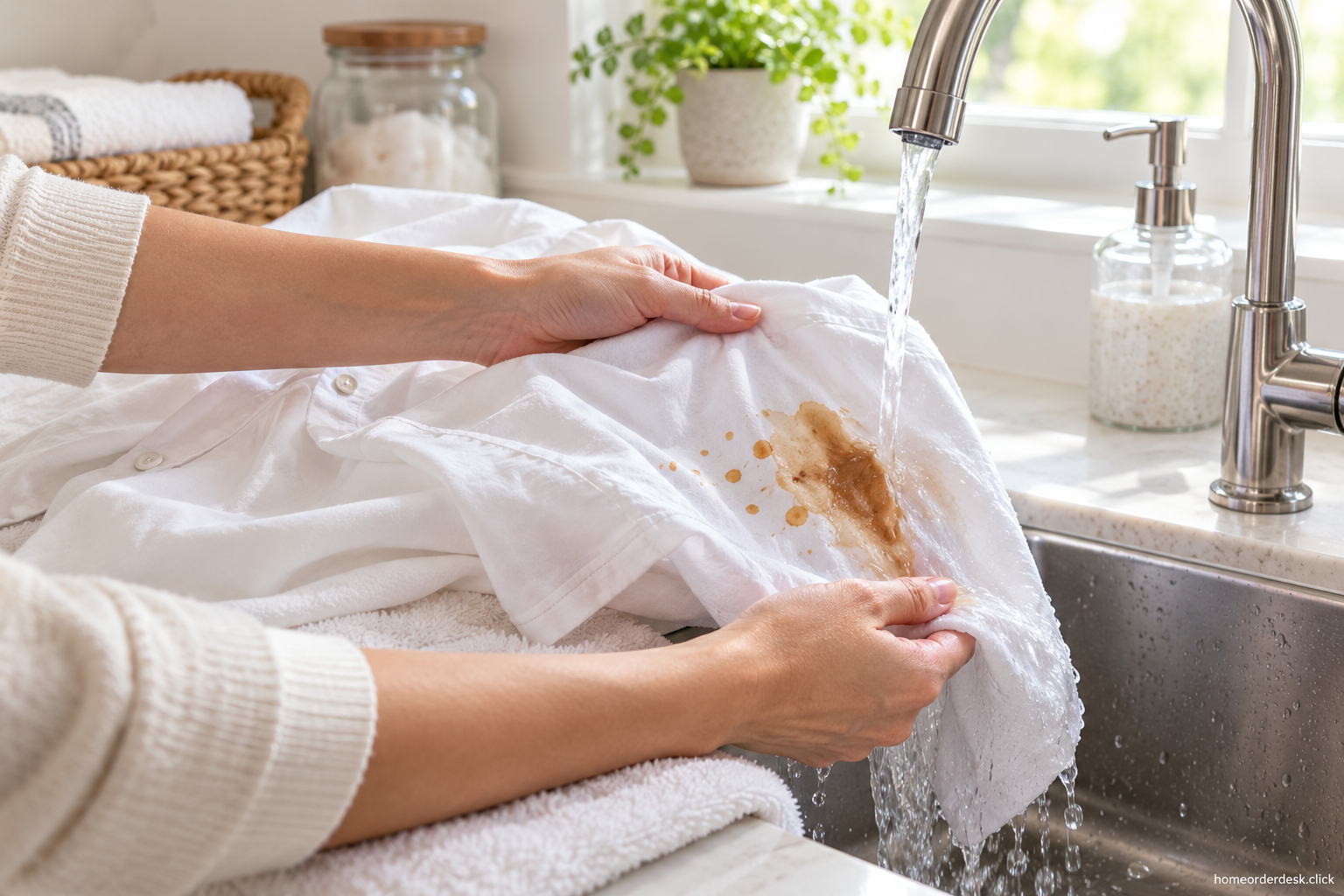
For a washable cotton shirt, turn the fabric so the back of the stain faces the faucet and let cool water run through it. Working from the back helps move loosened coffee out through the cloth instead of driving it farther into the weave. Keep the water flow gentle. If the shirt has a printed graphic, trim, or a contrasting panel nearby, keep the rinsing focused and avoid soaking those details unless their care instructions allow it.
Check the label before choosing temperature or bleach
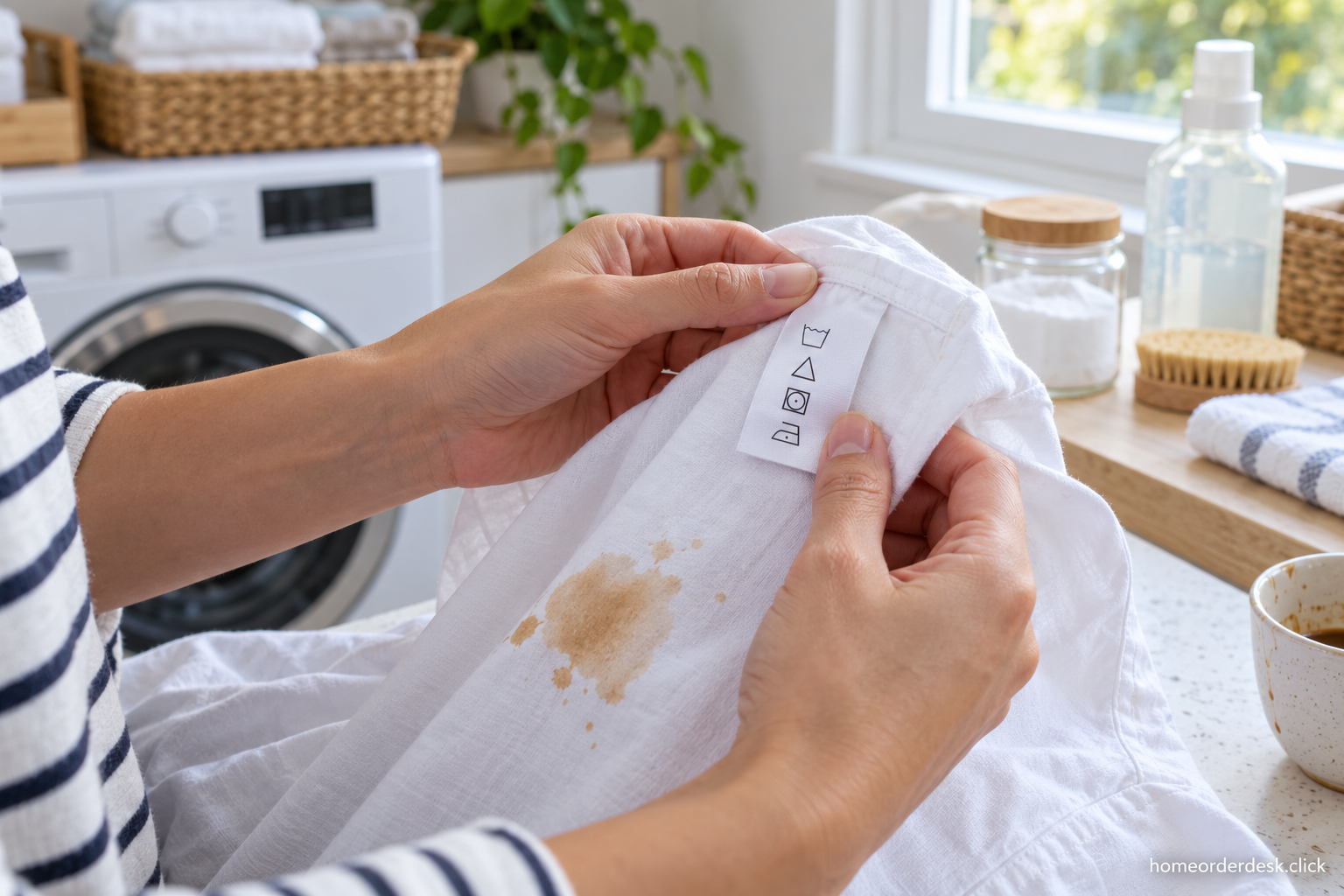
Look at the sewn care label before deciding how to wash. Cotton does not automatically mean every hot wash or bleaching product is safe: the shirt may be dyed, preshrunk, printed, blended, or finished in a way that changes the instructions. Follow the label’s maximum water temperature, cycle, and bleach symbol. If the symbols are unclear, choose the least aggressive treatment the label permits and avoid chlorine bleach.
If the shirt is colored, test the planned stain remover on an inside seam or another hidden area according to its package directions. Dab the test spot with a clean white cloth and check whether dye transfers. A hidden test reduces risk but does not overrule a care label or prove that a product is safe on every part of the garment. Do not combine products or add a second cleaner while the first one is still on the fabric.
Pretreat a fresh coffee mark
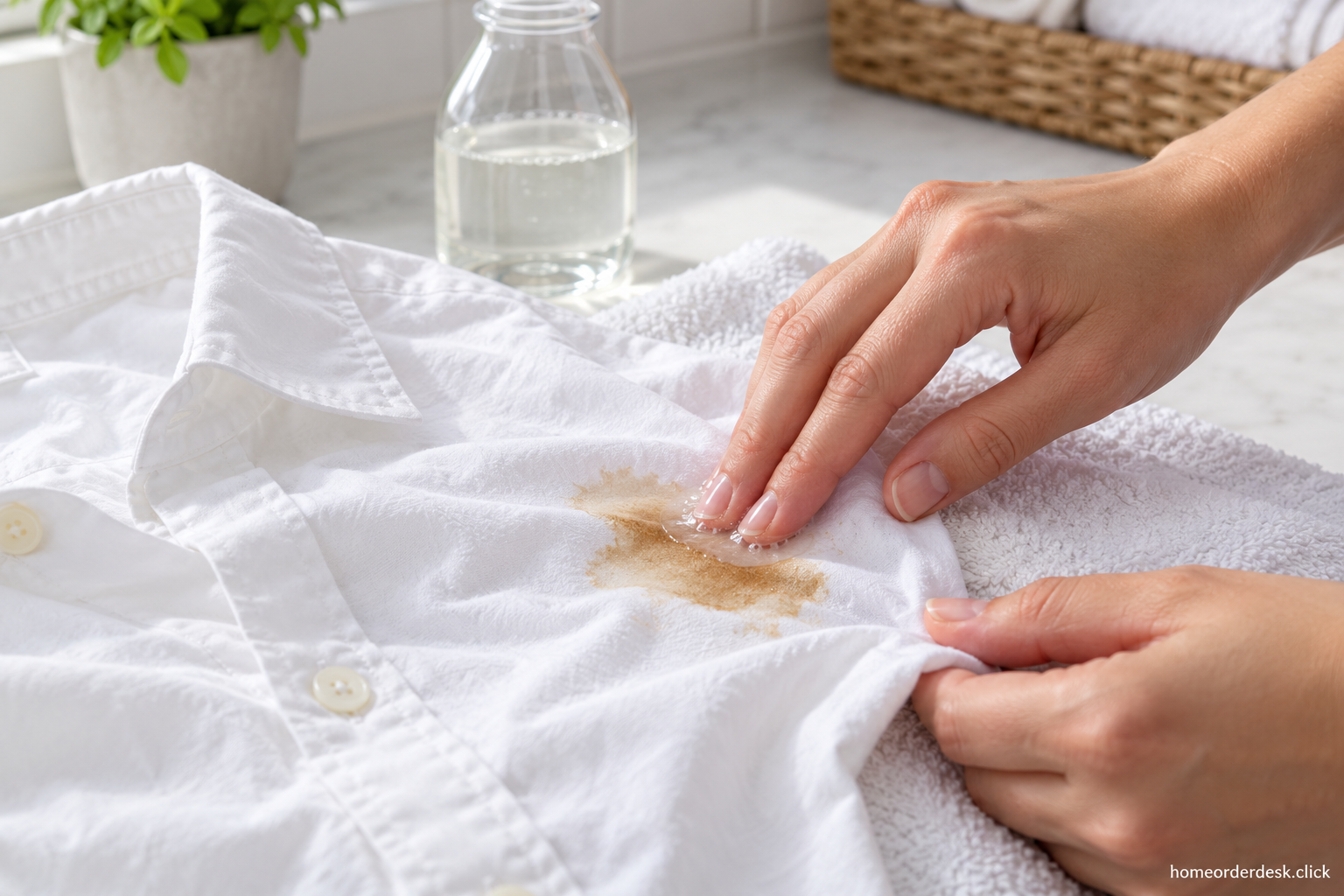
After the cool-water flush, apply a small amount of liquid laundry detergent or a prewash stain remover that the label says is suitable for the shirt. Work it gently into the stain with your fingertips or the softest method allowed by the product directions. Start just outside the visible edge and move inward so you do not push a brown halo outward. Let the product sit only for the time stated on its package; longer is not automatically better.
Then wash the shirt with detergent using the temperature and cycle allowed by its care label. The American Cleaning Institute’s coffee-and-tea guidance calls for cool-water sponging or soaking, pretreatment, and laundering; it lists oxygen or chlorine bleach only when safe for the fabric. Treat bleach as an optional, label-dependent step, not the default. If the shirt’s color, print, or finish makes bleach uncertain, skip it.
A drink made with cream or milk may leave a protein and fat component as well as coffee color. Lift any residue, rinse with cool water, and use a laundry product whose label covers the garment and stain. Avoid starting with hot water or an untested solvent. If the spill included flavored syrup, whipped topping, or a large amount of dairy, repeat a safe pretreatment instead of assuming the first wash removed every part.
Check before the shirt goes in the dryer
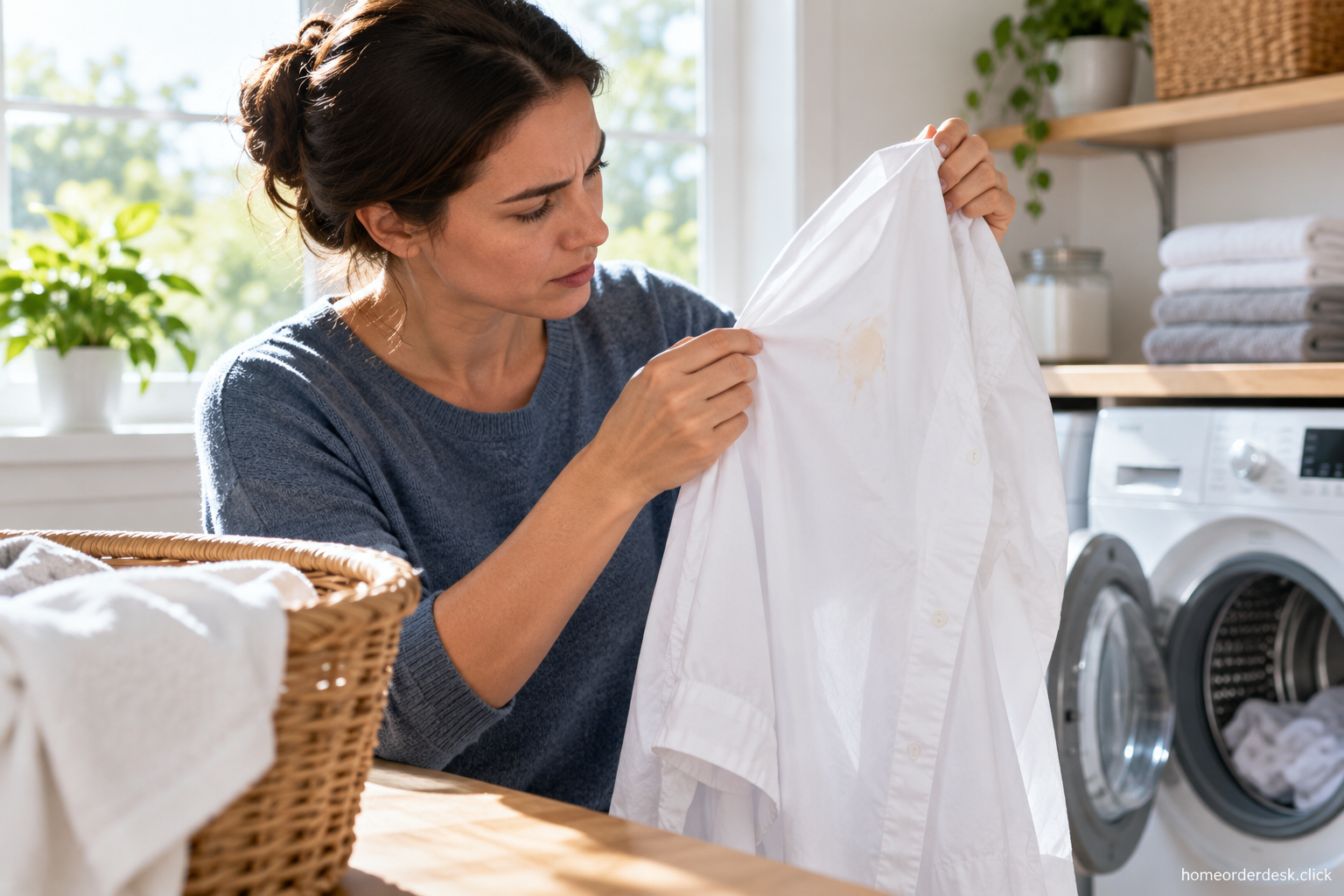
When the wash ends, inspect the damp shirt in bright, neutral light. Check the front, the reverse, the seam allowance, and the edge of the wet area; a faint ring can be easier to see once the fabric is held flat. If any brown or yellow color remains, do not tumble-dry, iron, or place the shirt on a hot radiator. Heat can make a remaining mark harder to remove.
If the stain is still visible, repeat the same care-label-safe pretreatment and wash cycle. Change only one part of the process at a time, such as allowing the permitted pretreatment time or using a fabric-safe oxygen bleach according to its package. This makes it easier to notice what helped and avoids stacking several chemicals on the same cloth. Air-dry while you reassess; once the spot is gone, dry as the care label directs.
What to do about an old or already dried stain
A stain that has been through a dryer may take more than one round and may not come out completely. First dampen the area with cool water, then apply a suitable detergent or prewash product and follow its instructions. For a washable cotton item, a soak may be appropriate only if both the care label and product label permit it. ACI notes that an enzyme-containing presoak may help an older coffee or tea stain; use it only when both labels allow it. Rinse thoroughly before laundering so concentrated product does not remain in the weave.
Do not escalate straight to bleach, peroxide, lemon juice, vinegar, or rubbing alcohol because a web tip says it works on coffee. Those products can change dyes, finishes, or nearby trim, and a cotton fiber label alone does not establish colorfastness. Use only an agent specifically allowed by the garment’s care instructions and test it out of sight first. If a ring grows, color shifts, or the cloth feels different, stop.
Common mistakes that make a small spill harder
Scrubbing is the main one: it can spread the wet boundary and rough up the shirt’s surface. Another is washing the shirt while coffee or milk still sits in the folds, where it can mark a second layer. Using a dryer to see whether the stain has gone is also a poor test; heat is not a stain-removal step. And an oversized amount of detergent can leave a residue that looks like a new mark after drying.
Do not pour stain remover directly over a large section of the garment. Apply the directed amount to the stained area and keep it away from leather patches, decorative pieces, and nonwashable labels. If a shirt is expensive, sentimental, lined, or part of a uniform with a special finish, a professional cleaner may be the safer next call than repeated experiments.
A quick prevention routine
Keep a clean white cloth in the kitchen or work bag if coffee travels with you. Blot a splash promptly, then rinse from the back when you can get to a sink. At home, check the coffee stain before sorting laundry into the dryer load. That small pause is more useful than keeping a shelf of aggressive spot treatments.
The goal is not to make every old mark disappear at any cost. Cotton shirts vary, dyes and finishes matter, and no method guarantees restoration. Work from the garment label, use one compatible product at a time, and stop when the fabric shows a change. If treatment does not improve the stain after a couple of careful cycles, take the shirt and the product details to a cleaner.
Frequently asked questions
Should I use hot water on a coffee stain in cotton?
Start with cool water and follow the shirt’s care label. Use a warmer wash only if the label and treatment product allow it, then inspect before drying.
Can I put a coffee-stained shirt in the dryer after washing?
Only after checking that the stain is gone. If color remains, repeat a safe treatment and air-dry while you reassess.
What if the coffee had cream or sugar in it?
Lift residue, rinse with cool water, pretreat with a product labeled for the garment, and wash as directed. Check again before applying heat.
Can vinegar or peroxide remove coffee from any cotton shirt?
No. Cotton may be dyed or finished, and those agents can change color or trim. Use only products allowed by the care label and test a hidden area first.