How to Clean Vomit From a Mattress After a Stomach Bug
Remove vomit carefully, clean the mattress surface without soaking its core, launder soiled bedding, and understand the limits of disinfecting porous foam.
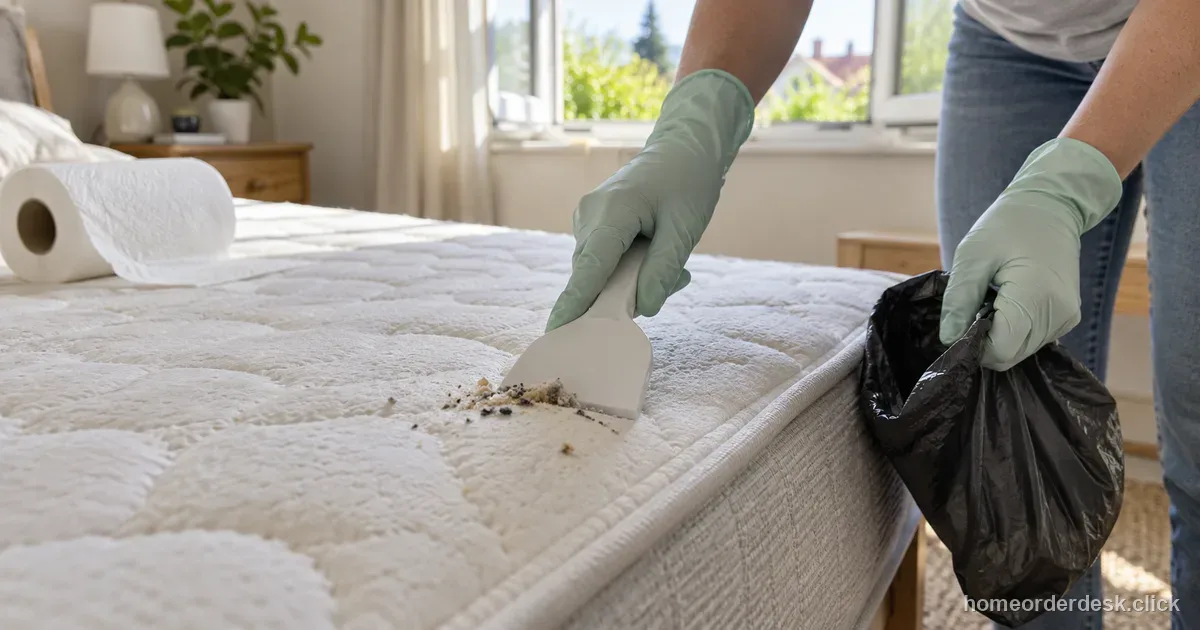
Vomit on a mattress in the middle of the night is unpleasant, but a careful cleanup can remove visible soil and odor while limiting moisture in the padding. If a stomach bug is possible, also protect other people: norovirus spreads through vomit and contaminated laundry, so wash your hands and handle linens without shaking them. Cleaning a porous mattress is not the same as disinfecting a hard surface; do not assume a household peroxide spray makes the foam virus-free.
First, the solids and the bedding
Put on disposable gloves. Lift solid material with a disposable scraper, stiff card, or plastic spatula, scooping it into a bag rather than wiping it across the mattress. Strip bedding and the protector carefully without shaking them. Wash washable items promptly with detergent on the longest cycle and hottest water the care label allows, then dry on the highest heat setting the fabric permits. A warm cycle is not a substitute for the CDC's norovirus laundry guidance.
If a waterproof protector caught the spill, remove it and check the mattress underneath. Do not wet a clean mattress just because the bedding was soiled.
For sheets and other washable items, CDC advises using detergent, hot water at the maximum available cycle length, and the highest dryer heat setting the items can tolerate. Follow care labels so you do not damage a waterproof coating or shrink a protector. Keep clean laundry separate from the soiled bundle, and wash your hands with soap and water after handling it.
Blot the liquid, do not rub
Press dry paper towels or disposable absorbent cloths onto the wet area and lift, repeating with fresh material. Work from the outside toward the center to avoid spreading the spill. Bag used materials, then wash your hands. Avoid shaking or dry-scrubbing contaminated material.
Absorb moisture and odor
Once free liquid is blotted, a light layer of baking soda can help absorb surface moisture and odor. Leave it only as long as the mattress maker allows, then vacuum it up with an upholstery attachment. Baking soda is a deodorizing step; it does not disinfect the mattress or prove that virus has been removed.
Clean the mattress surface
Check the mattress care label or manufacturer's instructions first. If spot cleaning is permitted, use the smallest amount of cool water with a little mild detergent on a cloth, blotting rather than scrubbing. Use a second barely damp cloth to lift residue, then press with a dry towel. An upholstery enzyme product is an option only if its label and the mattress maker allow it. Do not pour cleaner onto the mattress or use steam unless the manufacturer specifically permits it.
| Surface cleaning | Disinfection | |
|---|---|---|
| Goal | Remove visible soil and residue | Inactivate a named pathogen on an approved surface |
| What to check | Mattress maker's spot-clean instructions | EPA label: norovirus claim and approved use surface |
| Important limit | Use minimal moisture and dry fully | Do not assume porous foam is a labeled disinfection surface |
A product labeled for hard, nonporous surfaces is not automatically approved for mattress fabric or foam. Do not substitute diluted household hydrogen peroxide; report the surface as cleaned unless a compatible EPA-labeled use is specified.
What disinfection can and cannot do
For norovirus, CDC guidance calls for laundering contaminated fabrics carefully and using an EPA-registered disinfectant with a norovirus claim on compatible surfaces, according to its label. EPA List G products commonly specify hard, nonporous surfaces; a mattress cover or foam core may not be an approved use site. Check both the disinfectant label and mattress instructions. Do not improvise with diluted drugstore hydrogen peroxide or spray a product onto fabric unless its label explicitly allows that material and use.
If the mattress label does not permit an effective disinfectant on the affected area, describe the result honestly as cleaned, not disinfected. When vomit soaked through a porous core, or the mattress cannot be cleaned as directed, ask the manufacturer or a professional cleaner about the specific model; replacement may be the practical choice. Do not use bleach on fabric unless the care label and product label both permit it.
Do not try to compensate for uncertain surface disinfection by soaking the mattress, fogging the room, or combining products. Extra moisture can move contamination deeper and make drying harder. Keep children and pets away while the area is being cleaned, and store the product after use. If anyone develops severe symptoms or is at higher risk, contact a healthcare professional; this cleaning guide does not diagnose the illness or replace medical advice.
For the hard floor, bed frame, or nearby handles that received splashes, clean visible soil first and then use a product labeled for norovirus on that specific surface. Follow the stated wet contact time and any rinse directions. Keep the room aired as the label allows, and do not move contaminated cloths across clean surfaces.
Dry it completely before reuse
Blot again with a dry towel, then allow airflow across the area. Use a fan and keep the bed uncovered until the surface and padding are fully dry. Do not put sheets or a protector back over damp foam. If the spill penetrated deeply, drying may take longer than the surface suggests; follow the manufacturer's instructions before sleeping on it.
Handle nearby laundry and touch points
Wash sheets, pillowcases, washable protectors, and clothing contaminated with vomit using the CDC laundry steps and their care labels. Clean visible soil from nearby hard surfaces first, then use an EPA-registered product whose label lists norovirus and the intended surface, keeping it wet for the full contact time. Never mix cleaners. Wash hands thoroughly with soap and water after cleanup; hand sanitizer alone is less reliable against norovirus.
Make the next cleanup easier
A fitted waterproof mattress protector can keep a future spill off the mattress. During an illness, an extra washable protector or absorbent pad over the fitted sheet gives you a removable layer. Keep gloves and disposable absorbent materials nearby, and do not return a soiled layer to the bed until it has been laundered and dried.
Frequently asked questions
Does baking soda disinfect a mattress after vomit?
No. It may absorb some moisture and odor, but it does not disinfect. Follow the mattress care instructions, and use a disinfectant only on materials and surfaces listed on its EPA label.
Can I use diluted 3 percent hydrogen peroxide to disinfect mattress foam?
Do not assume so. A household peroxide solution is not automatically an EPA-registered norovirus disinfectant, and many product labels limit disinfection claims to hard, nonporous surfaces. Check the product label and mattress maker's care instructions.
Can I just use water and soap on vomit on a mattress?
Soap handles some of it, but an enzyme cleaner is better because it breaks down the protein and starch in food residue that soap leaves behind, which is part of what smells. Use either with a barely-damp cloth, never a soak.
How do I protect the bed if my child is still being sick?
Put a fresh waterproof protector and a folded towel over the dry area so a repeat episode only means removing the top layer. Do a full proper clean once the child is well and you have daylight.