How to Remove Urine From a Mattress: Bedwetting, Pets, and Old Stains
Clear urine and its smell from a mattress with an enzyme cleaner that breaks the uric acid crystals plain cleaning leaves behind.
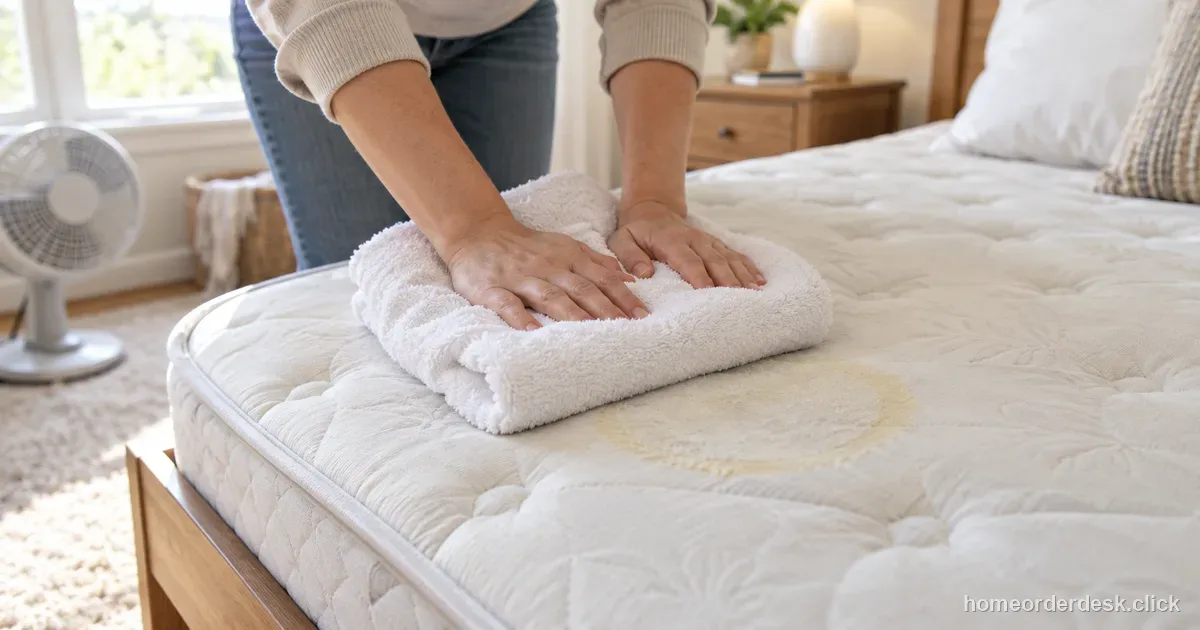
Urine on a mattress can leave a visible mark and an odor, but the best cleanup depends on the mattress cover, foam, and manufacturer instructions. Mattress layers are difficult to rinse, and over-wetting can damage materials or leave moisture trapped inside. Check the care label and warranty before removing a cover or applying a cleaner.
Blot a fresh accident hard
Remove the sheets and any washable protector only as its label directs. Blot the mattress surface with clean absorbent towels; press gently and lift rather than standing on the bed or rubbing. Replace the towel as it becomes wet. Keep the amount of liquid added during any approved treatment as small as possible.
The more liquid you remove now by pressure alone, the less has to be treated and dried later. Do not rub, which spreads the stain outward.
Use a cleaner only when the maker permits it
If the mattress maker permits an enzyme cleaner for this cover and stain, follow that product’s label exactly. Do not deliberately soak the mattress or try to reach the full depth of the urine; that may drive liquid into foam layers. Use the smallest labeled amount that is appropriate for the surface, then blot excess without rubbing.
Do not cover a wet mattress with plastic to extend dwell time unless the cleaner label and mattress maker explicitly direct it. Trapping moisture can slow drying and affect internal layers. Follow the stated contact time and drying instructions instead.
Powder is optional and label-dependent
Baking soda may be permitted for some mattress surfaces, but check the maker’s instructions before applying powder; residue can be difficult to remove from textured covers. If allowed, use the amount and cleanup method the label specifies and vacuum only if the mattress maker permits vacuuming.
If odor remains after an approved treatment and complete drying, do not assume repeated enzyme applications are safe. Contact the mattress maker or a professional cleaner and explain the product and amount used. Surface treatment may not reach deeper layers, and further liquid can make the problem worse.
- Remove beddingWash removable bedding by its own care label; do not unzip the mattress cover unless the maker says it is washable.
- BlotPress a clean absorbent towel gently onto the surface; do not stand on it or rub.
- Treat if permittedUse only a cleaner the mattress maker allows, at the amount and contact time on its label.
- DryFollow model-specific drying instructions and wait until fully dry before remaking the bed.
Avoid deep soaking and trapped moisture in foam or padding.
Old and set-in urine stains
For an old dried stain, avoid re-wetting the mattress to reactivate residue unless its care instructions approve that method. A remaining yellow mark may persist even after an approved surface clean. Do not remove the cover unless the maker explicitly says it is removable and washable.
The yellow color may not fully disappear even after the smell is gone, since old urine can stain the ticking permanently. Judge success by the smell, not the color.
Pet urine and repeat marking
If the accident involved a pet, follow the mattress maker’s guidance and use a cleaner only if it is approved for both the stain and cover. Odor or repeated soiling may have causes beyond the visible spot; keep pets away until the area is fully dry and ask a veterinarian about repeated inappropriate urination.
Repeated accidents can affect the cover or deeper mattress layers. Do not keep soaking the surface or assume replacement is required; contact the mattress maker about its cleaning limits and warranty, and seek veterinary advice for recurring behavior.
Dry only as the manufacturer directs
If the mattress remains damp after a permitted surface treatment, stop adding product and contact the manufacturer. Follow its drying instructions; do not stand the mattress on its side, aim a fan at one area, or leave it uncovered for a fixed number of hours unless the maker allows that method.
Do not put the bed back together, and do not put a fitted sheet or protector back on, until the mattress is completely dry to the depth the urine reached.
Do not rely on odor masking
Baking soda may absorb some surface moisture or odor, but it does not identify or remove every source of a recurring smell. Use it only if the mattress maker permits powder on the cover and provides a safe removal method. Avoid mixing it with vinegar or another cleaner.
Air fresheners can mask odor without cleaning the fabric. Choose a stain or odor product only if its label lists the mattress cover and the mattress maker allows it. Do not infer that an enzyme or bacterial-culture product is required for every odor.
Follow the contact time on the cleaner label and the mattress care guide. Do not keep the area wet with plastic or a damp towel unless both instructions explicitly say to do so; trapped moisture can be difficult to remove from foam or padding.
After an approved treatment, blot any excess and let the mattress dry fully using the method the manufacturer specifies. Do not rebuild the bed or replace bedding while the area is damp. Contact the maker if moisture or odor persists rather than repeating an unapproved soak.
Once the mattress is fully dry, consider a washable mattress protector that fits the model and can be cleaned according to its own label. A protector can make future surface spills easier to handle, but it does not replace the mattress maker’s stain instructions. Do not add a waterproof layer that traps heat or changes the fit unless it is compatible with the bed.
Save the model name and care guide in a place you can find quickly. If a spill occurs again, remove and wash only parts the manufacturer identifies as removable, blot the mattress, and stop before cleaners or liquid reach the inner structure.
Preventing the next one
A washable, waterproof-backed mattress protector is the single best defense, and for a child in the bedwetting years, an absorbent washable pad on top of the protector takes the hit and washes easily. Keep a spare set so the bed can be remade at 2 a.m. and the cleanup done properly in the morning.
Frequently asked questions
Why can urine odor remain after cleaning?
Odor may persist if residue remains, the mattress has not dried fully, or liquid reached deeper layers. This does not identify the exact cause; follow the mattress maker’s instructions and avoid adding more liquid by guesswork.
How much enzyme cleaner should I use on a mattress?
Use only the amount the cleaner label and mattress maker permit. Do not try to soak the mattress or reach deep layers with liquid.
The yellow stain remains after cleaning. Is that possible?
Yes. A visible discoloration may persist even when the surface is clean. Avoid repeated wet treatments; ask the manufacturer or a professional cleaner.
Should I remove a zippered mattress cover?
Only if the manufacturer explicitly says it is removable and washable. A zipper alone does not mean the cover should be removed.