How to Remove Blood From a Mattress, Including Dried and Period Stains
Clean blood off a mattress with cold water and an enzyme or peroxide treatment, using minimal moisture because a mattress cannot be rinsed or wrung.
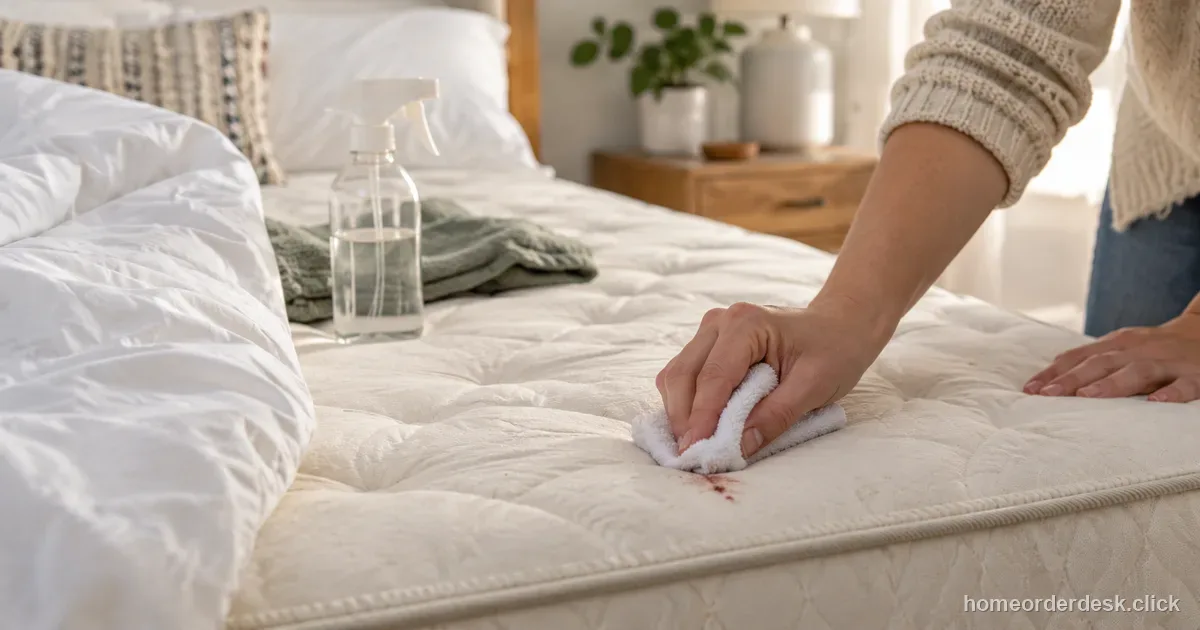
Blood on a mattress can stain the fabric cover, but treatment depends on the mattress model, materials, and care instructions. Foam and layered mattresses can be difficult to rinse and dry, so use the least moisture permitted by the maker. Check the mattress label and warranty before removing a cover or applying any cleaner; a zipper does not mean the cover is washable.
Strip the bed and protect the layers
Take off all the bedding and wash it separately in cold water right away, since warm water sets blood. If a mattress protector caught most of the blood, that is the good outcome; wash it per its label and check whether much reached the mattress at all before you treat the mattress itself.
Blot up any wet blood on the mattress with dry paper towels or an old towel, pressing straight down and lifting, working from the outside of the stain inward.
Protect the bedding and mattress cover
If the blood is not your own, wear disposable gloves while handling soiled bedding and cloths. Remove sheets carefully so they do not drag across clean surfaces, and place them in laundry according to their own care labels. Use a mattress protector only if it is designed to be removed and washed; do not unzip the mattress cover unless the mattress maker explicitly says it can be removed.
Keep clean and used towels separate. Do not reuse a cloth that has blood on it to wipe another area of the bed. After handling the stain, follow ordinary handwashing and laundry hygiene. Avoid spraying disinfectant or bleach on the mattress unless its manufacturer specifically lists a compatible method, because surface disinfection and fabric stain removal are different tasks.
Cold water first, and very little of it
Dampen a cloth with cold water, wring it out well, and blot the stain. Follow immediately with a dry towel pressed down hard to pull the moisture back out. Repeat this cold-blot-then-dry-blot cycle as long as the towel keeps picking up pink.
Never pour water onto the mattress and never use warm or hot water. Heat denatures the protein in blood and locks it into the fabric, and excess water drives contamination deep into layers you cannot reach.
An enzyme cleaner for what remains
If a mark is left after cold blotting, use a stain product only when the mattress maker and product label permit it for that cover. A cleaner made for pet urine is not automatically suitable for blood. Apply only the labeled amount and contact time, blot excess, and follow the mattress maker’s drying instructions.
Test an approved product only as its label directs and only on a hidden area when appropriate. Keep moisture away from seams and foam layers. A long dwell or deep soak can be hard to remove from a mattress, so do not extend contact time to chase a stain.
The mattress model and care guide control cleaning products, moisture, and drying.
Hydrogen peroxide for stubborn or old blood
Hydrogen peroxide can discolor or weaken some mattress covers and finishes. Do not use it unless the mattress maker approves it for the exact fabric and gives a method. Never mix peroxide with other cleaners; use only a labeled product and keep the application minimal.
A homemade peroxide, baking-soda, and dish-soap paste is not a universal mattress treatment. It can leave residue, affect dyes, and add moisture that is difficult to remove. Avoid home mixtures unless the manufacturer explicitly permits them; ask a cleaner or the mattress maker about a persistent dried mark.
Period and dried blood specifically
A period stain may be larger or dried before it is noticed. Do not run several cold-water cycles or lay a wet cloth over the mattress automatically. Check the mattress care guide, then use only a treatment and contact time approved for the cover. Keep moisture minimal, and stop if liquid begins to spread toward seams or foam.
An old brown blood stain may leave discoloration even after careful cleaning. Its appearance alone does not reveal whether residue has reached deeper layers. Stop before repeatedly wetting the mattress in pursuit of the last color; ask the manufacturer or a professional cleaner about options.
Tufting, seams, and the layers below
Stitched channels and tufted areas can hold cleaning liquid longer than a flat surface. Avoid directing a spray into seams or using a swab to push liquid deeper. Blot only the accessible surface with a clean absorbent cloth, and contact a professional if the stain has reached padding or foam.
For step-by-step blood removal on the sheets and any clothing from the same incident, Stainfield Home covers it by fabric type.
Mattress type changes what is possible
Mattresses use different cover fabrics, padding, foam, and barriers, so construction alone does not predict how quickly a spot will dry. Follow the model-specific cleaning instructions. On foam or pillow-top models, avoid soaking and do not remove layers or covers unless the manufacturer explicitly allows it.
Some mattresses have a removable, washable cover that unzips all the way around. If yours does and the care label allows it, unzipping and washing the cover is far more effective than surface-treating it in place, though check first that the cover is meant to come off, since some enclose fiberglass fire barriers that should not be exposed.
| Quilted cover | Foam, hybrid, or pillow-top | |
|---|---|---|
| Before cleaning | Check model care instructions and cover limits. | Check model care instructions and whether the cover is removable. |
| Cleaner | Use only an approved product and amount. | Avoid soaking or directing liquid into seams and foam. |
| If stain persists | Ask the manufacturer or a fabric cleaner. | Ask the manufacturer before adding moisture or removing layers. |
Drying and prevention
After any approved treatment, blot excess moisture with a dry towel and let the mattress dry fully using the manufacturer’s directions. Do not remake the bed over a damp area. Avoid direct high heat or placing the mattress on its side unless the maker permits it; if the core remains damp, stop and contact the manufacturer.
A washable waterproof mattress protector is the single best defense against the next incident, keeping blood and other fluids on a layer you can throw in the machine.
Frequently asked questions
Can I use warm water on blood on a mattress?
Use only the mattress maker’s approved method; if water is permitted for the fabric, cold water is generally preferable for blood. Blot with a wrung-out cloth and avoid pouring liquid into the mattress.
Can I use hydrogen peroxide on a mattress stain?
Only if the mattress maker approves it for the exact cover. Peroxide may discolor fabric; do not mix it with other cleaners.
How do I handle an old dried blood mark?
Check the care guide and avoid repeated wetting or scraping. Use a compatible product only as labeled, or ask the mattress maker/professional cleaner.
What if the treated area smells or stays damp?
Stop adding liquid, keep bedding off until fully dry, and contact the mattress maker for its recommended next step.