How to Remove Red Wine From a Marble or Granite Countertop
Treat red wine on stone as two problems: a pigment stain the poultice pulls out, and an acid etch on marble that only polishing repairs.
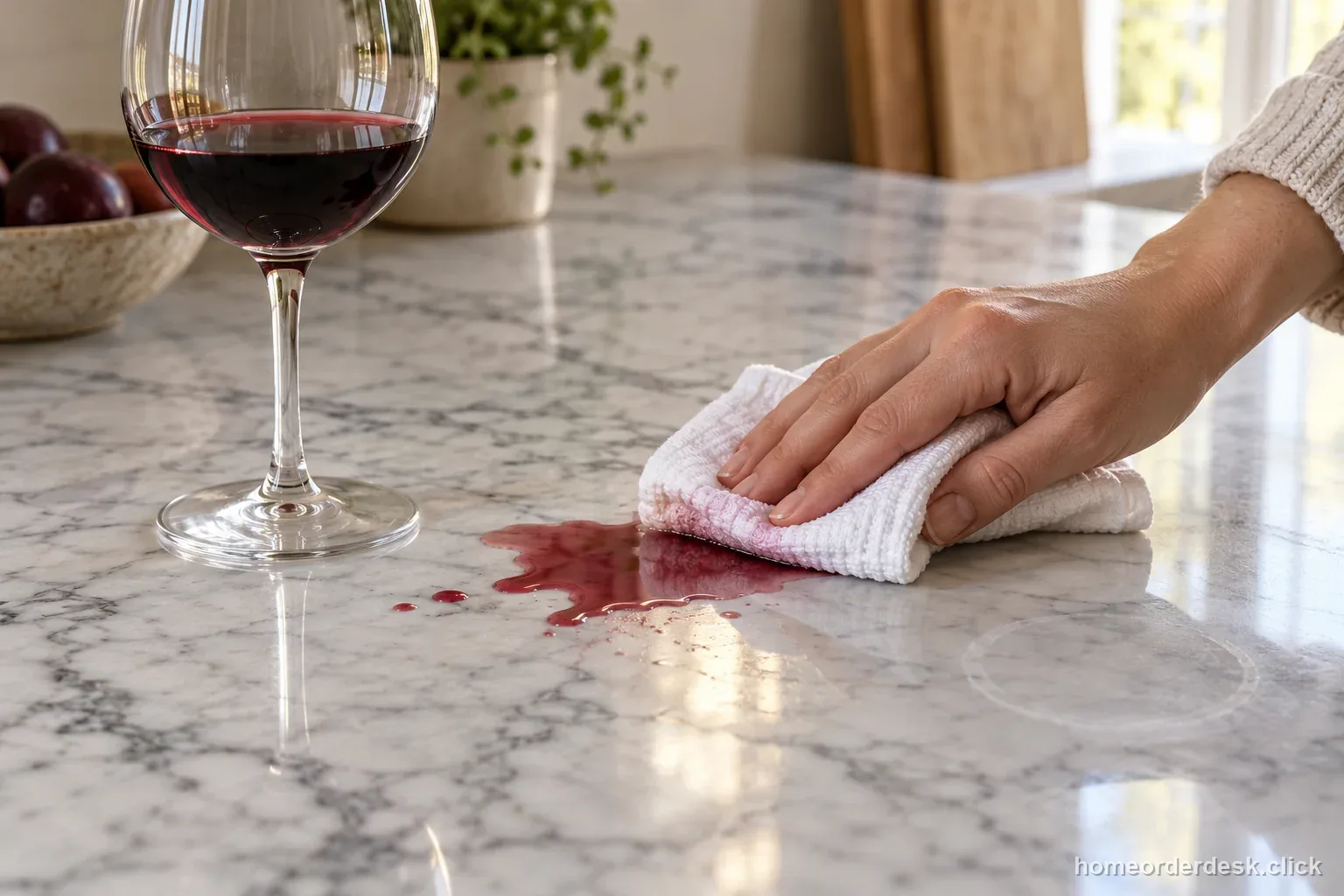
Red wine on a stone countertop is really two separate problems wearing one spill. Wine carries dark pigment that soaks into porous stone and leaves a stain, and it is also acidic, so on calcium-based stone such as marble or travertine it eats a dull, slightly rough spot into the polish. Cleaning removes the stain. It does nothing for the etch, and confusing the two leads people to scrub for hours at a countertop that actually needs polishing.
Work out which stone you have before you do anything else. Marble, travertine, limestone, and onyx are calcite and acid-sensitive. Granite and quartzite are much harder and mostly acid-resistant, though they can still stain if the sealer has worn thin. Engineered quartz is different again and has its own maker-specific rules.
Blot the spill, do not wipe it
Lay a paper towel or a clean cloth over the wine and press straight down. Wiping drags pigment across a wider area and, on marble, drags acid across more of the polished surface, turning a small etch into a large one. Lift and replace the towel until it stops picking up color, then rinse the area with plain water and blot it dry.
A spill caught and blotted within a few minutes on well-sealed stone often leaves nothing at all. The stain risk climbs steadily the longer the wine sits and works its way into the surface, which is why the first response matters more than any product you might reach for later.
Fresh residual color: soap and water first
If a light stain remains after blotting, wash it with a few drops of dish soap in warm water and a soft cloth, rinse, and dry. Repeat the wash once. This is a low-risk first step on many sealed stone surfaces, but engineered stone and specialty finishes have model-specific restrictions; use a mild cleaner approved for that countertop and follow its maker directions.
Do not reach for vinegar, lemon juice, or a general bathroom cleaner. Acids etch marble on contact, and even on granite a repeated acid wipe wears down the sealer that is keeping stains out in the first place. Abrasive powders and scouring pads dull a polished finish permanently.
A set stain needs a poultice
Pigment that has soaked in will not wipe off, because it is below the surface. You draw it back out with a poultice: a paste that sits on the stone, stays damp, and pulls the stain up into itself as it slowly dries over a day or two.
For most stone, mix baking soda with a little water to a peanut-butter consistency. On light-colored marble only, a paste of flour and 12 percent hydrogen peroxide is stronger on organic color, but peroxide can lighten dark or colored stone, so test it somewhere hidden first. Spread the paste about a quarter inch thick over the stain, extending past the edges, cover it with plastic wrap taped down at the sides, and leave it 24 to 48 hours.
- ApplySpread the paste about a quarter inch thick, past the stain, and cover it with plastic.
- 24 to 48 hoursLeave the covered poultice in place.
- After uncoveringLet the paste dry fully, scrape with plastic or wood, then rinse and inspect.
- If color remainsRepeat the poultice; a deep stain may take two or three cycles.
The paste draws pigment out as it dries; deep stains may need another full cycle.
Removing the poultice and repeating
When the time is up, peel off the plastic and let the paste finish drying completely, which is when it does the last and most useful part of its work. Scrape it off with a plastic or wooden edge, never metal, and rinse the area thoroughly with water. Dry it and look at the stain in good raking light from the side.
A deep stain often needs two or three poultice cycles before it is fully gone. Each one lifts more color, and this is normal rather than a sign that the method is failing. It is still far safer than trying to force the stain out with a single aggressive chemical treatment that might damage the stone.
The etch mark is a different repair
If, after the stain is gone, you are left with a dull ring or a patch that feels slightly rough and looks lighter when light rakes across it, that is an acid etch in the marble polish. No cleaner fixes it because the surface itself has been chemically changed. A marble polishing powder, rubbed with a damp cloth and a little pressure, restores the shine on a light etch. A deep etch needs a stone professional to hone and re-polish the area so it matches the rest of the top.
Most true granites and quartzites resist ordinary wine acids, but commercial stone names and mineral content can vary. If a pale or dull mark remains, confirm the material with the fabricator before repeating a chemical poultice or polishing it.
The mark can need another poultice or surface polishing, depending on what changed.
Reseal and check your sealer
Once the countertop is clean and dry, test whether the sealer is still working. Drop a small puddle of water on the stone and wait 15 minutes. If it beads or simply sits on top, the seal is fine. If it soaks in and darkens the stone underneath, the countertop needs resealing with a penetrating stone sealer, which is a straightforward wipe-on, wait, wipe-off job and the single most effective thing standing between the next spill and a stain.
If the wine also reached a rug, a tablecloth, or clothing during the same spill, Stainfield Home has fabric-by-fabric removal steps for red wine.
Everyday habits that protect stone
Use coasters and keep a tray under the wine bottle, wipe any spill the moment it happens rather than after the guests have gone home, and keep acidic drinks and cut citrus off bare marble entirely. Reseal marble every year or so and granite every two to three years, or any time the water bead test stops passing, and your countertop will shrug off spills that would otherwise mean an afternoon with a poultice.
Frequently asked questions
Why can't I use vinegar on a red-wine stain on marble?
Vinegar is acidic and etches calcium-based stone on contact, leaving a dull rough patch that is worse than the stain and can only be fixed by polishing. Use dish soap and water for fresh color and a baking-soda poultice for a set stain.
What is a poultice and how does it work?
It is a damp paste — baking soda and water for most stone — spread over the stain, covered with plastic, and left a day or two. As it slowly dries it draws the absorbed pigment up out of the stone into the paste. Deep stains take two or three applications.
The stain is gone but there is a dull ring. What is that?
On marble or travertine, that is an acid etch: the wine dissolved a shallow spot in the polished surface. Cleaning cannot restore it. A marble polishing powder handles a light etch; a deep one needs a stone restoration professional.
Does sealing make a countertop stain-proof?
No, it buys you time. A good sealer keeps liquids on the surface long enough to blot them up before they soak in. Test it by leaving a puddle of water 15 minutes; if the stone darkens, it is time to reseal.